First-Year Students' Initial Understanding of The Basic Concept of Static Fluid
DOI:
https://doi.org/10.24114/jpf.v14i2.62546Keywords:
Initial Understanding, Maritime Context, Physics Learning, Static Fluids.Abstract
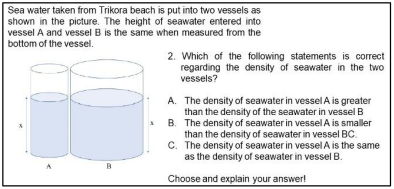
Indonesia is one of the largest maritime countries in the world. Learning should be carried out contextually by linking knowledge with contexts relevant to students' daily lives, such as the maritime context. This research is descriptive to determine students' initial understanding of the basic concept of static fluids. This research involved 66 first-year students in biology education as research subjects. The data collection technique used in this research is a test that uses 6 questions that represent the concepts of density, hydrostatic pressure, and buoyant force. Data was analyzed descriptively, quantitatively and qualitatively. The research results show that many students still experience problems understanding the basic concepts of static fluids, including density, hydrostatic pressure, and buoyant force. This indicates the need for implementing learning that can improve students' understanding of basic concepts of static fluid and enable them to link their knowledge with conditions and situations related to the maritime context in their daily lives. One of the effective approaches to address this issue is implementing a problem-based learning model. This study highlights the importance of contextualized general physics instruction to bridge students’ experiential and conceptual understanding, especially in maritime-based learning contexts.
References
Adeel, S., Daniel, A. D., & Botelho, A. (2023). The effect of entrepreneurship education on the determinants of entrepreneurial behaviour among higher education students: A multi-group analysis. Journal of Innovation and Knowledge, 8(1), 100324. https://doi.org/10.1016/j.jik.2023.100324
Afni, N., & Hartono. (2020). Contextual teaching and learning (CTL) as a strategy to improve students mathematical literacy. Journal of Physics: Conference Series, 1581(1). https://doi.org/10.1088/1742-6596/1581/1/012043
Astra, I. M., Raihanati, R., & Mujayanah, N. (2020). Development of Electronic Module Using Creative Problem-Solving Model Equipped with HOTS Problems on The Kinetic Theory of Gases Material. In Jurnal Penelitian & Pengembangan Pendidikan Fisika (Vol. 6, Issue 2, pp. 181“194). https://doi.org/10.21009/1.06205
Bada, & Olusegun, S. (2015). Constructivism Learning: A Paradigm for Teaching and Learning. IOSR Journal of Research & Method in Education (IOSR-JRME), 5(6), 66“70. https://doi.org/10.9790/7388-05616670
Basham, J. D., Hall, T. E., Carter, R. A., & Stahl, W. M. (2016). An Operationalized Understanding of Personalized Learning. Journal of Special Education Technology, 31(3), 126“136. https://doi.org/10.1177/0162643416660835
Bellaera, L., Weinstein-Jones, Y., Ilie, S., & Baker, S. T. (2021). Critical thinking in practice: The priorities and practices of instructors teaching in higher education. Thinking Skills and Creativity, 41(May), 100856. https://doi.org/10.1016/j.tsc.2021.100856
Berek, F. X., Sutopo, S., & Munzil, M. (2016). Concept enhancement of junior high school students in hydrostatic pressure and archimedes law by predict-observe-explain strategy. Jurnal Pendidikan IPA Indonesia, 5(2), 230“238. https://doi.org/10.15294/jpii.v5i2.6038
Buteler, L., & Coleoni, E. (2016). Solving problems to learn concepts, how does it happen? A case for buoyancy. Physical Review Physics Education Research, 12(2), 1“12. https://doi.org/10.1103/PhysRevPhysEducRes.12.020144
Cáceres, M., Nussbaum, M., & Ortiz, J. (2020). Integrating critical thinking into the classroom: A teacher™s perspective. Thinking Skills and Creativity, 37(June), 100674. https://doi.org/10.1016/j.tsc.2020.100674
Cari, C., Pratiwi, S. N., Affandy, H., & Nugraha, D. A. (2020). Investigation of undergraduate student concept understanding on Hydrostatic Pressure using two-tier test. Journal of Physics: Conference Series, 1511(1). https://doi.org/10.1088/1742-6596/1511/1/012085
Consales, M., Principe, S., Iele, A., Leone, M., Zaraket, H., Jomaa, I., Cutolo, A., & Cusano, A. (2018). A Fiber Bragg Grating Liquid Level Sensor Based on the Archimedes™ Law of Buoyancy. Journal of Lightwave Technology, 36(20), 4936“4941. https://doi.org/10.1109/JLT.2018.2866130
Cucinotta, D., & Vanelli, M. (2020). WHO declares COVID-19 a pandemic. Acta Biomedica, 91(1), 157“160. https://doi.org/10.23750/abm.v91i1.9397
Dhanil, M., & Mufit, F. (2021). Design and Validity of Interactive Multimedia Based on Cognitive Conflict on Static Fluid Using Adobe Animate CC 2019. In Jurnal Penelitian & Pengembangan Pendidikan Fisika (Vol. 7, Issue 2, pp. 177“190). https://doi.org/10.21009/1.07210
Fardiah, D., Yulianita, N., Yuniati, Y., Yuliani, M., & Seppriadi, I. (2023). The Patterns of Distance Learning Communication in The Covid-19 Pandemic Era. Jurnal Komunikasi Pendidikan, 7(1), 2549“4163. http://journal.univetbantara.ac.id/index.php/komdik
Farhodovna, A. M., Olimboevich, A. J., & Badriddinovich, K. B. (2020). Innovative Pedogogical Technologies For Training The Course Of Physics. The American Journal of Interdisciplinary Innovations and Research, 02(12), 82“91. https://doi.org/10.37547/tajiir/volume02issue12-12
Gregorcic, B., & Bodin, M. (2017). Algodoo: A Tool for Encouraging Creativity in Physics Teaching and Learning. The Physics Teacher, 55(1), 25“28. https://doi.org/10.1119/1.4972493
HACIOÄžLU, Y., & GÃœLHAN, F. (2021). The Effects of STEM Education on the 7th Grade Students™ Critical Thinking Skills and STEM Perceptions. Journal of Education in Science, Environment and Health. https://doi.org/10.21891/jeseh.771331
Heard, J., Scoular, C., Duckworth, D., Ramalingam, D., & Teo, I. (2020). Critical Thinking : Skill Development Framework. Australian Council for Educational Research, September 2021, 1“23.
Ho, Y. R., Chen, B. Y., & Li, C. M. (2023). Thinking more wisely: using the Socratic method to develop critical thinking skills amongst healthcare students. BMC Medical Education, 23(1), 1“16. https://doi.org/10.1186/s12909-023-04134-2
Irhasyuarna, Y., Kusasi, M., Fahmi, F., Fajeriadi, H., Aulia, W. R., Nikmah, S., & Rahili, Z. (2022). Integrated science teaching materials with local wisdom insights to improve students™ critical thinking ability. BIO-INOVED : Jurnal Biologi-Inovasi Pendidikan, 4(3), 328. https://doi.org/10.20527/bino.v4i3.14148
Iskandar, I., Mardiansyah, W., Lestari, D. O., & Masumoto, Y. (2020). What did determine the warming trend in the Indonesian sea? Progress in Earth and Planetary Science, 7(1). https://doi.org/10.1186/s40645-020-00334-2
Jamaludin, J., & Batlolona, J. R. (2021). Analysis of Students™ Conceptual Understanding of Physics on the Topic of Static Fluids. Jurnal Penelitian Pendidikan IPA, 7(SpecialIssue), 6“13. https://doi.org/10.29303/jppipa.v7ispecialissue.845
Jufriadi, A., Kusairi, S., & Sutopo, S. (2021). Exploration of student™s understanding of distance and displacement concept. Journal of Physics: Conference Series, 1869(1), 0“6. https://doi.org/10.1088/1742-6596/1869/1/012195
Juniwati, Yusrizal, & Khaldun, I. (2020). Influence of the contextual teaching and learning model against student learning outcome. Journal of Physics: Conference Series, 1460(1). https://doi.org/10.1088/1742-6596/1460/1/012128
Kim, S., & Paik, S.-H. (2021). Archimedes™ Balance Approach Applied to Buoyant Force. The Physics Teacher, 59(2), 125“127. https://doi.org/https://doi.org/10.1119/10.0003469
Koes-H, S., Muhardjito, M., & Wijaya, C. P. (2018). Scaffolding for solving problem in static fluid: A case study. AIP Conference Proceedings, 1923. https://doi.org/10.1063/1.5019519
Kulgemeyer, C., & Wittwer, J. (2023). Misconceptions in Physics Explainer Videos and the Illusion of Understanding: an Experimental Study. International Journal of Science and Mathematics Education, 21(2), 417“437. https://doi.org/10.1007/s10763-022-10265-7
Lestari, F. P., Ahmadi, F., & Rochmad, R. (2021). The implementation of mathematics comic through contextual teaching and learning to improve critical thinking ability and character. European Journal of Educational Research, 10(1), 497“508. https://doi.org/10.12973/EU-JER.10.1.497
Liandi, A., & Andryawan. (2022). Wilayah Laut Indonesia Guna Menjaga Keberlanjutan. Jurnal Serina IV, 2(2), 229“238.
Liu, R., Liu, L., & Wang, F. (2022). The role of hydrostatic pressure on the metal corrosion in simulated deep-sea environments ” a review. Journal of Materials Science & Technology, 112(2022), 230“238. https://doi.org/https://doi.org/10.1016/j.jmst.2021.10.014
Madsen, A., McKagan, S. B., & Sayre, E. C. (2017). Resource Letter RBAI-1: Research-Based Assessment Instruments in Physics and Astronomy. American Journal of Physics, 85(4), 245“264. https://doi.org/10.1119/1.4977416
Martawijaya, M. A., Rahmadhanningsih, S., Swandi, A., Hasyim, M., & Sujiono, E. H. (2023). the Effect of Applying the Ethno-Stem-Project-Based Learning Model on Students™ Higher-Order Thinking Skill and Misconception of Physics Topics Related To Lake Tempe, Indonesia. In Jurnal Pendidikan IPA Indonesia (Vol. 12, Issue 1, pp. 1“13). https://doi.org/10.15294/jpii.v12i1.38703
Massolt, J., & Borowski, A. (2020). Perceived relevance of university physics problems by pre-service physics teachers: personal constructs. International Journal of Science Education, 42(2), 167“189. https://doi.org/10.1080/09500693.2019.1705424
Maynastiti, D., Serevina, V., & Sugihartono, I. (2020). The development of flip book contextual teaching and learning-based to enhance students™ physics problem solving skill. Journal of Physics: Conference Series, 1481(1). https://doi.org/10.1088/1742-6596/1481/1/012076
Menz, C., Spinath, B., & Seifried, E. (2021). Where do pre-service teachers™ educational psychological misconceptions come from? Pädagogische Psychologie, 35(2“3), 143“156. https://doi.org/https://doi.org/10.1024/1010-0652/a000299
Neidorf, T., Arora, A., Erberber, E., Tsokodayi, Y., & Mai, T. (2019). Student Misconceptions and Errors in Physics and Mathematics. In IEA Research for Education (Vol. 9).
Niss, M. (2017). Obstacles Related to Structuring for Mathematization Encountered by Students when Solving Physics Problems. International Journal of Science and Mathematics Education, 15(8), 1441“1462. https://doi.org/10.1007/s10763-016-9754-6
Oladejo, A. I., Okebukola, P. A., Akinola, V. O., Amusa, J. O., Akintoye, H., Owolabi, T., Shabani, J., & Olateju, T. T. (2023). Changing the Narratives of Physics-Learning in Secondary Schools: The Role of Culture, Technology, and Locational Context. Education Sciences, 13(2). https://doi.org/10.3390/educsci13020146
Oladejo, A. I., Okebukola, P. A., Olateju, T. T., Akinola, V. O., Ebisin, A., & Dansu, T. V. (2022). In Search of Culturally Responsive Tools for Meaningful Learning of Chemistry in Africa: We Stumbled on the Culturo-Techno-Contextual Approach. Journal of Chemical EDucationucation, 99(8), 2919“2931. https://doi.org/https://doi.org/10.1021/acs.jchemed.2c00126
Ozkan, G., & Selcuk, G. S. (2015). Effect of Technology Enhanced Conceptual Change Texts on Students™ Understanding of Buoyant Force. Universal Journal of Educational Research, 3(12), 981“988. https://doi.org/10.13189/ujer.2015.031205
Ozkan, G., & Selcuk, G. S. (2016). Facilitating conceptual change in students™ understanding of concepts related to pressure. European Journal of Physics, 37(5), 1“20. https://doi.org/10.1088/0143-0807/37/5/055702
Phan, T. (2020). Novel coronavirus: From discovery to clinical diagnostics. Infection, Genetics and Evolution, 79(January), 104211. https://doi.org/10.1016/j.meegid.2020.104211
Pieschl, S., Budd, J., Thomm, E., & Archer, J. (2021). Effects of Raising Student Teachers™ Metacognitive Awareness of Their Educational Psychological Misconceptions. Psychology Learning and Teaching, 20(2), 214“235. https://doi.org/10.1177/1475725721996223
Pisano, A. (2021). Physics for anesthesiologists and intensivists: From daily life to clinical practice. In Physics for Anesthesiologists and Intensivists: From Daily Life to Clinical Practice. https://doi.org/10.1007/978-3-030-72047-6
Pramana, A., Mochtar, A., Khotimah, K., Susarno, L. H., Surabaya, U. N., & Author, C. (2024). Jurnal Komunikasi Pendidikan. 8(1), 1“11.
Puji, R. P. N., Wathon, S., Zulianto, M., Surya, R. A., & Kurnianto, F. A. (2020). The Students™ Prior Knowledge at the Department of History Education within Tertiary Education. IOP Conference Series: Earth and Environmental Science, 485(1). https://doi.org/10.1088/1755-1315/485/1/012041
Puspitasari, R., Mufit, F., & Asrizal. (2021). Conditions of learning physics and students™ understanding of the concept of motion during the covid-19 pandemic. Journal of Physics: Conference Series, 1876(1). https://doi.org/10.1088/1742-6596/1876/1/012045
Rios, J. A., Ling, G., Pugh, R., Becker, D., & Bacall, A. (2020). Identifying Critical 21st-Century Skills for Workplace Success: A Content Analysis of Job Advertisements. Educational Researcher, 49(2), 80“89. https://doi.org/10.3102/0013189X19890600
Rusoke-Dierich, O. (2018). Archimedes™ Principle. In Diving Medicine (pp. 85“86). Springer International Publishing. https://doi.org/10.1007/978-3-319-73836-9_11
Saputra, O., Setiawan, A., & Rusdiana, D. (2019). Identification of student misconception about static fluid. Journal of Physics: Conference Series, 1157(3). https://doi.org/10.1088/1742-6596/1157/3/032069
Sari, S. Y., Rahim, F. R., Sundari, P. D., & Aulia, F. (2022). The importance of e-books in improving students™ skills in physics learning in the 21st century: A literature review. Journal of Physics: Conference Series, 2309(1). https://doi.org/10.1088/1742-6596/2309/1/012061
Sarkity, D., Azhar, A., & Sundari, P. (2022). Students˜ Ability to Identify The Types of Motion of Objects Through Kinematics Graphs. International Conference on Maritime Education (ICOME ) 2021, 134“141. https://doi.org/10.4108/eai.3-11-2021.2314799
Sarkity, D., & Fernando, A. (2021). Pengalaman Praktik Mengajar Calon Guru Biologi di Masa Pandemi COVID-19. 6(2), 133“151. https://doi.org/https://doi.org/10.37058/bioed.v6i2.2772
Sarkity, D., & Fernando, A. (2023). Maritime-Related Topics on Natural Science Learning in Independent Curriculum. BIO Web of Conferences, 79. https://doi.org/10.1051/bioconf/20237902003
Sarkity, D., & Sundari, P. D. (2020). Pemahaman Konsep Fisika Calon Guru Biologi Pada Topik Kinematika. Pdagogi Hayati : Jurnal Ilmiah Pendidikan Biologi, 4(2), 106“116.
Satriawan, M., Rosmiati, R., Widia, W., Sarnita, F., Suswati, L., Subhan, M., & Fatimah, F. (2020). Physics learning based contextual problems to enhance students™ creative thinking skills in fluid topic. Journal of Physics: Conference Series, 1521(2). https://doi.org/10.1088/1742-6596/1521/2/022036
Seah, L. H., Clarke, D., & Hart, C. (2015). Understanding Middle School Students™ Difficulties in Explaining Density Differences from a Language Perspective. International Journal of Science Education, 37(14), 2386“2409. https://doi.org/10.1080/09500693.2015.1080879
Setiani, L. (2023). Gambaran Prior Knowledge Siswa Pada Konsep Respirasi. 12(2), 146“152. https://doi.org/10.20961/inkuiri.v12i2.73691
Shangguan, C., Gong, S., Guo, Y., Wang, X., & Lu, J. (2020). The effects of emotional design on middle school students™ multimedia learning: the role of learners™ prior knowledge. Educational Psychology, 40(9), 1076“1093. https://doi.org/10.1080/01443410.2020.1714548
Shaw, A., Liu, O. L., Gu, L., Kardonova, E., Chirikov, I., Li, G., Hu, S., Yu, N., Ma, L., Guo, F., Su, Q., Shi, J., Shi, H., & Loyalka, P. (2020). Thinking critically about critical thinking: validating the Russian HEIghten® critical thinking assessment. Studies in Higher Education, 45(9), 1933“1948. https://doi.org/10.1080/03075079.2019.1672640
Sidel, J. L., Bleibaum, R. N., & Tao, K. W. C. (2018). Quantitative Descriptive Analysis. In S. E. Kemp, J. Hort, & T. Hollowood (Eds.), Descriptive Analysis in Sensory Evaluation (pp. 287“318). John Wiley & Sons Ltd. https://doi.org/10.1002/9781118991657.ch8
Siedlecki, S. L. (2020). Understanding Descriptive Research Designs and Methods. Clinical Nurse Specialist, 34(1), 8“12. https://doi.org/10.1097/NUR.0000000000000493
Silitonga, H. T. M., Panjaitan, M., & Supriyati, Y. (2020). Problem solving based physics learning strategy to enhance students™ higher order thinking skills. Journal of Physics: Conference Series, 1567(4). https://doi.org/10.1088/1742-6596/1567/4/042104
Sugiyono. (2019). Metode Penelitian Kuantitatif Kualitatif dan RND (Ke 2). Alfa Beta.
Sundari, P. D., & Dewi, W. S. (2021). Interactive recitation methods as a solution to the students™ deepening physics material during the Covid-19 pandemic. Journal of Physics: Conference Series, 1876(1). https://doi.org/10.1088/1742-6596/1876/1/012071
Supena, I., Darmuki, A., & Hariyadi, A. (2021). The Influence of Learning Model on Students™ Learning Outcomes. International Journal of Instruction, 14(3), 873“892.
Thornhill-Miller, B., Camarda, A., Mercier, M., Burkhardt, J. M., Morisseau, T., Bourgeois-Bougrine, S., Vinchon, F., El Hayek, S., Augereau-Landais, M., Mourey, F., Feybesse, C., Sundquist, D., & Lubart, T. (2023). Creativity, Critical Thinking, Communication, and Collaboration: Assessment, Certification, and Promotion of 21st Century Skills for the Future of Work and Education. Journal of Intelligence, 11(3). https://doi.org/10.3390/jintelligence11030054
Toheri, Winarso, W., & Haqq, A. A. (2020). Where exactly for enhance critical and creative thinking: The use of problem posing or contextual learning. European Journal of Educational Research, 9(2), 877“887. https://doi.org/10.12973/eu-jer.9.2.877
Vaismoradi, M., Turunen, H., & Bondas, T. (2013). Content analysis and thematic analysis: Implications for conducting a qualitative descriptive study. Nursing & Health Sciences, 2013(15), 398“405. https://doi.org/10.1111/nhs.12048
Wale, B. D., & Bishaw, K. S. (2020). Effects of using inquiry-based learning on EFL students™ critical thinking skills. Asian-Pacific Journal of Second and Foreign Language Education, 5(1). https://doi.org/10.1186/s40862-020-00090-2
Wang, H., Wang, Z., Dong, Y., Chang, R., Xu, C., Yu, X., Zhang, S., Tsamlag, L., Shang, M., Huang, J., Wang, Y., Xu, G., Shen, T., Zhang, X., & Cai, Y. (2020). Phase-adjusted estimation of the number of Coronavirus Disease 2019 cases in Wuhan, China. Cell Discovery, 6(1), 4“11. https://doi.org/10.1038/s41421-020-0148-0
Widyastuti, I., & Sahal, M. (2023). The Effectiveness of Maritim-Based Physics Teaching in Increasing The Science Process Skills of SMA Negeri 2 Dumai Students. Journal of Indonesian Science Teacher, 1(1), 26“35.
Zouhor, Z., Bogdanovic, I., & Segedinac, M. (2016). Effects of the Know-Want-Learn Strategy on Primary School Students™ Metacognition and Physics Achievement. Journal of Subject Didactics, 1(1), 39“49.
Downloads
Published
Issue
Section
License
Copyright (c) 2026 Dios Sarkity, Metta Liana, Cicyn Riantoni, Putri Dwi Sundari, Bakhrul Rizky Kurniawan

This work is licensed under a Creative Commons Attribution 4.0 International License.