Enhancing Students’ Scientific Literacy Ability Through Phenomenon-Based Experiential Learning With Formative Assessment
DOI:
https://doi.org/10.24114/jpf.v14i2.70562Abstract
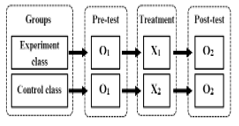
This study aims to analyze the effect of Phenomenon-Based Experiential Learning integrated with Formative Assessment on improving students’ scientific literacy in the topic of static fluids. The research employed a quasi-experimental method with a control group Pre-test–Post-test design, involving 71 eleventh-grade students from one of the Islamic Senior High Schools (MAN) in Padangsidimpuan, Indonesia. The experimental class received instruction using the Phenomenon-Based Experiential Learning model accompanied by Formative Assessment, while the control class was taught through conventional learning. Data were collected using eight essay questions covering the topics of hydrostatic pressure, Pascal’s law, and Archimedes’ principle. The findings revealed a significant difference between the two classes, with an N-gain score of 0.66 (medium category) in the experimental class and 0.29 (low category) in the control class. The analysis of each scientific literacy indicator also showed that the Explain Phenomena Scientifically (EPS) and Interpret Data and Evidence Scientifically (IDES) indicators achieved high improvement categories, while the Evaluate and Design Scientific Enquiry (EDSE) indicator increased within the medium category. These results indicate that Phenomenon-Based Experiential Learning integrated with Formative Assessment is effective in enhancing students’ scientific literacy skills.
References
Downloads
Published
Issue
Section
License
Copyright (c) 2026 Hidayat Pradananta, Lia Yuliati, Arif Hidayat

This work is licensed under a Creative Commons Attribution 4.0 International License.