Analisis Self-Efficacy Calon Guru Sekolah Dasar melalui Kegiatan Microteaching
DOI:
https://doi.org/10.24114/hesqb493Abstract
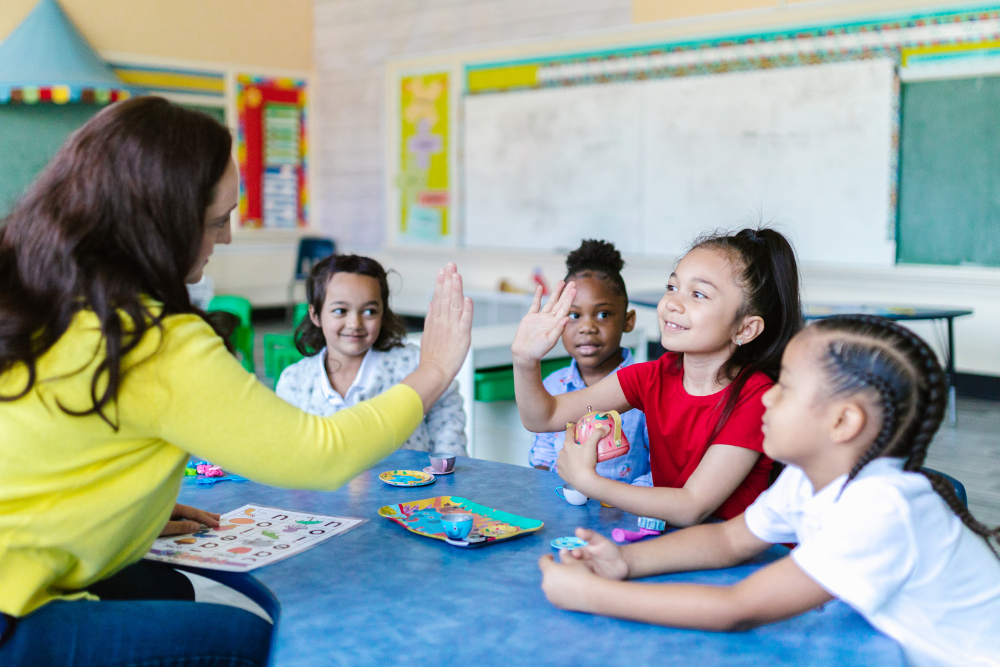
This study aimed to analyze the self-efficacy of prospective elementary school teachers through microteaching activities. The study employed a descriptive quantitative approach involving 40 students of the Elementary School Teacher Education Program (PGSD), class of 2023, as research participants. Data were collected through a closed-ended questionnaire and analyzed using descriptive statistical techniques in the form of percentages.
The findings revealed that microteaching activities contributed positively to the improvement of students' self-efficacy. This was indicated by students' confidence in developing lesson plans (62.5%), speaking in front of the class (67.5%), utilizing learning media (67.5%), and conducting learning evaluations (72.5%). In addition, repeated teaching practice and constructive feedback from lecturers and peers helped students enhance their confidence and teaching readiness.
These findings indicate that microteaching serves as an effective learning strategy for strengthening the self-efficacy of prospective elementary school teachers and preparing them for real classroom teaching situations.
References
Bandura, A. (1977). Self-efficacy: toward a unifying theory of behavioral change. Psychological Review, 84(2), 191.
Cahya, S. B., & Rakhmawati, D. Y. (2025). Pengaruh Self-Regulated Learning Dan Fasilitas Belajar Terhadap Hasil Belajar Mata Kuliah Keterampilan Mengajar Dan Microteaching Dalam Pembelajaran Daring. Jurnal Edukasi, 11(2), 2598–4187.
Ismiatun, I., & Sukirman. (2017). Pengaruh Minat Menjadi Guru, Persepsi Profesi Guru, dan Efikasi Diri Terhadap Kesiapan Mahasiswa Menjadi Guru. Economic Education Analysis Journal, 3(1), 1–15. http://journal.unnes.ac.id/sju/index.php/eeaj
Leni Apriani, Joni Alpen, A. A. (2020). Tingkat percaya diri dan keterampilan micro teaching Level of self-confidence and micro teaching skills. Psikologi Pendidikan, 1(1), 25–32.
Lestari, N., Eveline, E., & Permatasari, R. (2022). Self-Efficacy Calon Guru Sekolah Dasar yang Berdomisili Asal dari Remote Area. Jurnal Pendidikan Dasar, 10(2), 280–284.
Levia, T. (2025). Self-Efficacy Sebagai Prediktor Kesiapan Mengajar Mahasiswa Pai Dalam Praktik Microteaching. Jurnal Sains Student Research, 3(3), 679–688. https://doi.org/10.61722/jssr.v3i3.4898
Liana, T. M. M., Silaban, P., & Siregar, J. K. (2025). Pengaruh Self Efficacy, Locus of Control dan Pengalaman Magang Terhadap Kesiapan Kerja Mahasiswa. Advances in Management & Financial Reporting, 3(3), 1073–1095. https://doi.org/10.60079/amfr.v3i3.635
Nomor, V., & Hal, J. (2024). Pengaruh Micro Teaching Terhadap Kesiapan Mengajar Mahasiswa Pendidikan Akuntansi dalam Program PLP di Universitas Muhammadiyah Sumatera Utara. Jurnal Inovasi Pembelajaran Dan Pendidikan Islam, 2(X), 39–47. https://doi.org/10.30596/jippi.v2i1.54
Nugroho, A., Haryono, S., & Fitria, L. (2022). Analisis Faktor-Faktor Yang Mempengaruhi Minat Menjadi Guru Pada Mahasiswa Prodi Pendidikan Ekonomi. Jurnal Pendidikan Dan Pembelajaran Khatulistiwa (JPPK), 11(3), 287–289.
Rifka Alkhilyatul Ma’rifat, I Made Suraharta, I. I. J. (2024a). No Title 済無No Title No Title No Title (Vol. 2).
Rifka Alkhilyatul Ma’rifat, I Made Suraharta, I. I. J. (2024b). No Title 済無No Title No Title No Title. 2, 306–312.
Sari, N., Martono, T., & Wahyuni, S. (2017a). Pengaruh pembelajaran micro teaching dan program pengalaman lapangan (PPL) terhadap minat menjadi guru pada mahasiswa. BISE: Jurnal Pendidikan Bisnis Dan Ekonomi, 3(2).
Sari, N., Martono, T., & Wahyuni, S. (2017b). Pengaruh Pembelajaran Microteaching dan Program Pengalaman Lapangan (PPL) Terhadap Minat Menjadi Guru Mahasiswa Pendidikan Ekonomi FKIP UNS Tahun 2017. 4, 1–14.
Ulum, M., Riyanto, Y., & Setyowati, S. (2024). Self Efficacy Guru Sebagai Kunci Keberhasilan Pengajaran [Teacher Self-Efficacy as the Key to Successful Teaching]. Jurnal Administrasi Pendidikan Islam, 06(02), 212–229.
Watermarking, A., Transform, D. W., Menggunakan, H., Algoritma, O., Vera, G., Sulistyawan, N., Karina, Y., Budiman, G., Telekomunikasi, T., Telkom, U., Telekomunikasi, J., Barat, J., Email, I., Internet, P., Transform, D. W., Genetika, A., Watermarking, A., Cropping, T. S., Zhang, X., … Xiang, S. (2017). 3) 1),2),3 ). 4(score 149), 1–6.
Widodo, A. nur A., Ardani, A., & Aristiyo, D. N. (2021). Pengaruh Self Efficacy Dan Prestasi Microteaching Berbantu Zoom Meeting Terhadap Kemampuan Mengajar Matematika. AKSIOMA: Jurnal Program Studi Pendidikan Matematika, 10(2), 1088. https://doi.org/10.24127/ajpm.v10i2.3643
Downloads
Published
Issue
Section
License
Copyright (c) 2026 Anne Alfine Nainggolan, Enisa Simamora, Juliana Simanjuntak, Yohanna Angelia, Nurmayani Nurmayani

This work is licensed under a Creative Commons Attribution-ShareAlike 4.0 International License.
Authors who publish with this journal agree to the following terms: (1) Authors retain copyright and grant the journal right of first publication with the work simultaneously licensed under a Creative Commons Attribution-ShareAlike 4.0 International License (CC-BY-SA) that allows others to share the work with an acknowledgment of the work's authorship and initial publication in this journal; (2) Authors are able to enter into separate, additional contractual arrangements for the non-exclusive distribution of the journal's published version of the work (e.g., post it to an institutional repository or publish it in a book), with an acknowledgment of its initial publication in this journal; (3) Authors are permitted and encouraged to post their work online (e.g., in institutional repositories or on their website), as it can lead to productive exchanges, as well greater citation of published work (See The Effect of Open Access).