Integrasi Pembelajaran Aktif, Kontekstual, Kolaboratif, dan Reflektif melalui Model AKSI pada Pembelajaran IPS Sekolah Dasar
DOI:
https://doi.org/10.24114/jmpsd.v4i1.77727Abstract
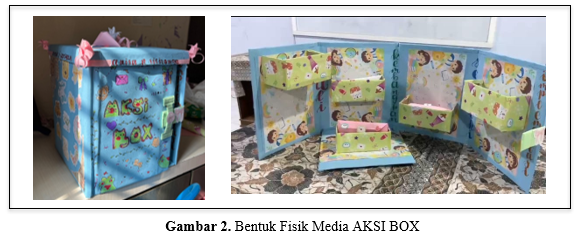
Social Studies learning in elementary schools requires learning activities that engage students in understanding concepts, investigating problems in their surroundings, collaborating with peers, and reflecting on their learning experiences. This article aims to describe the conceptual design of the AKSI learning model and its development into AKSI BOX as a practical learning medium for elementary Social Studies. The model was developed by synthesizing ideas from four selected studies concerning project-based learning, student-centered learning, the Know–Want to Know–Learned (KWL) strategy, and character development through Social Studies. The design integrates four principles: active, contextual, collaborative, and reflective learning. These principles are operationalized through five stages: Awali (activate prior knowledge), Kembangkan (develop questions and problems), Selidiki (investigate collaboratively), Implementasikan (produce a learning product), and Refleksi (reflect on the learning process). AKSI BOX is designed as a physical box containing activity cards and student worksheets that guide learners through these stages. The proposed design offers a structured way to connect Social Studies concepts with contextual classroom activities. However, the model and its supporting medium remain conceptual designs that require classroom implementation and empirical evaluation before their effectiveness can be established.
Downloads
References
Adzka, N., Aryaningrum, K., & Sunedi. (2026). Efektivitas metode pembelajaran Know to Know Learned (KWL) terhadap hasil belajar siswa pada pembelajaran IPS kelas IV SDN 03 Tanjung Batu. Pendas: Jurnal Ilmiah Pendidikan Dasar, 11(3). https://doi.org/10.23969/jp.v11i03.57635
Adi, D. P., Maryani, E., Ruhimat, M., & Komalasari, K. (2025). Living laboratory of regional potential for social studies learning to enhance students’ collaboration and communication. Harmoni Sosial: Jurnal Pendidikan IPS, 12(2). https://doi.org/10.21831/hsjpi.v12i2.89814
Apriana, W., Satria, T. F., & Rossa, R. (2025). Penerapan model Student Centered Learning pada pembelajaran IPS di sekolah dasar (sebuah kajian literatur). Pendas: Jurnal Ilmiah Pendidikan Dasar, 10(1). https://doi.org/10.23969/jp.v10i01.21396
Darmawati, D. M., Arini, N. W., Yanti, P. G., Hidayati, D. W., & Amzat, I. H. (2024). Implementation of TPACK-based problem-based learning model on social studies learning outcomes of elementary school students. Harmoni Sosial: Jurnal Pendidikan IPS, 11(1), 1–11. https://doi.org/10.21831/hsjpi.v11i1.64659
Faiz, N. F., & Supriyadi. (2026). Contextual ecological collage projects cultivate mutual cooperation in elementary education. Indonesian Journal of Education Methods Development, 21(2). https://doi.org/10.21070/ijemd.v21i2.1104
Habibah, R. I., Nuraini, A., & Wahyuningsih, Y. (2025). Systematic literature review dengan metode PRISMA: Peran pembelajaran IPS dalam mengembangkan karakter siswa. Didaktik: Jurnal Ilmiah PGSD FKIP Universitas Mandiri, 11(4), 264–275. https://doi.org/10.36989/didaktik.v11i04.8868
Hobaidillah. (2026). Penerapan model Project-Based Learning untuk meningkatkan kemampuan kolaborasi murid pada mata pelajaran IPAS. Jurnal Pendidikan Profesi Guru, 7(2). https://doi.org/10.22219/jppg.v7i2.46562
Jannah, S. R., Antoh, A. E., Purwandini, S. A., Istiqomah, M. R., Gunansyah, G., & Nafisah, D. (2026). The effectiveness of group-based learning in improving elementary students’ social studies learning outcomes and cooperative attitudes. Harmoni Sosial: Jurnal Pendidikan IPS, 13(2), 314–325. https://doi.org/10.21831/hsjpi.v13i2.69587
Kaffah, L. S., Haryono, & Utanto, Y. (2023). The effectiveness of the problem-based learning model assisted by stop-motion animation videos in improving the critical thinking abilities of elementary school students. Harmoni Sosial: Jurnal Pendidikan IPS, 10(2), 143–152. https://doi.org/10.21831/hsjpi.v10i2.66305
Kartini, A., Hairida, Nugroho, I. A., Wibowo, S. E., & Haliem, T. D. (2026). Literature review: The effect of local wisdom-based digital learning media on elementary school students’ critical thinking skills. Jurnal Prima Edukasia, 14(3). https://doi.org/10.21831/jpe.v14i3.101121
Mauliah, R., Sumarno, & Gusnardi. (2026). Effects of project-based learning supported by articulate storyline on students’ higher-order thinking skills in junior high school social studies. Harmoni Sosial: Jurnal Pendidikan IPS, 13(2), 302–313. https://doi.org/10.21831/hsjpi.v13i2.93602
Mangantjo, D., Firmansyah, A., Muchdar, Pettalolo, N., Mas’adi, & Wilade, S. (2026). Problem-based learning and critical thinking in elementary science and social studies: Evidence from a classroom action research study in Indonesia. Journal of Innovation and Research in Primary Education, 5(2), 3280–3292. https://doi.org/10.56916/jirpe.v5i2.3741
Mukhlisa, N., Sapri, N. H., & Krismanto, W. (2026). Instructional worksheet development based on contextual learning as assessment for learning to support numeracy skills in elementary schools. International Journal of Educational Practice and Policy, 4(2). https://doi.org/10.66314/ijepp.v4i2.434
Ningsiha, T. Z., Amana, A., Nasrullohb, A., Ofianto, O., Erniwati, E., & Firza, F. (2025). Enhancing communication and collaboration skills through discovery, cooperative and problem-based learning models in Social Studies education. Cogent Education, 12(1). https://doi.org/10.1080/2331186X.2025.2500110
Nurbayanti, R., Ismail, M., Somantri, M., Nurdiansyah, N., & Nurbayan, Y. (2025). Efektivitas model pembelajaran berbasis proyek dalam peningkatan berpikir kreatif siswa pada pembelajaran IPS sekolah dasar. Jurnal Didaktika Pendidikan Dasar, 9(3), 977–998. https://doi.org/10.26811/didaktika.v9i3.1969
Nugroho, F. A., Wijayati, I. W., Marsini, & Wati, U. A. (2026). Project-based learning based on collaborative reflection (PJBL-CR) as a learning innovation in Pancasila Education: A qualitative study of fifth-grade elementary school students. Information Technology Education Journal, 5(3), 179–195. https://doi.org/10.59562/intec.v5i3.12834
Pangestu, K., Malagola, Y., Robbaniyah, I., & Rahajeng, D. (2024). The influence of project-based learning on learning outcomes, creativity and student motivation in science learning at elementary schools. Jurnal Prima Edukasia, 12(2), 194–203. https://doi.org/10.21831/jpe.v12i2.63208
Rizal, M. S., Murtadho, N., Hanafi, Y., Ananda, R., & Mufarizuddin. (2025). The effectiveness of project-based learning in enhancing social competence among elementary school students. Journal of Integrated Elementary Education, 5(2), 269–285. https://doi.org/10.21580/jieed.v5i2.28047
Rukmi, D. A., Nisa, A. F., & Zulfiati, H. M. (2025). Innovation of a project module based on the Ajak Temani Mandiri learning model integrated with local wisdom to improve the creative dimension of elementary school students. Jurnal Prima Edukasia, 13(1), 181–190. https://doi.org/10.21831/jpe.v13i1.78206
Saleha, S., Nadar, N., & Masnur, M. (2026). Developing a TPACK-based science module through project-based learning to enhance elementary students’ 4Cs skills. Jurnal Prima Edukasia, 14(1), 100–112. https://doi.org/10.21831/jpe.v14i1.89864
Saputra, A., Defriyadi, D., Anwar, A. S., & Cahyati, D. (2026). Collaborative learning in primary schools: A systematic review of development, strategies, and effectiveness. Jurnal Ilmu Pendidikan Dasar Indonesia, 5(2). https://doi.org/10.51574/judikdas.v5i2.5664
Satria, T. G., Sapriya, S., Sa’ud, U. S., Riyana, C., Hajani, T. J., & Erander, S. (2025). The influence of project-based learning model on learning outcome and student’s critical thinking. Jurnal Prima Edukasia, 13(1), 146–158. https://doi.org/10.21831/jpe.v13i1.72446
Suryani, L., Nugroho, I. A., Wibowo, S. E., & Haliem, T. D. (2025). ESD and critical thinking in science and social studies learning for Grade IV elementary school. Jurnal Prima Edukasia, 13(3), 469–482. https://doi.org/10.21831/jpe.v13i3.86222
Tianti, T., Komalasari, K., & Ratmaningsih, N. (2024). Implementation of project-based learning social studies in independent curriculum to reduce students’ social loafing. JIPSINDO, 11(2), 106–117. https://doi.org/10.21831/jipsindo.v11i2.70758
Widiani, N. K., & Rediani, N. N. (2026). Digital media-assisted project-based assessment for enhancing responsibility and collaboration in elementary social studies learning. Journal of Education Technology, 10(1), 121–129. https://doi.org/10.23887/jet.v10i01.113548
Downloads
Published
Issue
Section
License
Copyright (c) 2026 Sulastri Nababan, Agum Budianto, Eka Sesilia Br Tarigan, Keysia Laura Rizky, Hanisa Ummi Rahmadani

This work is licensed under a Creative Commons Attribution 4.0 International License.
Authors who publish with this journal agree to the following terms:
Authors retain copyright and grant the journal right of first publication with the work simultaneously licensed under a Creative Commons Attribution 4.0 International that allows others to share the work with an acknowledgement of the work's authorship and initial publication in this journal.
Authors are able to enter into separate, additional contractual arrangements for the non-exclusive distribution of the journal's published version of the work (e.g., post it to an institutional repository or publish it in a book), with an acknowledgement of its initial publication in this journal.
Authors are permitted and encouraged to post their work online (e.g., in institutional repositories or on their website) prior to and during the submission process, as it can lead to productive exchanges, as well as earlier and greater citation of published work.