
_(1).png)
.png)


.png)
.png)


.png)

.png)
1.jpg)

.png)

.png)




.png)
1.png)
Journal title Initials Frequency Print ISSN Online ISSN Editor-in-chief Publisher | Garnish (Jurnal Pendidikan Tata Boga) GNI 2 issues per year (Februari and Agustus) On going 2621-105X Erli Mutiara Universitas Negeri Medan |
Portal Jurnal Universitas Negeri Medan merupakan media resmi untuk publikasi karya ilmiah yang dikelola oleh berbagai unit akademik di lingkungan universitas. Seluruh jurnal yang tersedia dalam portal ini telah melewati proses tinjauan sejawat (peer-review) secara ketat guna menjamin mutu, keabsahan, dan orisinalitas setiap artikel yang dimuat. Portal ini mengadopsi kebijakan akses terbuka (open access) sebagai upaya untuk mendukung penyebaran ilmu pengetahuan secara luas, inklusif, dan bertanggung jawab, sekaligus mempermudah akses bagi peneliti, dosen, mahasiswa, serta masyarakat umum terhadap hasil-hasil riset terbaru.
Jurnal-jurnal yang dipublikasikan mencakup berbagai bidang keilmuan, seperti pendidikan, ilmu pengetahuan alam, teknologi, ekonomi, ilmu sosial dan humaniora dan sebagainya. Masing-masing jurnal memiliki fokus dan cakupan kajian yang spesifik, yang meliputi laporan hasil penelitian, studi teoritis, tinjauan literatur, maupun gagasan inovatif dalam bidang keilmuannya.
##context.contexts##
-
ABDITERA: Jurnal Pengabdian Teknologi Terapan
ABDITERA: Jurnal Pengabdian Teknologi Terapan merupakan jurnal yang dikelola oleh Jurusan Pendidikan Teknik Bangunan Universitas Negeri Medan. ABDITERA memuat dan menerbitkan karya-karya ilmiah berbasis pengabdian kepada masyarakat dalam bidang teknologi terapan dan bidang-bidang lain yang relevan. Jurnal ini terbuka bagi para peneliti, dosen, dan profesional lain. Artikel yang diterbitkan akan dievaluasi oleh tim redaksi dan reviewer yang kompeten pada bidangnya masing-masing. Tim redaksi berhak melakukan perubahan pada tulisan artikel demi keseragaman format, tanpa mengubah maksud di dalamnya. ABDITERA terbit 2 kali setahun, yaitu pada bulan Mei dan November. Silahkan akses Template Artikel pada link berikut: https://bit.ly/ArticleTemplateABDITERA
-
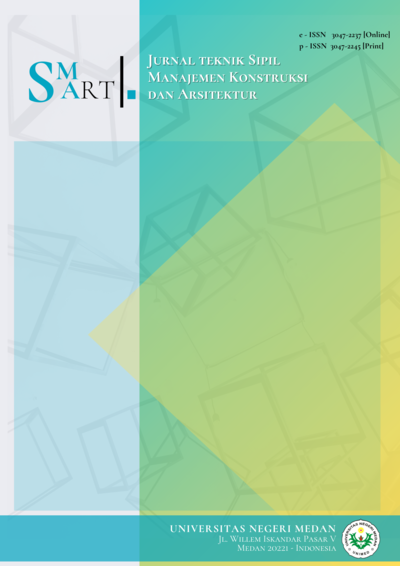
SMART: Jurnal Teknik Sipil, Manajemen Konstruksi, dan Arsitektur
SMART: Jurnal Teknik Sipil, Manajemen Konstruksi, dan Arsitektur merupakan jurnal yang dikelola oleh Jurusan Pendidikan Teknik Bangunan Universitas Negeri Medan. SMART memuat dan menerbitkan karya-karya ilmiah berbasis penelitian dalam bidang Teknik Sipil, Manajemen Konstruksi, Arsitektur, dan bidang-bidang lain yang relevan. Jurnal ini terbuka bagi para peneliti, dosen dan profesional lain. Artikel yang diterbitkan akan dievaluasi oleh tim redaksi dan reviewer yang kompeten pada bidangnya masing-masing. Tim redaksi berhak melakukan perubahan pada tulisan artikel demi keseragaman format, tanpa mengubah maksud di dalamnya. SMART terbit 2 kali setahun, yaitu pada bulan Juni dan Desember. Silahkan akses Template Artikel pada link berikut: https://bit.ly/ArticleTemplateSMART -
Jurnal Merah Putih Sekolah Dasar
JURNAL MERAH PUTIH SEKOLAH DASAR
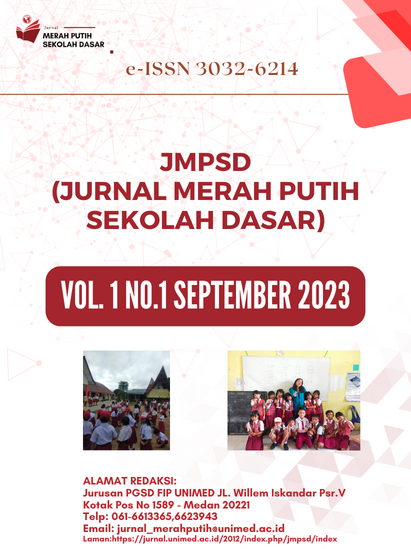
Journal Title : Jurnal Merah Putih Sekolah Dasar, The Indonesian Journal of Primary School Education Initials : JMPSD Language : Indonesia and English e-ISSN : 3032-6214 Citation Analysis : Google Scholar | SINTA | Garuda | Dimensions | Crossref Frequency : 6 Issue per year (Sept, Nov, Jan, March, May, dan July) Publisher : Medan State UniversityDOI : prefix 10.24114/jmpsd Editor In Chief : Waliyul Maulana Siregar, S.Pd., M.Pd. Author Fee : IDR. 150,000. Update. 01 Sept 2024
Article Process 2 Days 7 Days 90% Submission to 1st Decision Peer-review Process Acceptance Rate of the total submissions
Welcome to the Open Journal System of Jurnal Merah Putih: Journal of Elementary School Education (JMPSD).
We are pleased to announce that JMPSD is a peer-reviewed academic journal that publishes scholarly articles through a fair and rigorous quality control process. We recognize that authors require a reliable platform for disseminating their research, while readers expect trustworthy and credible academic information.JMPSD is a scientific journal published by Medan State University and managed by the PGSD Unimed Study Program. It contains articles related to research results, education, learning, science, culture, technology, language, arts, social issues, and community service. JMPSD is published six times a year: in September, November, January, March, May, and July.
The editorial board welcomes manuscripts in the field of Elementary Education and Basic Education Studies.
Jurnal Merah Putih Sekolah Dasar (JMPSD) supports the achievement of the Sustainable Development Goals (SDGs), particularly SDG 4 (Quality Education). The journal publishes research articles that contribute to improving the quality of elementary education through innovative teaching and learning practices, inclusive education, teacher professional development, and sustainable educational practices.
Important notice before submission:
All submitted manuscripts must be free from plagiarism. JMPSD upholds the highest standards of academic integrity and does not tolerate any form of ethical misconduct or publication malpractice. -
Jurnal Inovasi Sekolah Dasar
JURNAL INOVASI SEKOLAH DASAR
Journal Title : Jurnal Inovasi Sekolah Dasar, The Indonesian Journal of Primary School Education Initials : JISD Language : Indonesia and English e-ISSN : 3046-9198 ISSN : - Frequency : 6 Issue per year (Dec, Feb, Apr, June, August, dan Oct) Publisher : Medan State UniversityDOI : prefix 10.24114/jisd Editor In Chief : Dr. Winara, S.Si., M.Pd. Author Fee : IDR. 150,000. Update. 01 Sept 2024
Article Process 2 Days 1 Weeks 90% Submission to 1st Decision Peer-review Process Acceptance Rate of the total submissions
Welcome to the Open Journal System of Jurnal Inovasi: Journal of Elementary School Inovation (JISD).
We are pleased to announce that JISD is a peer-reviewed academic journal that publishes scholarly articles through a fair and rigorous quality control process. We recognize that authors require a reliable platform for disseminating their research, while readers expect trustworthy and credible academic information.JISD is a scientific journal published by Medan State University and managed by the PGSD Unimed Study Program. It contains articles related to research results, education, learning, science, culture, technology, language, arts, social issues, and community service. JISD is published six times a year: in Desember, February, April, June, Agustus, and October.
The editorial board welcomes manuscripts in the field of Elementary Education and Basic Education Studies.
Jurnal Inovasi Sekolah Dasar (JISD) supports the achievement of the Sustainable Development Goals (SDGs), particularly SDG 4 (Quality Education). The journal publishes research articles that contribute to improving the quality of elementary education through innovative teaching and learning practices, inclusive education, teacher professional development, and sustainable educational practices.
Beyond SDG 4 (Quality Education), JISD contributes to the achievement of SDG 3 (Good Health and Well-being), SDG 5 (Gender Equality), SDG 10 (Reduced Inequalities), SDG 11 (Sustainable Cities and Communities), and SDG 13 (Climate Action) through research and practices in elementary education.
Important notice before submission:
All submitted manuscripts must be free from plagiarism. JISD upholds the highest standards of academic integrity and does not tolerate any form of ethical misconduct or publication malpractice. -
Journal of Indonesian Active in Sports
Journal of Indonesian Active in Sports (JIAS) adalah jurnal peer-review yang menerbitkan artikel-artikel berkualitas tinggi dan berdampak di seluruh dunia tentang ilmu pengetahuan, pembinaan dan pendidikan di berbagai bidang olahraga dan aktivitas fisik: kesehatan olahraga, fisiologi olahraga, psikologi olahraga, nutrisi, pedagogi, biomekanika olahraga, rehabilitasi atau aktivitas fisik yang diadaptasikan, dan topik-topik lain yang berkaitan dengan olahraga. Jurnal ini memfasilitasi transfer pengetahuan dan teknologi antara penelitian dan praktik dalam aktivitas fisik dan olahraga.
Dalam situasi apa pun, jurnal ini tidak menjamin publikasi sebelum dewan redaksi membuat keputusan akhir. Journal of Indonesian Active in Sports (JIAS) terbit pada bulan Maret, Juli, dan November setiap tahunnya.
-

Jurnal Jendela Ilmu Olahraga (J2IO)
.jpg)
Jurnal Jendela Ilmu Olahraga (J2IO) is a peer-reviewed journal that publishes high-quality, impactful scientific articles worldwide, coaching and education in various fields of sport and physical activity: sports health, sport physiology, sport psychology, nutrition, pedagogics, sports biomechanics, rehabilitation or adapted physical activity, and other sports related topics. This journal facilitates the transfer of knowledge and technology between research and practice in physical activity and athletics
All manuscripts submitted to Jurnal Jendela Ilmu Olahraga (J2IO) subject to peer review by national experts, and should;
1. Clear and easy to understand, precise and concise;
2. Bring new, original, interesting and valid information and guide future research;
3. Has not been previously published elsewhere and is not under consideration in another journal;
4. According to the journal instructions. Manuscripts that fail to comply with these rules may be returned to the author without review.
Under no circumstances should a journal warrant publication before the editorial board makes a final decision. Jurnal Jendela Ilmu Olahraga (J2IO) is published in November and May every year.


-
Journal Education for All: Media Informasi Ilmiah Bidang Pendidikan Luar Sekolah

Journal title Journal Education For All: Media Informasi Ilmiah Bidang Pendidikan Luar Sekolah Initials JEFA Abbreviation JEFA Frequency 2 issues per year (June & December) DOI Prefix 10.24114 ISSN 2303-1743 (print) | 3026-1406 (online) Editor-in-Chief Mahfuzi Irwan, S.Pd., M.Pd. Journal Education For All: Media Informasi Ilmiah Bidang Pendidikan Luar Sekolah published by the non-formal education/community education study program, Universitas Negeri Medan Since 2015 in print version, but in 2023 it was published online and managed in collaboration with the Indonesian Community Education Academic Association (HAPENMASI) Himpunan Akademisi Pendidikan Masyarakat Indonesia (HAPENMASI) with number 010/VI/HAPPENMASI/2022 and Asosiasi Pendidikan Masyarakat Indonesia (APENMASI) with number 018/VI/APENMASI/2022.
Journal Education For All: Media Informasi Ilmiah Bidang Pendidikan Luar Sekolah encompasses research articles, original research report, reviews, and scientific commentaries in community education, including Education for Human Resources Development, Adult Education, Community Empowerment, Social Entrepreanurship, and Family Education by means of nonformal and informal education.
-
JURNAL GEOGRAFI
Jurnal Geografi (E-ISSN: 2549-7057/P-ISSN: 2085-8167) is a scientific communication medium in Geography and Geography Education and other related fields. Jurnal Geografi aims to develop relevant concepts, theoretical studies, and actual issues and to encourage broader global and regional analysis and innovative thinking about sustainability globally and regionally.
Jurnal Geografi is committed to professional article manuscripts. Therefore, it welcomes high quality, original article manuscripts with the following themes: Education Geography, Social Geography, Tourism Geography, Political Geography, Population Geography, Soil Geography, Environmental Science, Hydrology, Oceanography, Meteorology, Climatology, Geomorphology, Geology, Biogeography, Geographic Information Systems, Remote Sensing, Cartography, Regional Planning and Development, Climate Change.
-
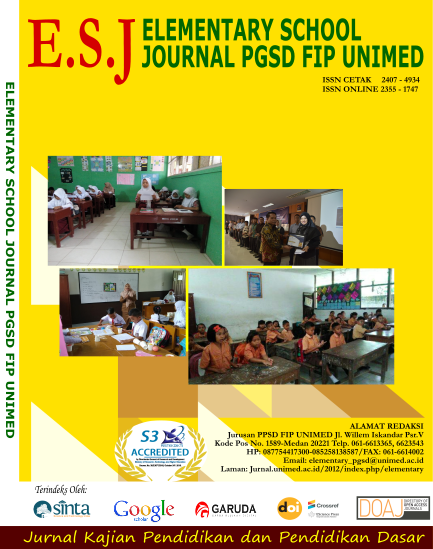
ELEMENTARY SCHOOL JOURNAL PGSD FIP UNIMED
Journal title Elementary School Journal PGSD FIP UNIMED (e-journal) Initials ESJ Abbreviation Elementary School Journal Frequency 4 issues per year (March, June, September & December) DOI Prefix 10.24114 by 

ISSN 2407-4934 (print) | 2355-1747 (online) Editor-in-Chief Lala Jelita Ananda, S.Pd., M.Pd. Publisher Department of Elementary School Teacher Education, Faculty of Education, Universitas Negeri Medan Indexing & Abstracting Sinta, Google Scholar, DOAJ, Crossref, Garuda, OneSearch, BASE, Dimensions, Cite Factor, Harvard Library
Elementary School Journal PGSD FIP UNIMED is published by Department Of Elementary School Teacher Education, Faculty of Education, Universitas Negeri Medan. Articles written for journals include the results of research on education, learning, and public services in preschool and elementary school. Elementary School Journal PGSD FIP UNIMED are published four times a year in March, June, September and December. Elementary School Journal PGSD FIP UNIMED published has through a review process by the reviewer.
EDITORIAL ADDRESS:Department Of Elementary School Journal Teacher Education, Faculty of Education, Universitas Negeri MedanWilliam Iskandar Street Pasar V Medan Estate
Kode Pos : No. 1589-Medan 20221
Phone: 081269530105
Email: elementary_pgsd@unimed.ac.id






.png)


.png)
-
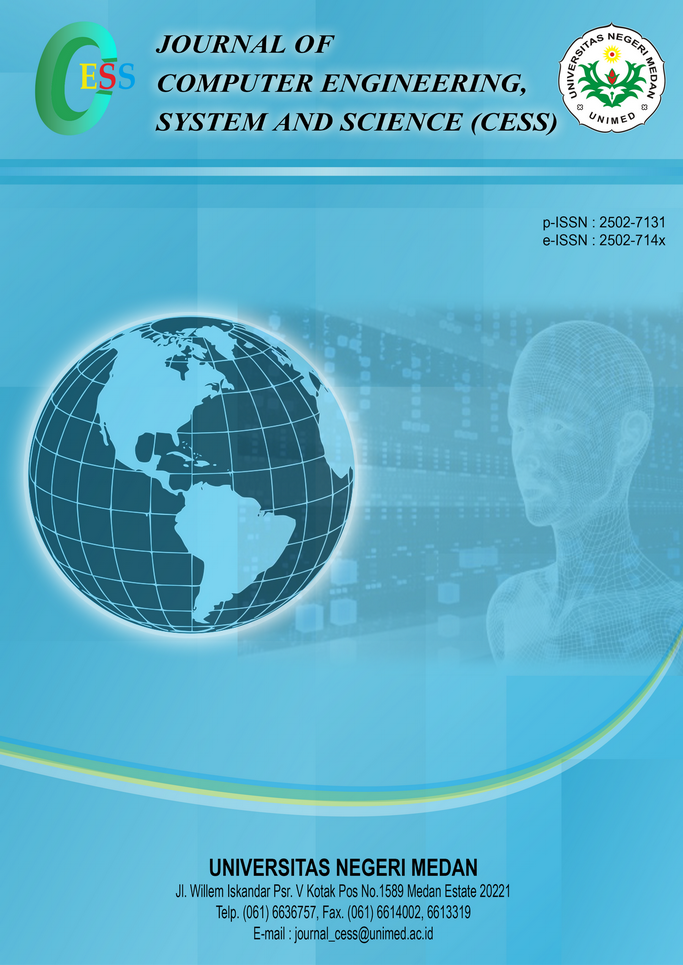
CESS (Journal of Computer Engineering, System and Science)

CESS (Journal of Computer Engineering, System and Science)is an open access media in publishing scientific articles that contain the results of research in information technology and computers. Paper that enters this journal will be checked for plagiarism and peer-rewiew first to maintain its quality. This journal is published by UPT. TIK Universitas Negeri Medan published 2 times a year in January and July. The existence of this journal is expected to develop research and make a real contribution in improving research resources in the field of information technology and computers.
CESS (Journal of Computer Engineering, System and Science) accredited SINTA 4 through the Decree of the Director General of Strengthening Research and Development of the Ministry of Research, Technology and Higher Education Number 105/E/KPT/2022, dated April 07, 2022 concerning the results of the Electronic Scientific Periodic Accreditation Period I Year 2022. The accreditation certificate can be seen HERE.
Journal title : CESS (Journal of Computer Engineering, System and Science) ISSN : ISSN : 2502-7131 (Cetak) | ISSN : 2502-714X (Elektronik) Frequency : Two times a year in January and July DOI : https://doi.org/10.24114/cess (Prefix - by Crossref) OAI : https://jurnal.unimed.ac.id/2012/index.php/cess/oai Editor in chief : Mohamad Ihwani, S.Si.,M.Kom Publisher : UPT. Teknologi Informasi dan Komunikasi (TIK) UNIMED. Journal indexed by:








-
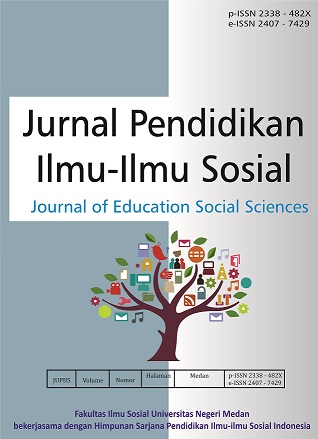
JUPIIS: JURNAL PENDIDIKAN ILMU-ILMU SOSIAL
ISSN 2407-7429 (Online) || ISSN 2085-482X (Cetak)
JUPIIS is a Journal of Social Science Education for information and communication resources for academics, and observers of Educational Social Sciences, Social Sciences, Political Sciences, Methodology of Social Sciences and Social Work. The published paper is the result of research, reflection, and actual critical study with respect to the themes of governmental, social, and political science. All papers are blind peer-reviewed by at reviewer. The scope of JUPIIS is is a Journal of Social Science Education. Published twice a year (June and December).



.png)


.png)
-
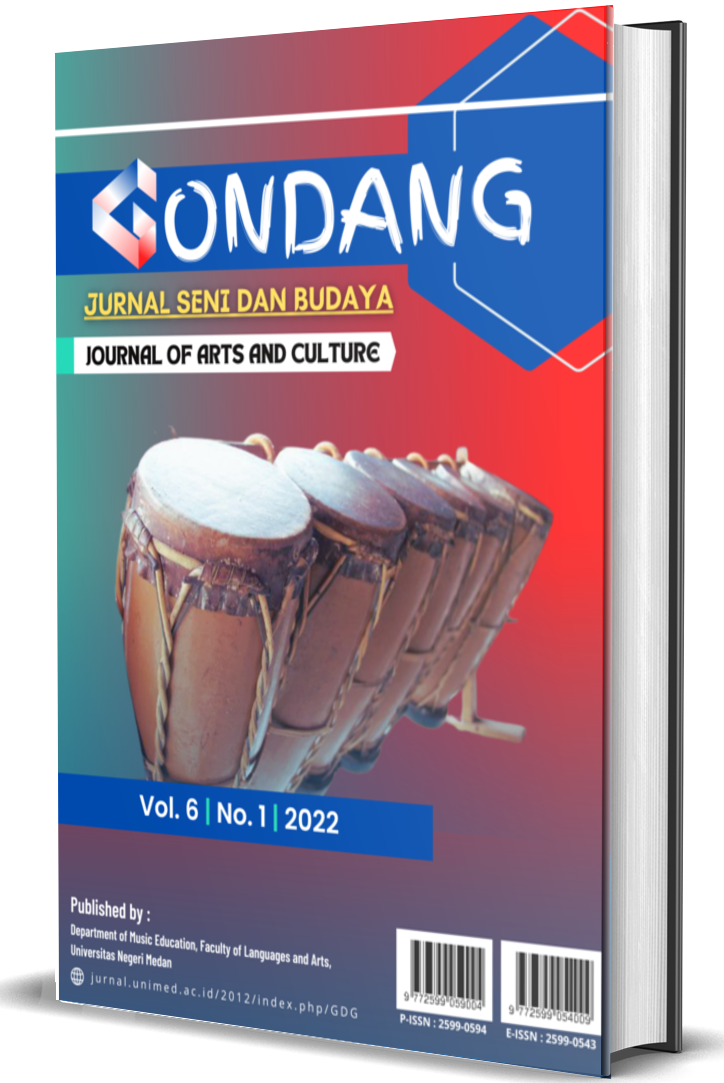
Gondang: Jurnal Seni dan Budaya
Journal title : Gondang: Jurnal Seni dan Budaya Initials : GSB Abbreviation : Gondang Frequency : 2 issues per year (June & December) DOI : Prefix 10.24114 by 
ISSN : 2599-0594 (print) | 2599-0543 (online) In Association : AP2SENI (Asosiasi Prodi Pendidikan Sendratasik, Drama, Tari, dan Musik Indonesia) Editor-in-Chief Managing Editor Publisher : Department of Music Education, Faculty of Languages and Arts, Universitas Negeri Medan Indexing & Abstracting : Sinta | Advances Science Index (ASI) | DOAJ | EBSCO | Copernicus | Dimensions | Garuda | Oxford Library | Harvard Library | Scilit | Google Scholar | Neliti | CiteFactor | Base | ZDB
Gondang is a Journal of Art and Cultural for information and communication resources for academics, and observers of Art and Culture, Performing Arts, Educational Arts, Methodology of Art and Cultural. The published paper is the result of research, reflection, and actual critical study with respect to the themes of Art and Culture. All papers are peer-reviewed by at least two referees. The scope of Gondang is the Science of Art and Culture. Published twice a year (June and December) and first published for print edition in June 2017.
Gondang: Jurnal Seni dan Budaya has been accredited Sinta 3 by the Indonesian Ministry of Research and Technology decision Number 0173/C3/DT.05.00/2025 which is valid for five years since on Volume 8 Number 1 (June, 2024) until Volume 12 Number 2 (December, 2028).
-
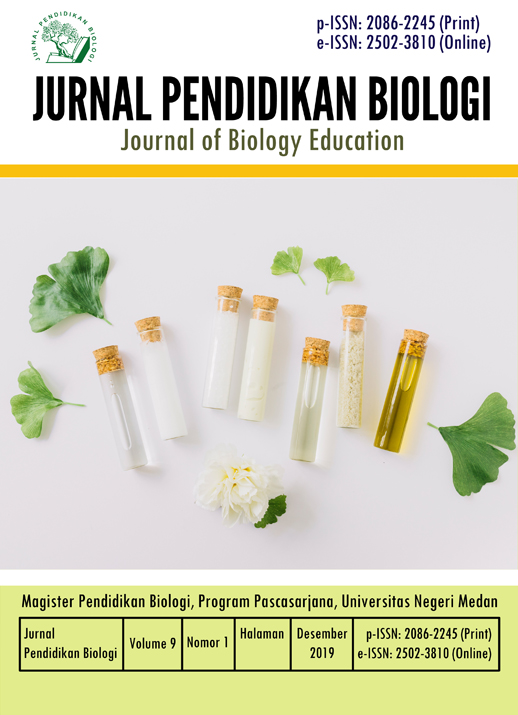
Jurnal Pendidikan Biologi
ISSN Print 2086-2245 | ISSN Online 2502-3810
Jurnal Pendidikan Biologi is a national electronic journal which is an open access and peer-reviewed journal that contains original research articles related to biology education research. This journal is managed by the Biology Education Study Program, Postgraduate Program, Universitas Negeri Medan. This journal is published three times a year in April, August, and December. This journal presents the results of research in the field of Biology Education. This journal has an ISSN Print on April 1, 2012 with the number pISSN 2086-2245 and ISSN Online on November 4, 2015 with the number eISSN 2502-3810 and determined by Decree No. 0005.25023810/JI.3.1/SK.ISSN/2016. Based on the online ISSN SK, the Biology Education Journal already has an Online ISSN starting with the Vol. 5, No. 2, April 2016.
This journal aims to bridge the gap between research and practice, providing information, ideas and opinions, in addition to a critical analysis of progress in biological education research. Through the scope of policy and curriculum developments, the latest research results and their application in the teaching, learning and assessment of biology in the future. Particular emphasis is placed on research relevant to educational practice, guided by the realities of education in systems, schools, colleges and universities.
............................................................................................................................................................................................................................................................................................................................
Indexing




 ............................................................................................................................................................................................................................................................................................................................
Copyright Changes
In January 2021, Jurnal Pendidikan Biologi change the copyright of the Journal delegated to the author. The changes are effective from Vol. 10 No. 2 of 2021.
............................................................................................................................................................................................................................................................................................................................ -
Tunas Geografi
Tunas Geografi Journal is a forum for every historian, practitioner, and geographer to publish their research results. This journal aims to be the main platform for the development and dissemination of geographical science and to make significant contributions to the development of geographical science and practice at the local, national, and global levels. The main focus of this journal is geography learning, social and human geography, regional development, geographical information systems, remote sensing, disaster and mitigation, geology and geomorphology, and oceanography and coastal geography.
This journal is intended for teachers, lecturers, graduates, and practitioners in geography. As a scientific communication medium, this magazine provides a means of publication to develop concepts, theoretical studies, and current issues relevant to the field of Geography. This journal also focuses on the development and application of geographical science in facing global challenges, including climate change, sustainable development, and the use of technology in geographical research and practice. We invite research contributions that can provide new insights and innovative solutions for society, the world of education, and public policy related to contemporary geographical issues.
With a scope that covers various aspects of geography, this journal is expected to enrich scientific studies and support the development of science at the national and international levels. It is published twice a year, namely in July and December, and is used as a publication material for geography education, geography science, or other related fields.
-
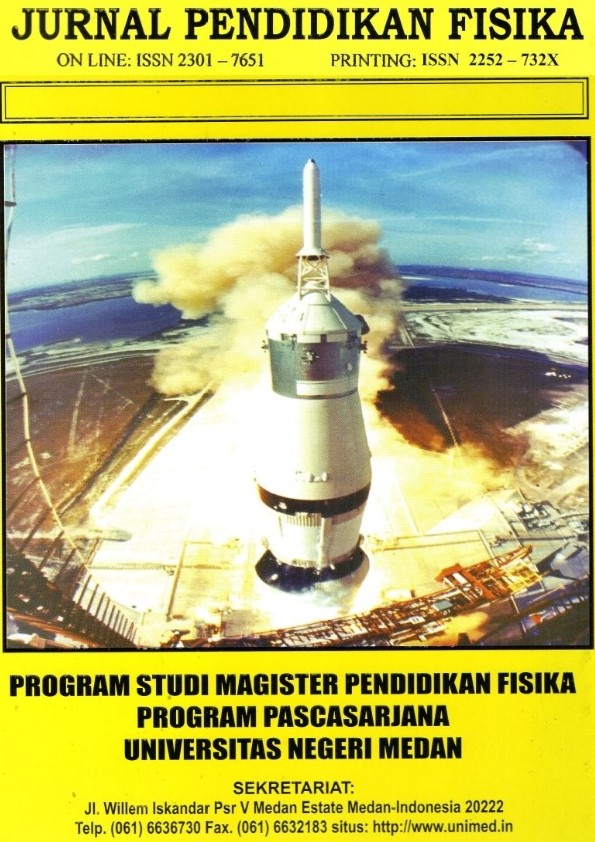
Jurnal Pendidikan Fisika
Journal title Jurnal Pendidikan Fisika Initials JPF Language English (preferred), Indonesia Frequency 2 issues per year (June, December) DOI prefix 10.24114 by 
Print ISSN 2252-732X Online ISSN 2301-7651 Editor-in-chief Prof. Dr. Sahyar, MS.,MM Publisher The Magister of Physics Education Department, Universitas Negeri Medan Citation Analysis Sinta | Google Scholar | Dimensions | Garuda | MIAR Pendidikan Fisika aims to enhance the development of sciences research in the field of physics education both for young researchers, independent researcher, as well as supporting research physics teachers. This is done in order to improve the quality of physics education in Indonesia in order to grow towards the International. This journal is a journal that was developed by The Magister of Physics Education Departement in State University of Medan and collaboration with State University of Medan. This journal started since 2012, the first site in http://dikfispasca.org until 2013 and Jurnal Pendidikan Fisika were then transferred into http://jurnal.unimed.ac.id/2012/index.php/jpf. Prepix DOI journal has transferred from 10.22611 to 10.24114 starting from Vol 10 No 2 December 2021.
Jurnal Pendidikan Fisika has been ACCREDITED by Ministry of Education, Culture, Research and Technology of the Republic of Indonesia, SK No. 204/E/KTP/2022, December 12th, 2022.
-
JURNAL PENELITIAN BIDANG PENDIDIKAN
Jurnal ini dikelola oleh Lembaga Penelitian dan Pengabdian kepada Masyarakat (LPPM) Universitas Negeri Medan. Terbit 2 kali setahun pada bulan Maret dan September. Jurnal ini memuat hasil-hasil penelitian berupa hasil penelitian kebijakan, hasil penelitian pembelajaran, serta hasil penelitian tindakan kelas. Jurnal ini menerbitkan artikel asli tentang isu-isu terbaru dan tren yang terjadi secara Nasional dalam kurikulum, instruksi, pembelajaran, kebijakan, dan persiapan Peneliti dengan tujuan untuk memajukan pengetahuan tentang teori dan praktik pendidikan. Selain artikel asli, jurnal memiliki bagian khusus berikut: (1) Pembelajaran: terdiri dari studi penelitian teoritis dan empiris pada pembelajaran. Naskah yang menyelidiki pembelajaran dan perubahan dan pertumbuhannya dari berbagai sudut pandang, termasuk psikologis, sosial, kognitif, sosiohistorical, dan afektif. Studi yang meneliti hubungan belajar mengajar, pengetahuan dan praktik, peserta didik itu sendiri.; (2) Isu dan Tren: terutama terdiri dari esai analitis, interpretatif, atau persuasif tentang isu-isu pendidikan saat ini, sosial, atau filsafat dan tren yang relevan dengan pengajaran. Bagian khusus ini secara khusus berusaha untuk mempromosikan dialog-dialog yang diinformasikan mengenai isu-isu terkini dalam pendidikan.; (3) Penelitian Bidang Pendidikan: terdiri dari penelitian empiris dan / atau teoritis asli yang meneliti persiapan Peneliti, pekerjaan Peneliti, atau bagaimana kerja Peneliti dipengaruhi oleh konteks yang lebih luas. "Penelitian Bidang Pendidikan" mengacu pada pengembangan di seluruh kontinum karir pengajaran, dari pra-layanan, melalui induksi, ke tahap-tahap pengajaran profesional tingkat lanjut.
Jurnal Penelitian Bidang Pendidikan has been ACCREDITED by Ministry of Education, Culture, Research and Technology of the Republic of Indonesia, SK No. 79/E/KPT/2023, MAY 11th, 2023.
ISSN ONLINE: 2502-7182
SLOT GACOR: MPOSAKTI
-
Jurnal Pendidikan Kimia
Jurnal Pendidikan Kimia (JPKim)
ISSN: 2085-3653 (Print) | 2549-3116 (Online)
DOI Prefix: 10.24114 (CrossRef Member since 2016)Jurnal Pendidikan Kimia (JPKim) is a peer-reviewed open-access journal that publishes high-quality research articles, reviews, and short communications in the fields of Chemistry Education and Chemistry. Established in 2009, the journal is published three times annually (April, August, and December) by the Postgraduate Program of Universitas Negeri Medan, Indonesia.
Jurnal Pendidikan Kimia (JPKim) is committed to promoting scholarly research and innovation in chemical education and its applications in teaching and learning. The journal aims to provide a platform for academics, researchers, and practitioners to disseminate theoretical and empirical findings that contribute to the advancement of the discipline. Since December 2016 (Vol. 8 No. 3), all published articles have been assigned a Digital Object Identifier (DOI) through CrossRef. To uphold academic integrity, the journal implements a strict plagiarism screening policy using Turnitin, effective from Vol. 12 No. 3 (December 2020).
Jurnal Pendidikan Kimia (JPKim) has been accredited as a nationally recognized scientific journal by the Ministry of Education, Culture, Research, and Technology of the Republic of Indonesia, under Decree No. 204/E/KPT/2022, dated October 3, 2022. This accreditation, at the level of SINTA 2, is valid for five years, from Vol. 14 No. 1 (April 2022) through Vol. 18 No. 2 (August 2026). The journal is indexed in several national and international databases and strives toward broader visibility and global readership.
-
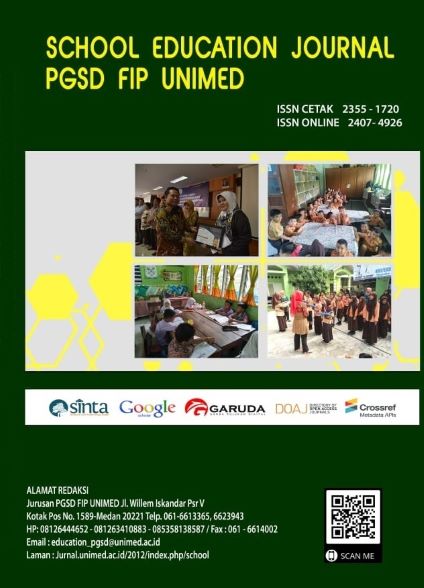
SCHOOL EDUCATION JOURNAL PGSD FIP UNIMED
Journal title School Education Journal PGSD FIP UNIMED Initials SEJ Abbreviation School Education Journal Frequency 4 issues per year (March, June, September & December) DOI Prefix 10.24114 by  Crossref
ISSN 2355-1720 (print) | 2407-4926 (online) Editor-in-Chief Elvi Mailani, S.Si., M.Pd. Publisher Department of PPSD, Faculty of Science Education, State University of Medan in collaboration with Himpunan Dosen PGSD Indonesia (HDPGSDI) Indexing & Abstracting Sinta | Google Scholar | Crossref | Garuda | Base | Dimensions | CiteFactor | Road | Princeton UL | Academia Edu | Harvard Library | WorldCat | Scispace | ResearcherLife | EBSCO | Scilit | NIH Library | Journal Stories
School Education Journal PGSD FIP UNIMED is managed by Department of PPSD FIP UNIMED. Articles written for journals include the results of research on education, learning, and public services. School Education Journal PGSD FIP UNIMED are published four times a year in March, June, September and December. School Education Journal PGSD FIP UNIMED published has through a review process by the reviewer.
-
JURNAL HANDAYANI PGSD FIP UNIMED
Jurnal Handayani PGSD FIP UNIMED contains articles related to the fields of education, learning, research and community service. This journal, abbreviated as Handayani JH, is managed by the Elementary School Teacher Education Study Program, State University of Medan. JH is published twice a year in June and December in print and electronic form published by State University of Medan in collaboration with the Indonesian Elementary School Teacher Education Lecturer Association. Jurnal Handayani PGSD FIP UNIMED agenda has played an important role for Elementary School Teacher Education Study Program, Faculty of Education, State University of Medan in encouraging harmonious educational innovations that can provide answers to various regional, national and global issues.
-
Journal of Physical Education, Health and Sports Recreation
Journal of Physical Education, Health and Sport Recreation (JPEHSR)
e-ISSN: 2987-8438
Frequency : 2 issues per year (June & December)
Editor in Chief : Saipul Ambri Damanik. S.Pd., M.Pd
ISSN: 2987-8438 (Online) | SK: 29878438/II.7.4/SK.ISSN/06/2023
Journal of Physical Education, Health and Sport Recreation (JPEHSR) dikelolah oleh program studi Pendidikan Jasmani Kesehatan dan Rekreasi adalah jurnal yang berfungsi menyediakan sarana publikasi berfokus pada hasil konseptual dan kebijakan di bidang pendidikan jasmani, kesehatan dan rekreasi, manajemen olahrga, pendidikan olahraga dan sebagai wadah untuk menuangkan hasil penelitian dan gagasan terkait. Jurnal JPEHSR terbit pada bulan Juni dan Desember setiap tahun.


-
Jurnal Kategori Seni: Seni Rupa

Jurnal Kategori Seni: Seni Rupa is an academic journal that focuses on the arts, especially fine arts and performing arts. This journal is managed by the Department of Fine Arts, Faculty of Language and Arts, Universitas Negeri Medan. With a commitment to become a platform that supports research and development in the art world, this journal contains various research results, final assignments, and final works relevant to fine and performing arts. The journal covers various aspects, including learning, assessment, analysis, and in-depth study in the field of fine and performing arts. We strive to present articles that are not only of high quality, but also make a significant contribution to the understanding and practice of art in society.
Frequency of Publication Jurnal Kategrori Seni: Seni Rupa is published periodically every six months, with two publication periods in one year, namely in the January-June period and the July-December period. Each issue is designed to feature a variety of topics and perspectives that reflect the dynamics and current developments in the art world. Seni Rupa not only serves as a publication platform, but also as a means to facilitate dialog and collaboration among researchers, artists, and educators in a joint effort to develop and enrich the art world. We invite all interested parties to participate and contribute to this journey, both through article submissions and by providing feedback and support for our journal.
Journal title Jurnal Kategori Seni: Seni Rupa Initials JKSSR Abbreviation SRP Frequency 2 issues per year (June & December) DOI Prefix 10.24114 by CrossreffISSN 1829-8230 (print) Editor-in-Chief Rinanda Purba, S.Kom., M.Sn.
Managing Editor Muhammad Sabri, S.Kom., M.Sn.
Publisher Department of Fine Arts Education, Faculty of Languages and Arts, Universitas Negeri Medan Indexing & Abstracting Garuda | Google Scholar
Seni Rupa is in the process of being indexed by:









Recommended Tools:


-
Anthropos: Jurnal Antropologi Sosial dan Budaya (Journal of Social and Cultural Anthropology)
ISSN 2460-4585 (Cetak) | ISSN 2460-4593 (Online)
Anthropos: Jurnal Antropologi Sosial dan Budaya(Journal of Social and Cultural Anthropology) is a Journal of Social and Cultural Anthropology for information and communication resources for academics, and observers of Social and Cultural Anthropology, Educational Social and Cultural Anthropology/Sociology, Methodology of Social and Cultural Anthropology/Sociology. The published paper is the result of research, reflection, and actual critical study with respect to the themes of Social and Cultural Anthropology/Sociology. All papers are blind peer-review. The scope of Anthropos is the Science of Social and Cultural Anthropology/Sociology. Published twice a year (Juli and January) and first published for print and online edition in July 2015
Anthropos: Jurnal Antropologi Sosial dan Budaya(Journal Of Social and Cultural Anthropology) is a journal for research and thought in the education and non-education of social sciences, is a best-partner national journal published twice a year in print and online by the Anthropology Education Program, Faculty of Social Sciences, University Negeri Medan, Indonesia. This statement explains the ethical behavior of all parties involved in publishing articles in ANTROPOS JOURNAL, including authors, editorial boards, best partners, and publishers. This statement is based on COPE's Best Practice.



-
Journal of Community Research and Service
Journal Title : Journal of Community Research and Service
ISSN : 2549-1849 (print) | 2549-3434 (online) DOI : 10.24114/jcrs by Chief Editor : Dr. Widya Andayani (Scopus ID: 57204177897) Managing Editor : Azhar Aziz Lubis (Scopus ID: 57218869797) Frequency : 2 issues per year (January & July) Publisher : State University of Medan Indexation : Google Scholar | Sinta| Garuda Email : jcrs.lpm@unimed.ac.id Journal of Community Research and Service (JCRS) is an international multidisciplinary and peer-reviewed journal published by The Center of Community Service of State University of Medan. JCRS is designed to publish research and case studies of university-community engagement initiatives, analyses of the policies, and reflective essays.




_1.png)
-
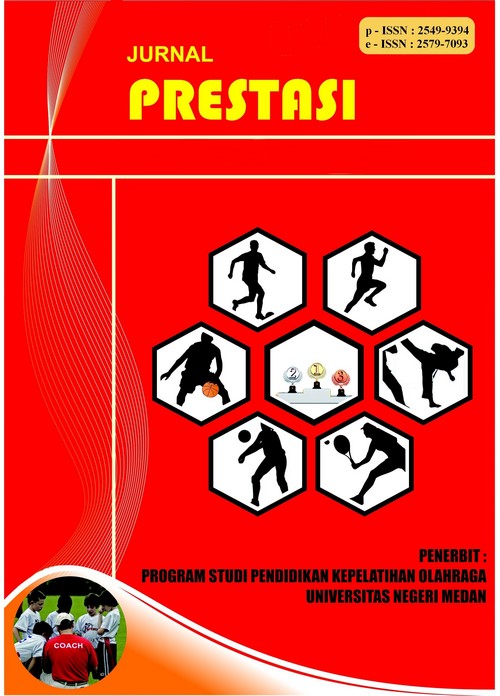
JURNAL PRESTASI
Jurnal Prestasi yang dikelola oleh Program Studi Pendidikan Kepelatihan Olahraga adalah Jurnal yang berfungsi menyediakan sarana publikasi untuk bidang pengembangan konsep-konsep dan kajian teoritis, termasuk isu-isu aktual yang relevan dalam bidang kepelatihan dan pendidikan olahraga. Jurnal Prestasi terbit pada bulan Juni dan Desember setiap tahunnya.
-
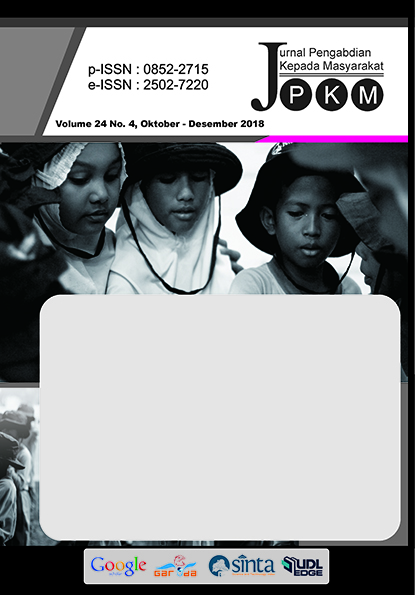
JURNAL PENGABDIAN KEPADA MASYARAKAT
Journal Title : Jurnal Pengabdian Kepada Masyarakat ISSN : 0852-2715 (print) | 2502-7220 (online) DOI : 10.24114 by Chief Editor : Rahmad H. Gultom, M.Pd Section Editor : Muhammad Chairad, S.Pd., M.Pd. Frequency : 4 issues per year Publisher : Universitas Negeri Medan Indexation : Google Scholar | Sinta| Garuda Email : jpkm.lpm@unimed.ac.id Journal of Community Service. This journal is managed by the Research and Community Service Institute of Universitas Negeri Medan. To publish articles of service that have been carried out in order to inspire and benefit the wider community.







-
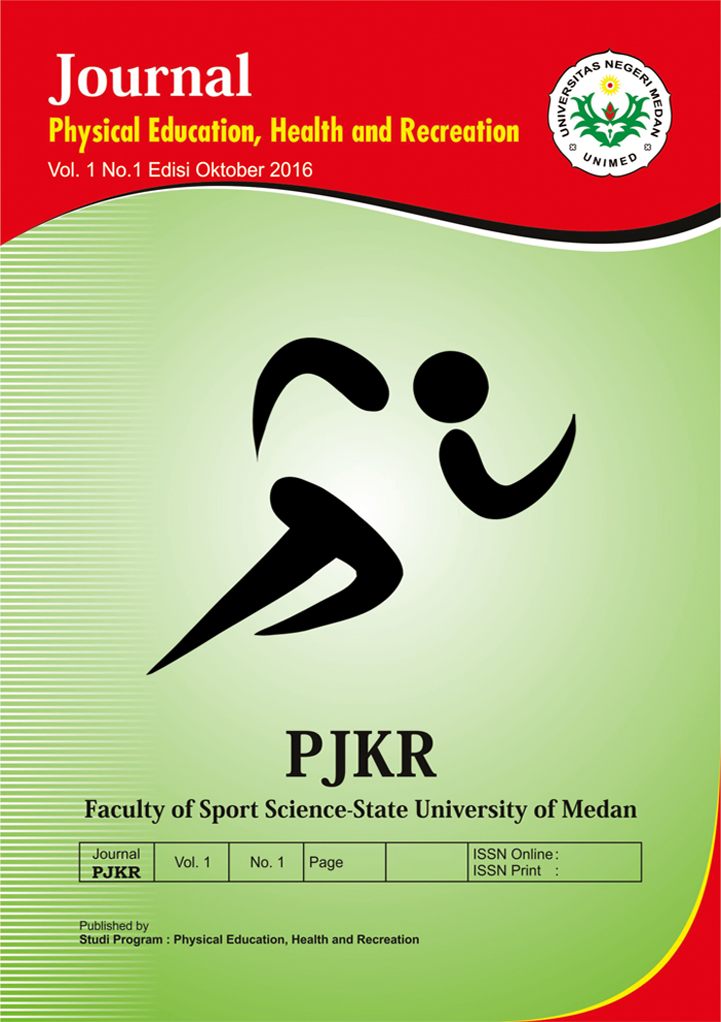
Journal Physical Education, Health and Recreation
ISSN 2548-9208 (Online) | ISSN 2548-9194 (Print)
Accredited 4th Rank from RISTEKDIKTI No.148/M/KPT/2020
DOI https://doi.org/10.24114/jpehr
A journal is managed by Faculty of Sport Science (FIK), State University of Medan. This journal discusses science in the fields of physical education, health and recreation. The Journal of Physical Education, Health and Recreation is published twice a year, the first issue of October 2016. Articles which enter the Journal of Physical Education, Health and Recreation will be received by the editor to be forwarded to the editor board which is then forwarded to the reviewer with blind peer review no later than 4 weeks.
Indexing:

.png)



-
BASASTRA: JURNAL KAJIAN BAHASA DAN SASTRA INDONESIA
BASASTRA: Jurnal Kajian Bahasa dan Sastra Indonesia ISSN 2579-793X merupakan jurnal ilmiah yang dikelola oleh Program Studi Pendidikan Bahasa dan Sastra Indonesia, Fakultas Bahasa dan Seni, Universitas Negeri Medan. Jurnal ini berfokus pada publikasi karya ilmiah dalam bidang pendidikan bahasa dan sastra Indonesia, baik berupa hasil penelitian empiris, kajian konseptual, maupun artikel pengabdian kepada masyarakat.
Ruang lingkup BASASTRA mencakup berbagai topik terkait pengajaran bahasa Indonesia, kajian linguistik, kritik sastra, pengembangan kurikulum, media pembelajaran, serta kontribusi pendidikan bahasa dan sastra terhadap penguatan literasi di Indonesia.
Sebagai bentuk komitmen terhadap kualitas akademik, setiap naskah yang diajukan ke BASASTRA akan melalui proses peer-review oleh para mitra bestari yang kompeten di bidangnya. Penerbitan artikel dilakukan secara berkala, yakni tiga kali dalam setahun pada bulan April, Agustus, dan Desember.
Dengan visi menjadi media ilmiah yang berkontribusi pada pengembangan kajian bahasa dan sastra Indonesia, BASASTRA berupaya menghadirkan publikasi yang relevan, bermutu, dan berdaya guna bagi pengembangan ilmu pengetahuan serta praktik pendidikan di Indonesia.
-
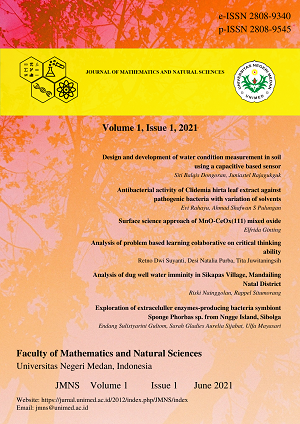
Journal of Mathematics and Natural Sciences
Journal title
: Journal of Mathematics and Natural Sciences
Initials
: JMNS
Frequency
: 2 issues per year (June and December)
DOI
: prefix on going by
Print ISSN
: 2808-9545
Online ISSN
: 2808-9340
Editor-in-chief
: Prof. Herbert Sipahutar
Publisher
: Universitas Negeri Medan
Journal of Mathematics and Natural Sciences is an international peer-review open-access journal devoted to the publication of original research, short communication, and review articles. Journal of Mathematics and Natural Sciences publishes one volume and two issues a year in June and December. All areas listed on the cover of this journal, such as biology, chemistry, mathematics, physics, and science education, are included within the scope of the Journal of Mathematics and Natural Sciences. This journal was published by the Faculty of Mathematics and Natural Sciences, Universitas Negeri Medan. There are no publication charges for publication in the Journal of Mathematics and Natural Sciences (fully free of charge). The manuscript should be prepared in good English and has to be proofread by a native speaker or professional proofreader.
The authors are suggested to read and follow the Author Guidelines strictly, otherwise, the paper will be rejected without review. Paper submission should be performed through online submission. The registered author can be Login at, LOGIN, and the new author should register prior to submitting the paper at, REGISTER.
-
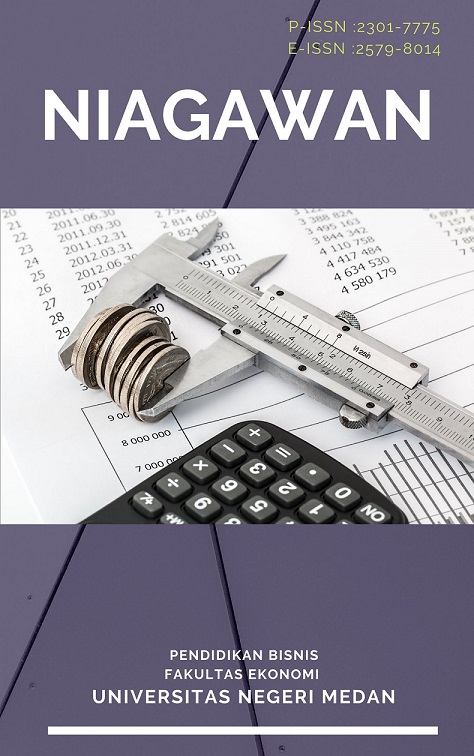
NIAGAWAN
NIAGAWAN is a journal managed by the Department of Business Education, Faculty of Economics, Universitas Negeri Medan. The aim is to serve as information media where scientific articles can be exchanged among teaching staff, alumni, practitioners, and observers in education and management and business.
NIAGAWAN editor receives scientific articles of empirical research and theoretical studies related to management and business sciences, education especially in business, entrepreneurship, that certainly have never been published. NIAGAWAN Published 3 (three) times in the year in March (First Issue) July (Second Issue) and November (Third Issue).
p-ISSN :2301-7775 (print) dan e-ISSN: 2579-8014 (online)
Journal title NIAGAWAN Initials NIAGAWAN Frequency 3 Issues per Year (March July and November) DOI prefix 10.24114/niaga.v13i2 by 
Print ISSN 2301-7775 (Print) Online ISSN 2579-8014 (Online) Editor-in-chief Pasca Dwi Putra, S.E., M.Si Publisher Universitas Negeri Medan Citation Analysis Google Scholar Indexing by:
-
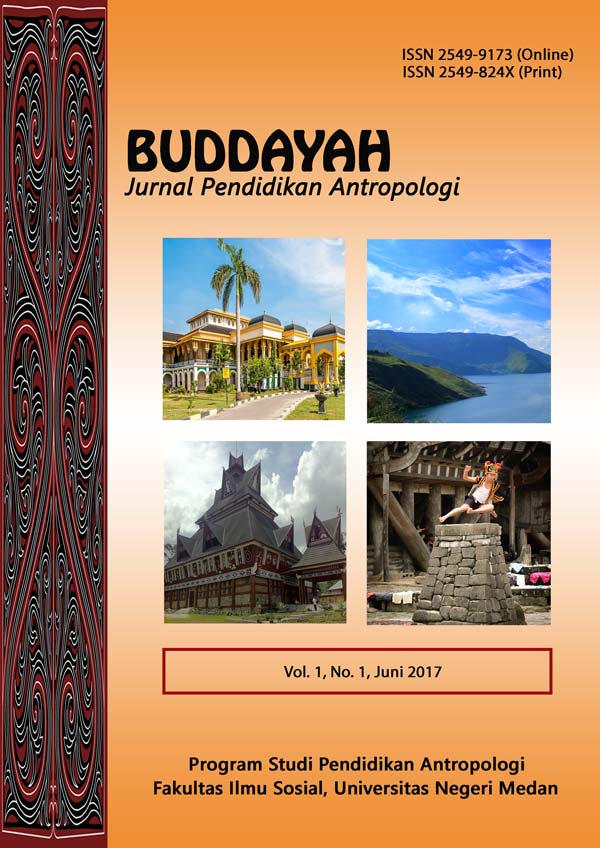
Buddayah: Jurnal Pendidikan Antropologi
ISSN 2549-824X (print)| ISSN 2549-9173 (online)
Jurnal Buddayah ini diterbitkan sebagai media komunikasi ilmiah kajian Sosiologi dan Antropologi baik bidang kependidikan dan non kependidikan, bagi para mahasiswa dan alumni Pendidikan Antropologi baik dari Fakultas Ilmu Sosial Universitas Negeri Medan maupun alumni serta akademisi, praktisi, dan peneliti bidang Antropologi dari perguruan tinggi dan institusi lain. Sebagai media komunikasi ilmiah, jurnal ini berfungsi menyediakan sarana publikasi untuk bidang pengembangan konsep-konsep dan kajian teoritis, termasuk isu-isu aktual yang relevan dalam bidang Pendidikan Antropologi pada khususnya dan Ilmu Antropologi pada umumnya. Isi tulisan tidak harus sejalan dengan kebijakan redaksi.
Jurnal ini diterbitkan dua kali setahun pada bulan Juni dan Desember dan diedarkan sebagai bahan publikasi pendidikan antropologi, ilmu antropologi atau bidang lain yang terkait. Peredarannya untuk kalangan terbatas, dan para peminat dapat memperolehnya dengan mengganti ongkos cetak dan ongkos kirim.



-
Kode : Jurnal Bahasa
ISSN: 2301-5411 (Print) | ISSN: 2579-7956 (Online)
DOI: https://doi.org/10.24114/kode
Jurnal Kode adalah jurnal yang dikelola oleh Prodi Pendidikan Bahasa dan sastra Indonesia, Fakultas Bahasa dan Seni, Universitas Negeri Medan. Jurnal ini terbit empat kali dalam setahun pada bulan Maret, Juni, September, dan Desember. Aspek kajian jurnal ini berisi tentang hasil penelitian dan konseptual dalam bidang pembelajaran, penilaian, linguistik, dan sastra Indonesia. Jurnal ini juga dihadirkan untuk mendukung pengembangan akademika di Jurusan Bahasa dan sastra Indonesia.

Indexing:.png)
.png)
.png)
.png)
-
In Laboratory Journal: Jurnal Seni Pertunjukan dan Seni Rupa
Journal title In Laboratory Journal : Jurnal Seni Pertunjukan dan Seni Rupa Initials ILJ Abbreviation Inlab Frequency 2 issues per year (February & Augustus) DOI Prefix 10.24114 by CrossrefE-ISSN 2986-0385 Editor-in-Chief Ilham Rifandi, S.Sn., M.Sn Publisher Department of Performance Art, Faculty of Languages and Arts, Universitas Negeri Medan Indexing & Abstracting DOAJ | Copernicus | Dimensions | Garuda | Publons | Harvard Library | Scilit | Google Scholar | Neliti | ResearchGate
In Laboratory Journal : Jurnal Seni Pertunjukan dan Seni Rupa adalah Jurnal Ilmiah Berkala berbasis Open Journal System (OJS) yang dikelola oleh Program Studi Seni Pertunjukan, Fakultas Bahasa dan Seni serta dikelola langsung oleh Universitas Negeri Medan. In Laboratory Journal : Jurnal Seni Pertunjukan dan Seni Rupa memuat artikel tentang seni pertunjukan dan seni rupa (seni tari, seni teater, seni musik, dan seni karawitan, seni lukis, desain), baik kajian perihal praktik maupun perkara teori, serta berbagai ilmu pengetahuan lain yang relevan.
Terbit dua kali dalam setahun (Februari dan Agustus) In Laboratory Journal menerima artikel dari penulis dengan berbagai latar belakang, dengan menerapkan sistem double blind peer review, dimana reviewer tidak mengetahui penulis naskah yang sedang diperiksanya dan sebaliknya, penulis tidak mengetahui reviewer yang menelaah naskahnya
-
Gestus Journal: Penciptaan dan Pengkajian Seni
Gestus Journal : is a journal of art creation and study managed by the Performing Arts Study Program, Sendratasik, faculty of Language and Art, State University of Medan.
This journal publishes original articles with a focus on the creation and study of Performing Art. Scope areas are: Art History, Cultural studies, performance studies, philosophy of art, Sociology of the Arts, Film, Multimedia, Creative Processes and conceptual research in Performing Arts.
-
Journal of Informatics and Data Science
Journal of Informatics and Data Science (J-IDS) is a scientific journal managed by the Computer Science Study Program, Faculty of Mathematics and Natural Sciences, Universitas Negeri Medan, Indonesia. J-IDS will be published 2 times a year (June and November). Articles can be written in English. Articles are research results with a maximum plagiarism of 20%. Manuscripts submitted to J-IDS will be reviewed by at least 2 reviewers. Manuscripts must be submitted through the Open Journal System (OJS) in .doc or .docx format. J-IDS is registered at the National Library with the International Standard Serial Number (ISSN): 2964-0415 (Online). J-IDS uses Turnitin and Mendeley plagiarism checks for reference management, and is supported by Crossref (DOI) for the identification of scholarly works.
The focus and scope of J-IDS includes Artificial Intelligence, Science Computation, Data Mining, Data Science, Big Data, Natural Language Processing, Computer Vision, Expert Systems, Text and Web Mining, and Parallel Processing.
-
RODA: Jurnal Pendidikan dan Teknologi Otomotif
Journal title
: RODA: Jurnal Pendidikan dan Teknologi Otomotif
Initials
: roda
Abbreviation
: RODA
Frequency
: 2 issues per year (February and August)
DOI
: prefix on going by
Print ISSN
: on going
Online ISSN
: 2775-4456
Editor-in-chief
: Safri Gunawan, S.T., M.T.
Publisher
: Universitas Negeri Medan
RODA: Jurnal Pendidikan dan Teknologi Otomotif adalah jurnal open-access dengan proses review double-blind. RODA terbit dua kali dalam satu tahun. RODA memberikan ruang bagi reseachers untuk mempublikasikan hasil penelitian dengan topik seputar pendidikan dan otomotif, serta topik relevan lainnya. penjelasan lebih rinci dapat dilihat di focus and scope.
-
Jasmerah: Journal of Education and Historical Studies
ISSN Online: 2686-5556 | ISSN Print: 2686-1569
Jasmerah is a journal of academic, open access, and peer-reviewed which dedicated to the development of historical studies and history education. The journal of Jasmerah published by the Department of History Education, Faculty of Social Sciences, Universitas Negeri Medan.
The journal of Jasmerah published in two issues each year, in June and December. The types of articles received for publication are research reports and conceptual ideas, both in Indonesian and English. Article submission is open throughout the year. However, before submitting, please ensure that the manuscript fits within Jasmerah’s focus and scope, and follows our author guidelines.
Indexing by:







-
Jurnal Kewarganegaraan
Journal Title : Jurnal Kewarganegaraan Journal Initials : JK Frequency : 2 issues a year (March and September) DOI : Prefix 10.24114/jk by CrossrefPortal ISSN : 1693-7287 (Print) | 2745-6919 (Online) BRIN ISSN : 1693-7287 (Print) | 2745-6919 (Online) Link : https://jurnal.unimed.ac.id/2012/index.php/jk %20March%202025.png)
Jurnal Kewarganegaraan (English: Citizenship Journal) is an academic journal dedicated to promoting and disseminating research on citizenship studies and citizenship education. This journal is a peer-reviewed journal that focuses on the publication of scientific research on discourse and the practice of citizenship as an object of critical inquiry. Jurnal Kewarganegaraan was published by the Jurusan Pendidikan Pancasila dan Kewarganegaraan (English: Departement of Pancasila and Civic Education) Universitas Negeri Medan and is managed in collaboration with Asosiasi Profesi Pendidikan Pancasila dan Kewarganegaraan Indonesia (Indonesia Association Profession of Pancasila and Civic Education/AP3KnI).
Jurnal Kewarganegaraan is very interested in scientific and professional studies in the discourse and practice of citizenship. We seek submissions of articles that cross the lines of scientific disciplines (interdisciplinary perspectives) that aim to develop citizenship studies and citizenship education in the local, national, and global scope. Our particular attention is paid to works dealing with historical and contemporary questions of concern regarding other dimensions, meanings, and forms of citizenship and contributing to education for citizenship.
Each article published in Kewarganegaraan has been peer-reviewed by designated experts. These experts have experience in journal management and article publication in prestigious journals. The articles published in Kewarganegaraan have met the journal's Editorial Board requirements.
Indexing
Jurnal Kewarganegaraan has been indexed by:

%20PNG.png)


This journal has been ACCREDITED by National Journal Accreditation (in Bahasa Akreditasi Jurnal Nasional, or ARJUNA) and managed by the Ministry of Higher Education, Science, and Technology of the Republic of Indonesia with SINTA 2 since Vol. 21 Issue 1 of 2024 to Vol. 25 Issue 2 of 2028 according to the Decree Number 10/C/C3/DT.05.00/2025 (Click to download the full decree).
-
Pesona
Journal title
: PESONA : Jurnal Pendidikan Tata Busana
Frequency
: 2 issues per year (April and October)
DOI
: prefix on going by
Print ISSN
: 2777-1148
Online ISSN
: 2776-8473
Editor-in-chief
: Prof. Dr. Farihah, M.Pd
Publisher
: Universitas Negeri Medan
PESONA: Jurnal Pendidikan Tata Busana adalah jurnal open-access dengan proses double-blind peer review. Double Blind Peer Review adalah metode penelaahan teman sejawat terhadap sebuah karya ilmiah yang akan dipublikasikan dalam terbitan berkala ilmiah, yang mana identitas reviewer dan penulis disembunyikan, sehingga reviewer tidak mengetahui artikel siapa yang sedang ditelaah dan penulis juga tidak mengetahui siapa yang menelaah artikelnya. Metode ini digunakan untuk menjaga obyektivitas hasil penelaahan. PESONA merupakan jurnal tentang fashion dan ilmu pengetahuan dan teknologi yang berkaitan dengan bidang tata busana. PESONA terbit dua kali dalam satu tahun yaitu pada bulan April dan Oktober. Focus and scope PESONA meliputi pendidikan, pembelajaran, evaluasi, manajemen, teknologi, dan fashion dalam bidang tata busana.

-
Journal of Millennial Community
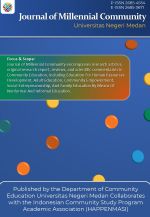
Journal Title : Journal of Millennial Community ISSN : 2685-4554 (Print) | 2685-3671 (Electronik) DOI Prefix : 10.24114 by Crossref Editor in Chief : Sani Susanti,S.Pd,M.Pd Managing Editor : Mahfuzi Irwan, M.Pd. Publisher : Program Studi Pendidikan Luar Sekolah, Universitas Negeri Medan Country : Indonesia Frequency : 2 issues per year (March and September) Indexed : Sinta | Google Scholar | Garuda Journal of Millennial Community encompasses research articles, original research report, reviews, and scientific commentaries in community education, including Education for Human Resources Development, Adult Education, Community Empowerment, Social Entrepreanurship, and Family Education by means of nonformal and informal education. This journal in collaboration of Asosiasi Pendidikan Masyarakat Indonesia (APENMASI) with number 017/VI/APENMASI/2022 and Himpunan Akademisi dan Prodi Pendidikan Masyarakat Indonesia (HAPPENMASI) with number 009/VI/HAPPENMASI/2022. The journal welcomes original research articles, literature reviews, case studies, and critical scientific commentaries that contribute to the knowledge and practice of community-based education. It encourages interdisciplinary and cross-sectoral perspectives that address educational challenges and opportunities in diverse social, cultural, and economic contexts—particularly those relevant to millennial and post-millennial generations.
-
-
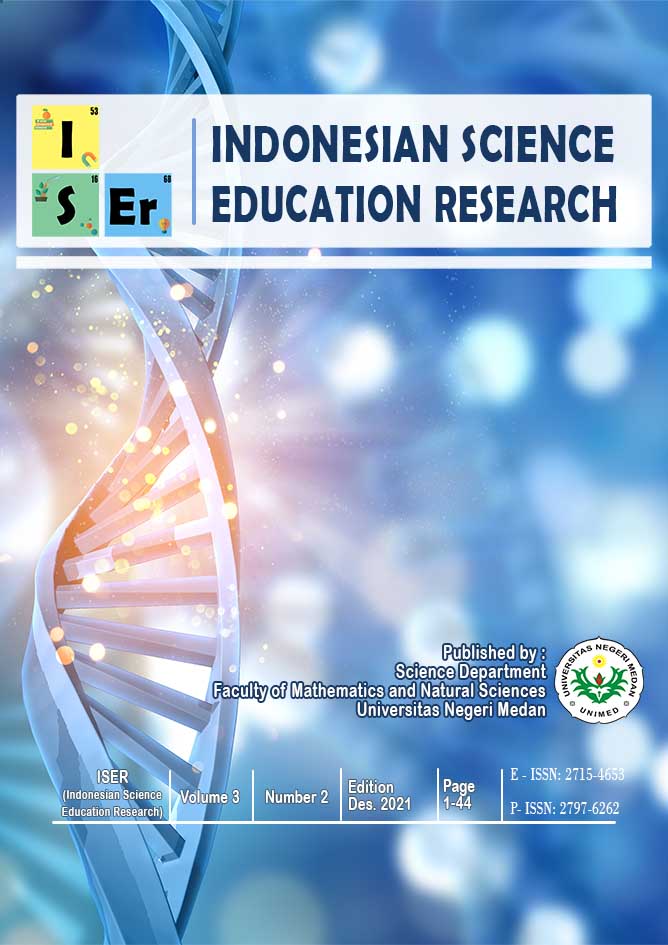
(IPER) Indonesian Physics Education Research
p-ISSN: 2746-9034 (Printed Media) ; e-ISSN: 2774-5066 (Online Media)
IPER (Indonesian Physics Education Research) (e-Journal) is a journal managed by the Physics Education Study Program, Under Physics Department of Universitas Negeri Medan. This journal contains the results of research on physics education, which is published two times a year.
The IPER Journal is an integrated forum for communicating scientific progress in the field of physics education. This journal contains the results of thoughts, innovations and new findings in physics education, as well as significant research results related to improving the quality of physics learning, including
- Physics teaching materials and their development
- Utilization and development of learning approaches, models and strategies
- Utilization and development of physics learning media
- Development of evaluation and assessment instruments in physics education
_________________________________________________________________________________________________
Journal Title Indonesian Physics Education Research Initials IPER Language English Frequency 2 issues per year (June, December) DOI prefix 10.24114 by Print ISSN 2746-9034 Online ISSN 2774-5066 Editor-in-chief Dr. Wawan Bunawan, M.Pd., M.Si. Publisher Physics Education Study Program, Faculty of Mathematics and Natural Sciences, Universitas Negeri Medan in collaboration with Physical Society of Indonesia (PSI) _________________________________________________________________________________________________
-
Altruistik : Jurnal Konseling dan Psikologi Pendidikan

Altruistik : Jurnal Konseling dan Psikologi Pendidikan
e-ISSN: 2798-3773 | p-ISSN:2798-3765
Focus and Scope : Guidance and Counseling, Educational Psychology
Frequency : Twice a Year / Semi Annual (June and December)
Editor in Chief : Rina Suryani, S.Pd., M.Pd.
Speed: 30-60 Days Avg. from Submission to First Decision
Accreditation Rankings : SINTA 4
ALTRUISTIK : Jurnal Konseling dan Psikologi Pendidikan publishes practice, theory, and research articles in the field of guidance and counseling and educational psychology in Indonesia. Each submitted manuscript will be reviewed by at least 2 bestary partners using the Double Blind Review method.
This journal is published twice a year (May and November) by the Guidance and Counseling Study Program, Faculty of Education, State University of Medan in collaboration with the Indonesian Guidance and Counseling Association (ABKIN).
Interested in submitting a manuscript? Please register yourself. Writing guidelines can be seen Author Guidelines, and the Manuscript Scoping Style can be seen Focus and Scope. Please follow the submission guidelines.
-
Jurnal Engineering Development
Jurnal Engineering Development (EDev) adalah peer-reviewed journal yang mempublikasikan artikel-artikel ilmiah dari berbagai disiplin ilmu rekayasa/keteknikan, yang terbit 2 kali setahun pada bulan April dan Oktober. dengan no. ISSN 2777-113X (online). Artikel-artikel yang dipublikasikan di Jurnal EDev meliputi hasil-hasil penelitian ilmiah asli atau artikel ulasan ilmiah hasil kajian literatur yang bersifat baru. Jurnal EDev diterbitkan oleh Fakultas Teknik Universitas Negeri Medan. Jurnal EDev menerima manuskrip atau artikel dalam bidang teknik/rekayasa seperti teknik sipil, teknik arsitektur, teknik mesin, teknik elektro, teknik lingkungan, teknik informatika dan gizi dari berbagai kalangan akademisi dan peneliti baik nasional maupun internasional. Artikel-artikel yang dimuat di Jurnal EDev adalah artikel yang telah melalui proses penelaahan oleh Mitra Bebestari (peer-reviewers). -
Jurnal Inovasi Pembelajaran Kimia
 Jurnal Inovasi Pembelajaran Kimia (Journal of Innovation in Chemistry Education) is an electronic journal that covers research findings and ideas in all aspect of chemistry education.
Jurnal Inovasi Pembelajaran Kimia (Journal of Innovation in Chemistry Education) is Sinta 3 accredited by the Indonesian Ministry of Higher Education, Science, and Technology (Kemdiktisaintek) as stated by the Directorate General of Research and Development Number 0385/E5.3/KI.02.00/2022 10/C/C3/DT.05.00/2025 about the Scientific Journal Accreditation Ranking Period 1 2025.
This Journal is indexed by:



.png)

ISSN : 2685-0850 (online) ISSN : 2685-0761 (print) Editor in Chief : Freddy Tua Musa Panggabean, M.Pd Publisher : Chemistry Education Study Program, Universitas Negeri Medan DOI Prefix : https://doi.org/10.24114/jipk Issue : 2 Issues annually (April and October) -
Quantitative Economics Journal
 Quantitative Economics Journal is published by the Department of Economics, Post Graduate Program State University of Medan and can be used as in online and print editions. This journal is contained with the articles that cover the economics area that derived from the research and engineering ideas that are quantitative. The viewers, authors and future authors that expressed in this publication do not necessarily reflect the Department of Economics, Post Graduate Program, State University of Medan.
Journal title : Quantitative Economics Journal ISSN : ISSN : 2089-7847 (Print) | ISSN : 2089-7995 (Online) Frequency : Two times a year in April and Oktober DOI : https://doi.org/10.24114/qej (Prefix - by Crossref) OAI : https://jurnal.unimed.ac.id/2012/index.php/qej/oai Editor in chief : Prof. Indra Maipita, M.Si. Ph.D Publisher : Department of Economics, Post Graduate Program, State University of Medan Journal indexed by:





-
Jurnal Insinyur Profesional
Journal of Professional Engineers (JIP) is a reputable, peer-reviewed journal dedicated to civil, mechanical, electrical, and related engineering disciplines. It appears biannually—in January and July—and all published articles receive a unique DOI (Digital Object Identifier) under the prefix 10.24114/jip via Crossref. While the Online ISSN 2809-1515 is already assigned, the Print ISSN remains under registration.
The journal’s scholarly integrity is ensured by Editor-in-Chief Dr. Ir. Syafiatun Siregar, S.T., M.T., IPU, ASEAN Eng., who sets its editorial policies and quality standards. Publication and administration are managed by Universitas Negeri Medan, which provides the technical and organizational support required for a rigorous peer-review process and wide dissemination of articles.
Journal indexed by:


-
JEVTE Journal of Electrical Vocational Teacher Education

Journal of Electrical Vocational Teacher Education
Intials: JEVTE
e-ISSN: 2797-3360 | p-ISSN: 2797-7846
Frequency: 2 issues per year (May & November)
DOI: Prefix 10.24114
Editor in Chief: Prof. Dr. Muhammad Amin, ST., M.Pd.
Managing Editor: Bakti Dwi Waluyo, S.Pd., M.T.
Publisher: Departement of Electrical Engineering Education, Faculty of
Journal of Electrical Vocational Teacher Education (JEVTE) is an open-access journal with a peer-review process that publishes research articles on vocational education, particularly in the field of electrical vocations. Each submitted manuscript is reviewed by at least two peer reviewers using a double-blind review method.
The journal is published twice a year, in May and November.
Authors interested in submitting a manuscript are required to register. Author guidelines can be found [here], and the manuscript template can be downloaded [here].
-
Jurnal Sains Indonesia
Jurnal Sains Indonesia menerima naskah berupa hasil penelitian, catatan penelitian (note), telaah pustaka (review), pemikiran, pandangan atau tulisan ilmiah lainnya yang berhubungan dengan sains dan matematika yang belum pernah dan tidak sedang dipertimbangkan untuk diterbitkan oleh penerbit lain dalam bentuk apapun.
Artikel yang diterima dan diterbitkan akan diakses secara bebas di situs web ini dan mengabstraksi basis data pengindeksan & pengindeksan: Google Scholar.
Harap baca panduan ini dengan seksama. Setiap naskah yang dikirim ke kantor redaksi jurnal harus mengikuti pedoman penulisan. Jika naskah tidak memenuhi pedoman penulis atau naskah apa pun yang ditulis dalam format yang berbeda, artikel tersebut akan DITOLAK sebelum diperiksa lebih lanjut. Hanya manuskrip yang dikirimkan yang memenuhi format jurnal yang akan diproses lebih lanjut.
-
Jurnal Pelita Pendidikan
Pelita Pendidikan Journal is a national scientific journal with open access and a peer-reviewed system that contains research articles related to biology education. This journal is managed by the Biology Education Study Program, Faculty of Mathematics and Natural Sciences, Medan State University.
This journal is published four times a year in March, June, September, and December. This journal presents the results of research in the field of Biology Education including learning models, classroom assessment, media learning, scientific process skills, scientific literacy, scientific attitude, teaching strategy, thinking skills, learning difficulties, teacher professional development, and moral knowing.
This journal has an ISSN Print number 2338-3003 and ISSN Online number 2502-3217. Based on the online ISSN SK, the Pelita Pendidikan Journal already has ISSN Online starting from Vol. 4, No. 1, March 2016.Indexing:
-
LINGUISTICA
Journal Title : LINGUISTICA
ISSN : 2301-5152 (print) | 2655-7517 (online) DOI : https://doi.org/10.24114/linguistica Chief Editor : Anna Tambunan (Scopus ID: 57200147322) Managing Editor : Azhar Aziz Lubis (Scopus ID: 57218869797) Frequency : 4 issues per year (January, April, July, October) Publisher : Universitas Negeri Medan Indexation : Sinta | Dimension | Google Scholar | Garuda Email : linguistica@unimed.ac.id ISSN: 2301-5152 (Print) | ISSN: 2655-7517 (Online)
LINGUISTICA Journal is a quarterly publication presenting articles on Linguistics. The contents include analyses, studies, applications of theories, research reports and reviews
Linguistica is indexed in:


_1_.png)

-
JURNAL IKATAN ALUMNI FISIKA
Jurnal Ikatan Alumni Fisika Universitas Negeri Medan
Jurnal Ikatan Alumni Fisika Universitas Negeri Medan (JIAF) mempublikasikan artikel ilmiah yang berisi ide, gagasan, hasil penelitian, kajian pustaka, serta inovasi lain yang mencakup pengembangan pembelajaran, model pembelajaran, evaluasi pembelajaran, media pembelajaran, teknologi pembelajaran fisika, fisika material, kimia fisika, fisika bumi, instrumentasi, komputasi, dan astronomi.Sebagai wadah akademik, Jurnal Ikatan Alumni Fisika berkomitmen untuk mendukung pengembangan ilmu pengetahuan, khususnya di bidang fisika dan pendidikan fisika, serta mendorong penerapannya dalam kehidupan masyarakat dan perkembangan teknologi. Jurnal ini menerima artikel dari dosen, mahasiswa, alumni, peneliti, maupun praktisi yang ingin berkontribusi dalam pengembangan keilmuan dan inovasi di bidang fisika.
JIAF telah terakreditasi SINTA 6 berdasarkan hasil penilaian akreditasi jurnal tahun 2019 dengan Surat Keputusan Direktur Jenderal Penguatan Riset dan Pengembangan Nomor 3/E/KPT/2019 tanggal 14 Januari 2019 tentang Peringkat Akreditasi Jurnal Ilmiah Periode I Tahun 2019.
-
Journal of Learning and Technology in Physics
E-ISSN: 2721-1274 | P-ISSN: 2721-2718
Journal of Learning and Technology in Physics is a journal that develops under the Expertise Group, especially Physics Lecturers. This journal is scientific based on the results of research studies of scientific literature and the development of products resulting from research in supporting the development of Physics. With the development of Physics in all sectors both education and technology makes the results of Physics research able to be a solution and an alternative for the Improvement and Progress of Science.
-
JURNAL PENDIDIKAN DAN KEPENGAWASAN
Jurnal Pendidikan dan Kepengawasan tentang upaya dan strategi peningkatan kompetensi sumber daya sekolah, terutama berkaitan peran dan fungsi pengawas sekolah sebagai supervisor baik akademik maupun manajerial.
-
Jurnal Teknik Sipil dan Arsitektur
Jurnal Nasional Teknik Sipil dan Arsitektur (JNTSA)merupakan jurnal yang dikelola oleh Jurusan Pendidikan Teknik Bangunan Universitas Negeri Medan. JNTSA memuat dan menerbitkan karya-karya ilmiah berbasis penelitian dalam bidang Teknik Sipil dan Teknik Arsitektur dan bidang-bidang yang relevan. Jurnal ini terbuka bagi para peneliti, dosen dan profesional lain. Artikel yang akan diterbitkan akan dievaluasi oleh tim redaksi dan reviewer. Tim redaksi berhak melakukan perubahan pada tulisan artikel demi keseragaman format, tanpa mengubah maksud didalamnya. Jurnal Nasional Teknik Sipil dan Arsitektur terbit 2 kali setahun, yaitu Mei dan November. (Klik disini untuk arsip jurnal lengkap) -
Jurnal Fibonaci: Jurnal Pendidikan Matematika
bonaci: Jurnal Pendidikan Matematika EISSN: 2746-3656 adalah jurnal ilmiah yang diterbitkan oleh Prodi Pendidikan Matematika FMIPA Unimed. Jurnal ini mempublikasikan artikel-artikel hasil penelitian dengan fokus mengenai pendidikan matematika baik berbahasa bahasa Indonesia maupun bahasa Inggris.
Jurnal ini memiliki lingkup: Desain Pembelajaran Matematika, Pengembangan Bahan Ajar ataupun Model Pembelajaran, Media Pembelajaran Matematika, Alat Peraga Pembelajaran Matematika, Analisis Kesulitan Siswa dalam Pembelajaran, Evaluasi Pembelajaran Matematika, Kurikulum Pendidikan Matematika, Teori Belajar Matematika, Sejarah dan Filsafat Matematika, Analisis Penerapan Model/Pendekatan/Metode/Strategi Pembelajaran, Media Pembelajaran berbasis IT, Penelitian Tindakan Kelas, Kreativitas dan Inovasi Pembelajaran Matematika, Lesson Study Pembelajaran Matematika.
Jurnal ini menggunakan sistem review double-blind Review, artinya penulis dan reviewer tidak saling mengenal.
-
JS (JURNAL SEKOLAH)
ISSN : 2548-8856 (Print) | ISSN : 2549-127X (Online)
JS (Jurnal Sekolah) memuat artikel yang berkaitan dengan hasil penelitian, pendidikan, pembelajaran, ilmu pengetahuan, budaya, teknologi, bahasa, seni, sosial, dan pengabdian masyarakat. Jurnal ini dikelola oleh Prodi PGSD dan terbit empat kali dalam setahun yaitu pada bulan Maret, Juni, September dan Desember. JS (Jurnal Sekolah) dikelola oleh Prodi Pendidikan Guru Sekolah Dasar (PGSD), Fakultas Ilmu Pendidikan, Universitas Negeri Medan dan bekerjasama dengan Himpunan Dosen PGSD Indonesia. Artikel pada jurnal ini telah melalui proses review oleh tim reviewer dari berbagai perguruan tinggi di Indonesia.
Indexed by:

-
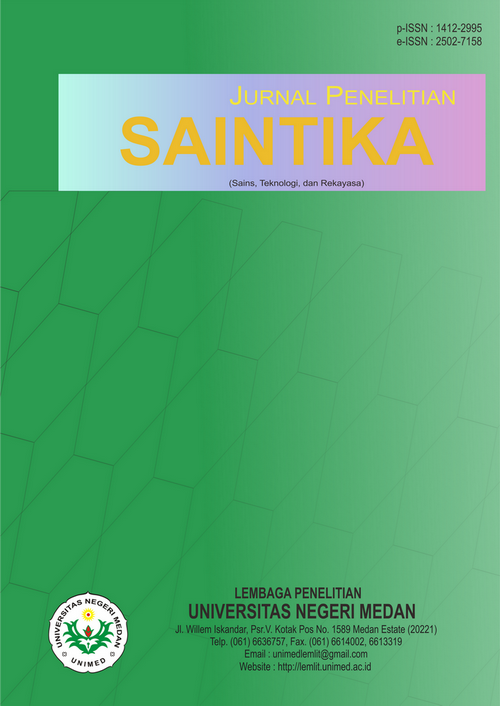
JURNAL PENELITIAN SAINTIKA
Jurnal ini dikelola oleh Lemlit Universitas Negeri Medan. Jurnal ini memuat tentang sains, teknologi dan rekayasa.
-
Jurnal Tematik
Call for Papers (Februari 2026)
Jurnal Tematik mengundang para peneliti dan penulis untuk dapat mengisi terbitan bulan Mei 2026
Nama Jurnal : Jurnal Tematik ISSN : 1979-6633 (print) | 2460-7738 (Electronik) DOI Prefix : 10.24114 by Crossref Pimpinan Redaksi : Prof. Dr. Anita Yus, M.Pd. Editor Pengelola : Artha Mahindra Diputera, M.Pd., CIQnR. Penerbit : Pendidikan Dasar Universitas Negeri Medan Negara : Indonesia Terbitan : 4 issues per year (February, May, August and November) Diindeks : Garuda | Google Scholar | Sinta 4 | Dimensions Jurnal Tematik (JT), merupakan jurnal akses terbuka yang diterbitkan oleh Departemen Pendidikan Dasar, Fakultas Ilmu Pendidikan Universitas Negeri Medan. Jurnal Tematik bertujuan untuk menyediakan platform bagi para peneliti, pendidik, dan praktisi untuk menyebarkan artikel ilmiah berkualitas tinggi yang berkontribusi pada pemahaman teoritis dan aplikasi praktis dari Pendidikan Dasar di tingkat: PAUD, SD, SMP serta Pendidikan Tinggi bidang PGSD dan PG PAUD. Kami menerima penelitian asli, tinjauan literatur, studi kasus, dan makalah konseptual yang mengeksplorasi tentang Pendidikan Dasar.
-
Jurnal Keluarga Sehat Sejahtera
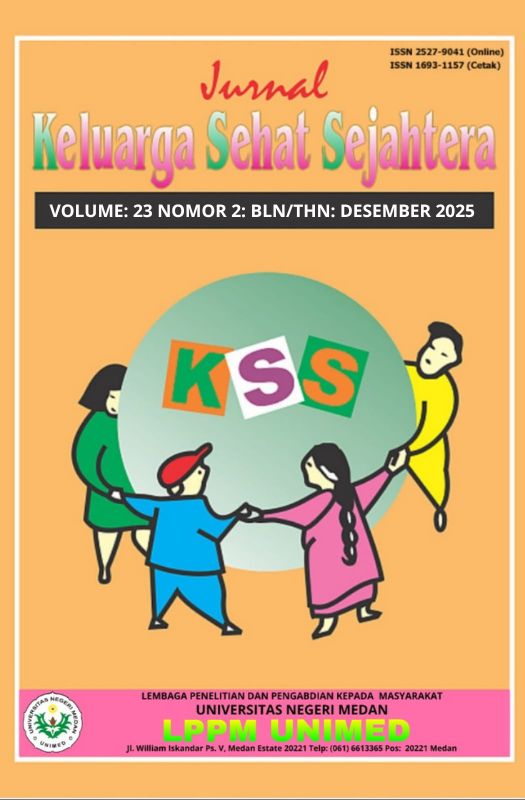
Journal Title : Jurnal Keluarga Sehat Sejahtera, International Healthy and Prosperous Family Journal Initials : JKSS Language : Indonesia and English e-ISSN : 2527-9041 ISSN : 1693-1157 Frequency : 2 issues per year (June, & December) Publisher : Universitas Negeri Medan DOI : 10.24114 Indexing : Sinta 5 | Dimension | Google Scholar |Garuda | Crossref | Worldcat | Base |OneSearch | Scilit | Neliti, and others Author Fee : Rp. 350,000 [Update. 01 June 2025] Jurnal Keluarga Sehat Sejahtera (JKSS) is a journal, that publishes high-quality research papers in the broad field of JKSS Journal is a journal published by the Institute for Research and Community Service, State University of Medan (LPPM UNIMED). Published twice a year, every June and December. This journal was first published in December 2009, with the aim of attracting interest, facilitating, and becoming a forum for interested practitioners and academics. JKSS aims to publish high-quality research articles that contribute to the understanding of family health and well-being. The journal accepts submissions from researchers, practitioners, and policy makers from various disciplines.
Journal Metrics 3 Days 14 Days 45% Submission to 1st Decision Submission to Accepted Acceptance Rate of the total submissions
Jurnal Keluarga Sehat Sejahtera has published papers from authors with different country. Diversity of author's in JKSS. :
- Vol 23 No 1 (2025) : Timor Leste, Indonesia.
In connection with the ARJUNA accreditation results for the Jurnal Keluarga Sehat Sejahtera journal dated February 19, 2021, we would like to inform you that our journal has been indexed in SINTA 5. Currently, we are working on reaccreditation to maintain this accreditation status.The Accreditation Decree can be downloaded here.In light of this, we invite authors to submit articles to our journal in accordance with the previously communicated publication guidelines.Best regards,Editor in Chief -
BAHAS
ISSN : 2442-7594 (ONLINE) ISSN : 0852-8535 (CETAK)
Jurnal BAHAS memuat kajian-kajian mengenai bahasa, sastra, seni dan budaya. Jurnal BAHAS dikelola oleh Fakultas Bahasa dan Seni (FBS) Universitas Negeri Medan.




-
Jurnal Teknologi Pendidikan (JTP)
Journal Title : Jurnal Teknologi Pendidikan ISSN : 2407-7437 (online) DOI : 10.24114 by Chief Editor : Prof. Dr. R. Mursid, ST., M.Pd. Frequency : 2 issues per year Publisher : Teknologi Pendidikan Pascasarjana Universitas Negeri Medan Indexation : Google Scholar | Sinta| Garuda | Copernicus | Cite Factor | Base -
JURNAL ILMU KEOLAHRAGAAN
Jurnal Ilmu Keolahragaan
e-ISSN: 2549-9777 | p-ISSN: 1693-1475
Frequency : 2 issues per year (april & october)
Editor in Chief : Prof. Dr. Agung Sunarno, M.Pd.
Managing Editor: Puji Ratno, S.Si., M.Pd.
Publisher: Fakultas Ilmu Keolahragaan, Universitas Negeri Medan
Accreditation Rankings : Sinta 4
Jurnal ini dikelola oleh Fakultas Ilmu Keolahragaan Universitas Negeri Medan sebagai media publikasi ilmiah yang memuat hasil-hasil penelitian dan kajian teoritis dalam bidang Ilmu Keolahragaan. Jurnal ini bertujuan untuk menjadi sarana diseminasi pengetahuan, pengembangan ilmu, dan pertukaran informasi ilmiah bagi akademisi, peneliti, praktisi, serta pemerhati keolahragaan. Jurnal terbit 2 edisi dalam 1 tahun (April & Oktober)
Ruang lingkup (scope) jurnal mencakup berbagai topik di bidang keolahragaan, antara lain:
-
Pendidikan jasmani dan olahraga
-
Ilmu kepelatihan olahraga
-
Kesehatan olahraga
-
Biomekanika olahraga
-
Fisiologi olahraga
-
Psikologi olahraga
-
Manajemen olahraga
-
Rekreasi dan kebugaran
-
Gizi olahraga
-
Sosiologi olahraga
Jurnal ini terbuka bagi naskah-naskah yang bersifat orisinal, belum pernah dipublikasikan sebelumnya, dan memberikan kontribusi signifikan terhadap pengembangan ilmu keolahragaan.
Indeksasi Jurnal Ilmu Keolahragaan:
Jurnal Ilmu Keolahragaan telah terakreditasi SINTA 4 sesuai dengan Keputusan Direktorat Jenderal Pendidikan Tinggi, Riset dan Teknologi Kementerian Pendidikan, Kebudayaan, Riset dan Teknologi Republik Indonesia No. 105/E/KPT/2022
-
-
JURNAL TEKNOLOGI INFORMASI & KOMUNIKASI DALAM PENDIDIKAN
Print-ISSN : 2355-4983 | Online-ISSN : 2407-7488
Jurnal Teknologi Informasi dan Komunikasi dalam Pendidikan adalah jurnal yang dikelola oleh Program Studi Teknologi Pendidikan Pascasarjana Universitas Negeri Medan Gacor. Jurnal Teknologi Informasi dan Komunikasi dalam Pendidikan merupakan jurnal ilmiah yang memuat dan menyebarluaskan hasil-hasil penelitian, kajian ilmiah dan pengembangan teknologi informasi dan komunikasi yang memberi kontribusi pada pengembangan IPTEKS dalam memudahkan orang lain untuk belajar guna meningkatkan pemahaman, pengembangan teori dan konsep keilmuan, serta aplikasinya terhadap pendidikan dan pembelajaran secara menyeluruh.
The Journal of Information and Communication Technology in Education is a journal that is managed by the Graduate education technology Program of Universitas Negeri Medan. Journal of Information and Communication Technology in Education is a scientific journal that contains and disseminates research results, scientific studies and the development of information and communication technology that contributes to the development of science and technology in facilitating others to learn to improve understanding, development of theories and concepts of science, and Its application to education and thorough learning.
Indexed by :








-
Asas: Jurnal Sastra
Asas : Jurnal Sastra adalah jurnal yang bergerak dibidang bahasa dan sastra Indonesia yang dikelola oleh Program Studi Sastra Indonesia Unversitas Negeri Medan. Jurnal ini berisi hasil penelitian tentang linguistik, pendidikan, sastra Indonesia. Jurnal ini terbit dua kali dalam setahun pada januari dan Juli. Jurnal ini diperuntukkan untuk kalangan dosen, mahasiswa, pegiat sastra, dan pegiat bahasa.
Journal Name : Asas: Jurnal Sastra Initial : ASAS Abbreviation : ASAS Publish Schedule : Januari dan Juli ISSN : 2301-5896 (Cetak) | 2580-894X (Online) DOI : https://doi.org/10.24114/ajs (Prefix - by Crossref) Editor-in-Chief : Trisnawati Hutagalung Publisher : Universitas Negeri Medan Indexed : Google Scholar | SINTA| GARUDA INDEXED BY:



-
JURNAL BIOSAINS
Information Journal
Journal Title is JBIO (Jurnal biosains) : the journal of biosciences. This journal is set as journal national accredited with a grade on level SINTA 4 by the Ministry Research and Technology/National Research and Innovation Agency (RISTEKBRIN) Indonesia. The journal is published in both print and online versions 3 times per year (March, August and December). The online version is free access. JBIO (Jurnal biosains) : the journal of biosciences. (pISSN 2443-1230 e-ISSN 2460-6804) is an open-access journal, peer-reveiwed managed by Biology Department and published by Universitas Negeri Medan. DOI Prefix 10.24114. JBIO (Jurnal biosains) : the journal of biosciences. well indexed scientific journal seeks to promote and disseminate the knowledge of biological sciences by publishing outstanding research in the field. Review process double blind review. It publishes original research, applied, and review articles in botany, zoology, cell biology, ecology, microbiology, genetics, immunology, biosytematic, developmental biology, biochemistry, molecular biology.
Submit your best paper to JBIO via online submission system.
-
EINSTEIN (e-Journal)
Journal title : EINSTEIN (e-Journal) Initials : EIN Frequency : 3 issues per year (February, June, and October) DOI : prefix 10.24114 by Crossref Print ISSN : 2338-1981 Online ISSN : 2407-747X Editor-in-chief : Dr. Maryati E. Doloksaribu, S,Si., M.Si. Publisher : Department of Physics. Faculty of Mathematics and Natural Sciences. State University of Medan in collaboration with Physical Society of Indonesia (PSI) EINSTEIN (e-Journal) is a scientific journal that publishes articles from the fields of physics. Various topics of physics articles that can be accepted in this journal are:
- Theoretical Physics
- Earth Physics
- Material Physics
- Instrumentation Physics
- Computational Physics
- Applied Physics
-
Studia : Journal des Deutschprogramms
Studia:Journal des Deutschprogramms is a German language education journal, published by the German Language Study Program of State University of Medan. This journal contains scientific articles in the fields of literary research of German language literature, and German language teaching.
Studia:Journal des Deutschprogramms ist eine deutschsprachige Bildungsjournal, die vom Deutschen Sprachwissenschaftlichen Studienprogramm herausgegeben wird. Diese Zeitschrift enthält wissenschaftliche Artikel aus den Bereichen Sprach- und Literaturwissenschaft, und Deutschunterricht.





-
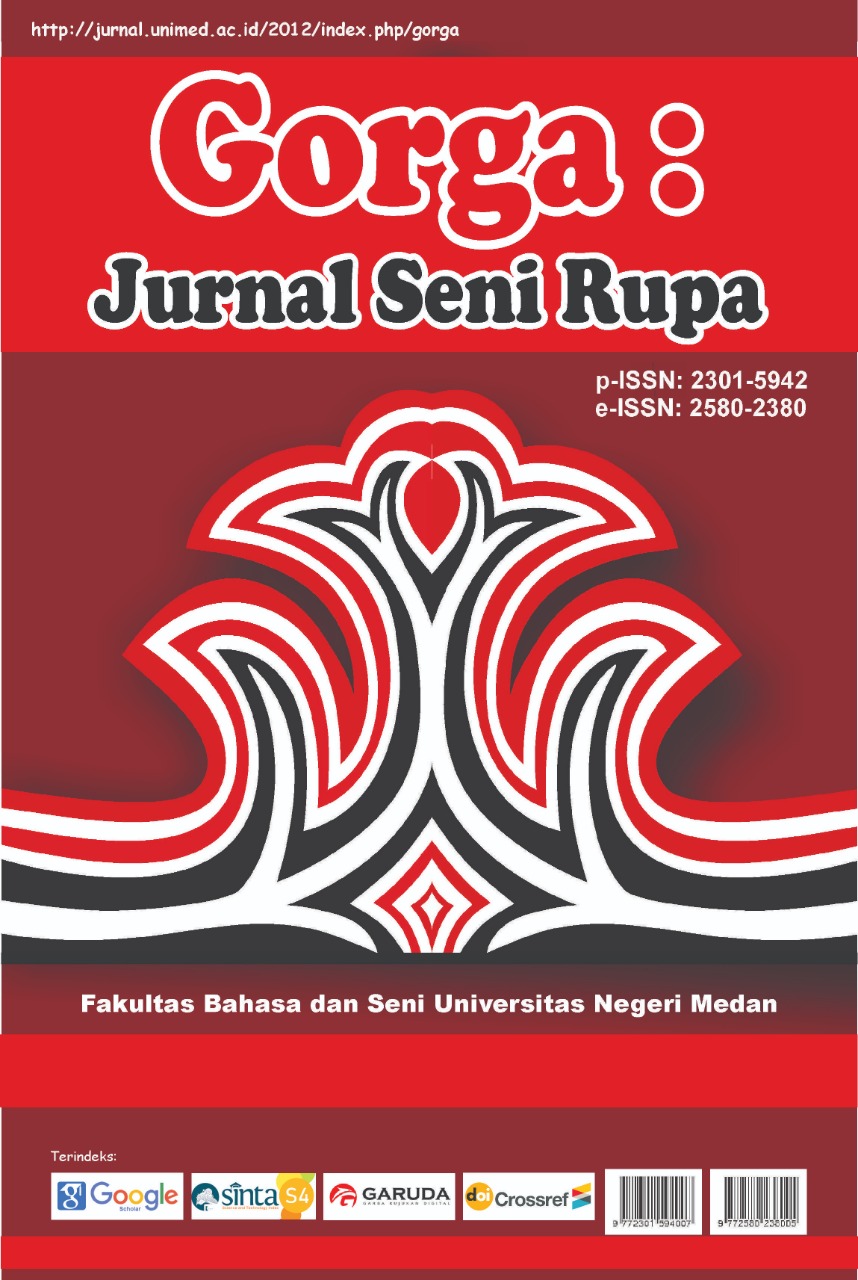
Gorga : Jurnal Seni Rupa
Journal Name Gorga : Jurnal Seni Rupa Initials GJSR Abbreviations Gorga Frequency Two times a year (June and December) DOI Prefix 10.24114 by CrossreffPortal ISSN 2301-5942 (Print) | 2580-2380 (Online) BRIN ISSN 2301-5942 (Print) | 2580-2380 (Online) Editor-in-Chief Drs. Anam Ibrahim, M.Pd. Managing Editor Adek Cerah Kurnia Azis, S.Pd., M.Pd. Publisher Fakultas Bahasa dan Seni Universitas Negeri Medan 
Gorga : Jurnal Seni Rupa has been published by Fakultas Bahasa dan Seni Universitas Negeri Medan since 2012. Gorga : Jurnal Seni Rupa presents the latest issues related to Fine Arts and Design throughout Indonesia and abroad. Gorga : Jurnal Seni Rupa is engaged in Fine Arts and Design which examines the results of research and final assignments (creation of works) in the fields of learning, assessment, analysis, creation of works, and so on in the scope of Fine Arts and Design.
The journal provides direct open access to its content with the principle that articles are freely available for consumption by the public which can support greater, broader, and deeper global knowledge exchange and development in the field of Fine Arts and Design. We are here to serve wholeheartedly for authors who want to contribute to the development of knowledge through Gorga : Jurnal Seni Rupa.
Indexing:

1.jpg)
-
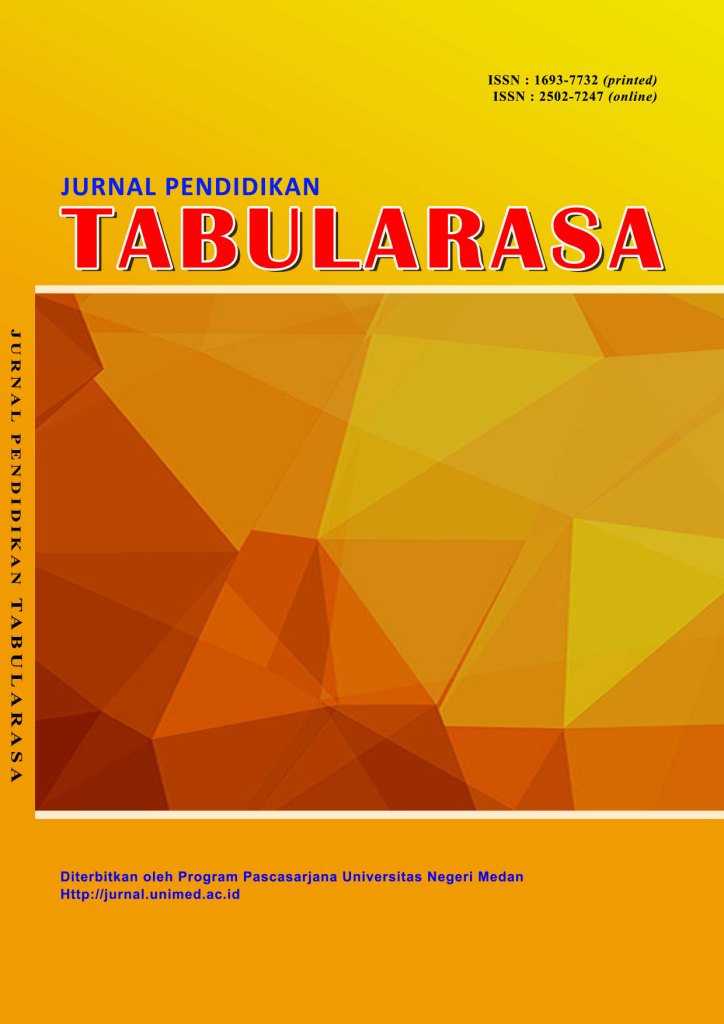
TABULARASA
ISSN:1693-7732 (Print) | ISSN: 2502-7247 (Online)
Jurnal Tabularasa adalah publikasi ilmiah yang memuat hasil penelitian bidang pendidikan meliputi teknologi pendidikan, administrasi pendidikan, manajemen pendidikan,pendidikan matematika, pendidikan biologi, pendidikan kimia, pendidikan dasar, pendidikan keolahragaan, dan pendidikan bahasa Indonesia yang belum pernah dipublikasikan.


-
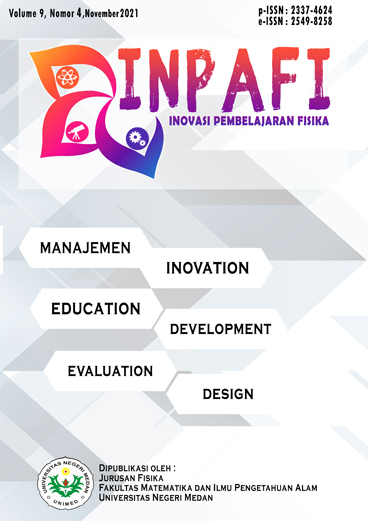
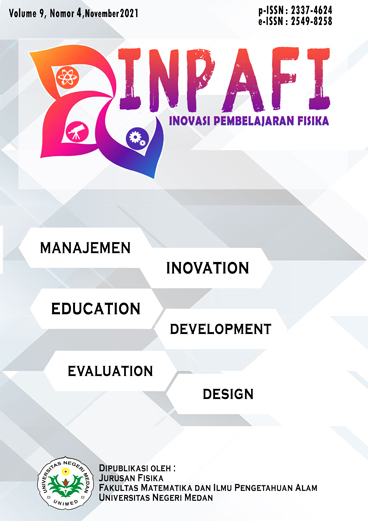
INPAFI (Inovasi Pembelajaran Fisika)
ISSN : 2337-4624 (Cetak) | ISSN : 2549-8258 (Online)
Jurnal Inovasi Pendidikan Fisika (INPAFI) dikelola oleh program studi Pendidikan Fisika Universitas Negeri Medan sejak Februari 2013.
Jurnal INPAFI diterbitkan sebagai media komunikasi ilmiah bidang Pendidikan Fisika yang diharapkan dapat membantu sebagai referensi penelitian berikutnya baik bagi para peneliti muda maupun para guru. Selain itu, juga untuk meningkatkan mutu pendidikan di Indonesia maupun di tigkat Internasional.
Bidang-bidang yang dibahas meliputi evaluasi proses dan hasil belajar, strategi belajar mengajar, media pendidikan, dan pengembangan program pengajaran.
Indexing :





-
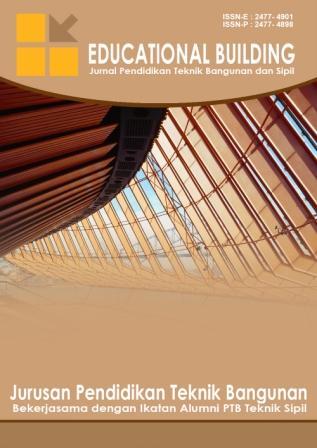
Educational Building: Jurnal Pendidikan Teknik Bangunan dan Sipil
Educational Building Jurnal Pendidikan Teknik Bangunan dan Sipil merupakan media publikasi karya-karya ilmiah khususnya hasil penelitian dalam bidang pendidikan teknik bangunan, teknik sipil, teknik arsitektur, teknik lingkungan, serta bidang ilmu yang relevan lainnya. Sebelum dipublikasi jurnal ini melewati proses daring dan reviewer. Jurnal ini diterbitkan dua kali dalam setahun yaitu pada bulan Juni dan Desember. Jurnal ini terbuka bagi masyarakat ilmiah tidak terbatas pada civitas akademika Fakultas Teknik Universitas Negeri Medan saja tetapi terbuka bagi dosen dan peneliti dari perguruan tinggi lain, dan paraprofessional lain. Jurnal ini telah mendapatkan Peringkat lima (5) Akreditas Jurnal Ilmiah sesuai dengan Surat Keputusan Direktur Jenderal Penguatan Riset dan Pengembangan Kementerian Riset, Teknologi, dan Pendidikan tinggi Nomor 3/E/KPT/2019 tentang Peringkat Akreditas Jurnal Ilmiah Periode I Tahun 2019.





-
PELANGI PENDIDIKAN
Print-ISSN : 0854-6401 | Online-ISSN : 2407-7461
Jurnal ini memuat beragam topik meliputi: hasil belajar, kemampuan awal, strategi pembelajaran, kemampaun meringkas dan koneksi matematika, manajerial, dan kewirausahaan. Terbit 2 kali setahun bulan Juni dan Desember. Jurnal ini dikelola oleh Wakil Rektor 1 Unimed.


-
JGK (Jurnal Guru Kita)
Journal Title JGK (Jurnal Guru Kita) Initials JGK Abbreviation Jurnal Guru Kita Frequency 4 issues per year (March, June, September, December) Prefix 10.24114 by Crossref Print ISSN 2548-883X | BRIN | ISSN Portal Online ISSN 2549-1288 | BRIN | ISSN Portal OAI https://jurnal.unimed.ac.id/2012/index.php/jgkp/oai Editor in Chief Laurensia Masri Perangin angin, S.Pd., M.Pd Publisher Universitas Negeri Medan JGK (Jurnal Guru Kita) contains articles resulting from research, learning, science, culture, technology, language, art, social phenomena and community service in the field of education. Published four times a year, namely in March, June, September and December. This journal is managed by Universitas Negeri Medan and in collaboration with the Indonesian Elementary School Teacher Education Lecturer Association. JGK (Jurnal Guru Kita) already has print and electronic ISSN. And has been nationally accredited since 24 October 2018. The articles in this journal have gone through a review process by a team of reviewers from various universities in Indonesia.
Indexing Journal : Google Scholar | SINTA (Science and Technology Index) | Garda Rujukan Digital (GARUDA) | Crossref | ResearchGate | Dimensions | Neliti | ROAD | Journal Stories | Semantic Scholar | ResearchBib | Scilit | Base

Google Scholar Metric at JGK (Jurnal Guru Kita) :
-
Grenek: Jurnal Seni Musik

.jpg?updatedAt=1748492156210)
Grenek: Jurnal Seni Musik
e-ISSN: 2579-8200 | p-ISSN: 2301-5349
Frequency: 2 issues per year (June & December)
DOI: Prefix 10.24114
Editor in Chief: Dr. Pulumun Peterus Ginting, S.Sn., M.Sn.
Managing Editor: Try Wahyu Purnomo, S.Pd., M.Pd.
Publisher: Departement of Music Education, Faculty of Languages and Arts, Universitas Negeri Medan
Accreditation Rankings: Sinta 4
Grenek: Jurnal Seni Musik (English: Grenek Music Journal) is a peer-reviewed journal published by the Department of Music Education, Faculty of Languages and Arts, Universitas Negeri Medan (since 2017) and is managed in collaboration with Asosiasi Program Studi Pendidikan Sendratasik Indonesia (Association of Indonesian Drama, Dance and Music Education Study Programs/AP2Seni). Grenek: Jurnal Seni Musik (English: Grenek Music Journal) is an integrated media for on going communication related to significant new research findings related to music studies, including: Music Education, Ethnomusicology, Music Performance Management, Musical Instrument Organology, Music Composition, Contemporary Music and Music Psychology.
Grenek: Jurnal Seni Musik (English: Grenek Music Journal) publishes research articles that are comprehensive in nature by inviting reviews from the leading experts in music studies. The incoming papers will be selected based on high scientific studies, provide important new knowledge, and are very interesting for the community in the field of music studies.This journal provides immediate open access to its content on the principle that making research freely available to the public supports a greater global exchange of knowledge.
Grenek: Jurnal Seni Musik is Indexed By:
Grenek: Jurnal Seni Musik (English: Grenek Music Journal) is accredited by the Ministry of Research, Technology and Higher Education, Republic of Indonesia, which is ranked Fourth Grade (Peringkat 4, Sinta 4) from 2021 to 2025 based on Decree No. 105/E/KPT/2022
1.jpg)
-
Gesture: Jurnal Seni Tari

Gesture: Jurnal Seni Tari
e-ISSN: 2599-2864 | p-ISSN: 2301-5799
Frequency : 2 issues per year (april & october)
Editor in Chief : Dr. Sitti Rahmah, S.Pd., M.Si
Managing Editor: Try Wahyu Purnomo, S.Pd., M.Pd
Publisher: Departement of Dance Education, Faculty of Languages and Arts, Universitas Negeri Medan
Accreditation Rankings : Sinta 4
Gesture: Jurnal Seni Tari (English: Gesture Dance Journal) is a peer-reviewed journal published by the Department of Dance Education, Faculty of Languages and Arts, Universitas Negeri Medan (since 2012) and is managed in collaboration with Asosiasi Program Studi Pendidikan Sendratasik Indonesia (Association of Indonesian Drama, Dance and Music Education Study Programs/AP2Seni). Gesture: Jurnal Seni Tari (English: Gesture Dance Journal) is an integrated media for on going communication related to significant new research findings related to dance studies, including: Dance Education, Dance Performance, Ethnochoreology, Dance Management, and Dance Psychology
Gesture: Jurnal Seni Tari (English: Gesture Dance Journal) publishes research articles that are comprehensive in nature by inviting reviews from the leading experts in dance studies. The incoming papers will be selected based on high scientific studies, provide important new knowledge, and are very interesting for the community in the field of dance studies. This journal provides immediate open access to its content onthe principle that making research freely available to the public supports a greater global exchange of knowledge.
Gesture: Jurnal Seni Tari is Indexed By:
Gesture: Jurnal Seni Tari (English: Gesture Dance Journal) is accredited by the Ministry of Research, Technology and Higher Education, Republic of Indonesia, which is ranked Fourth Grade (Peringkat 4, Sinta 4) from 2022 to 2027 based on Decree No. 10/C/CE/DT.05.00/05.00/2025
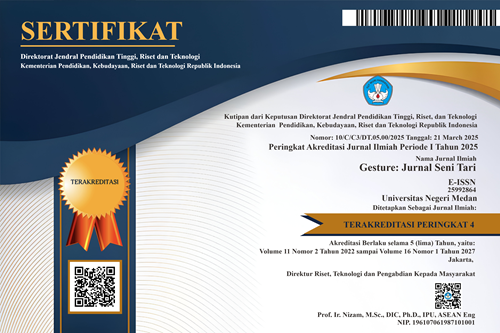
-
LINGUISTIK TERAPAN
Jurnal ini dikelola oleh prodi Linguistik Terapan Bahasa Inggris (LTBI) pascasarjana Unimed. -
Sains Olahraga : Jurnal Ilmiah Ilmu Keolahragaan
p-ISSN: 2302-2388 e-ISSN: 2580-5150
Sains OLahraga : Jurnal Ilmiah Ilmu Keolahragaan diterbitkan oleh program studi Ilmu Keolahragaan(IKOR) Fakultas Ilmu Keolahragaan (FIK) UNiversitas Negeri Medan (UNIMED) adalah jurnal yang memuat berbagai artikel ilmiah tentang berbagai hasil penelitian, konseptual dan kebijakan dibidang ilmu keolahragaan (sains olahraga). Jurnal Ilmiah Ilmu Keolahragaan menerima manuskrip/ sumbangan tulisan yang belum pernah diterbitkan dalam jurnal yang lain. Naskah yang masuk dievaluasi oleh tim redaksi. Redaksi dapat melakukan perubahan pada tulisan yang dimuat untuk keseragaman format, tanpa mengubah maksud dan isinya. Sains Olahraga : Jurnal Ilmiah Ilmu Keolahragaan terbit secara berkala 2 kali dalam setahun yaitu bulan April dan Oktober.




-
Edukasi Kultura
Nama Jurnal : Edukasi Kultura: Jurnal Bahasa, Sastra, dan Budaya Inisial : Kultura Frekuensi : Dua Kali Setahun (April, dan Oktober) e-ISSN : 2549-9726 p-ISSN : 2407-8409 Editor-in-chief : Dr. M. Oky Fardian Gafari, S.Sos.,M.Hum Penerbit : Universitas Negeri Medan
Dikelola oleh Prodi Magister Pendidikan Bahasa Indonesia Universitas Negeri Medan. dengan frekuensi penerbitan Dua kali setahun (April dan Oktober) di bidang pendidikan bahasa, sastra, dan budaya.
Jurnal Edukasi Kultura sedang mempersiapkan Pengajuan perpanjangan akreditasi mulai Volume 12 Nomor 1 April 2025 hingga Volume 14 Nomor 1 April 2027.
Edukasi Kultura tidak memungut biaya apa pun kepada penulis untuk seluruh proses publikasi, mulai dari pengiriman naskah (submission), penelaahan (peer review), hingga penerbitan artikel. Dengan demikian:
-
Biaya Pengiriman Artikel (Submission Fee): Rp 0 (Gratis)
-
Biaya Proses Publikasi (Article Processing Charge / APC): Rp 0 (Gratis)
- Layanan tinjauan cepat tersedia
Jurnal ini sepenuhnya bebas biaya Publikasi sebagai bentuk dukungan terhadap penyebaran ilmu pengetahuan dan hasil pengabdian kepada masyarakat yang terbuka dan inklusif.
Jurnal ini terdaftar di CrossRef dengan prefix Digital Object Identifier (DOI) 10.24114
Sebelum Pengajuan Artikel
Manuskrip harus orisinal, belum pernah dipublikasikan, dan tidak sedang dipertimbangkan untuk publikasi di tempat lain pada saat pengajuan ke EDUKASI KULTURA. Penulis harus memastikan bahwa manuskrip yang diajukan telah disiapkan menggunakan Template EDUKASI KULTURA Terbaru 2025. Manuskrip juga harus telah dikoreksi dengan pemeriksaan kemiripan (similarity check atau Turnitin). Penulisan referensi harus menggunakan alat manajemen sitasi seperti Mendeley, Zotero, EndNote, Ref-Works, Bib-Text, dll. Setiap manuskrip yang tidak memenuhi pedoman penulis, fokus, dan lingkup, yang ditulis dalam format berbeda dan tidak memenuhi persyaratan administratif akan langsung ditolak. Hanya manuskrip yang memenuhi standar EDUKASI KULTURA yang akan diproses lebih lanjut.

-
-
Jurnal Pedagogik Olahraga
Journal Title : Jurnal Pedagogik Olahraga (JPOR) ISSN : ISSN 2503-5355 (print) | ISSN 2580–8877 (online) DOI Prefix : Prefix 10.24114 by Crossref 
Editor in Chief : Dr Amir Supriyadi, M.Pd Managing Editor : Dr. Amiruddin M.Pd (Scopus ID: 59393562100) Publisher : Pascasarjana Universitas Negeri Medan Frequency : 2 issues per year (July, and Desember) Citation Analysis : | Garuda| Sinta 4 | Google Scholar Jurnal Pedagogik Olahraga (JPOR) merupakan jurnal elektronik nasional yang diterbitkan oleh Program Studi Pendidikan Olahraga Program Pascasarjana Universitas Negeri Medan dua kali setahun pada setiap bulan Juni dan Desember. Proses penyerahan naskah terbuka sepanjang tahun. Berdasarkan SK Dirjen Penguatan Riset dan Pengembangan Kemenristekdikti Nomor: 72/E/KPT/2024. Jurnal Pedagogik Olahraga adalah jurnal nasional yang terakreditasi SINTA 4. Semua naskah yang dikirimkan akan melalui tinjauan sejawat ganda dan tinjauan editorial sebelum diberikan penerimaan untuk publikasi. Jurnal Pedagogik Olahraga Berisikan hasil penelitian, makalah, tesis dan karya ilmiah lainnya yang berkaitan dengan :
- Olahraga Pendidikan,
- Olahraga Prestasi,
- Olahraga Kesehatan dan,
- Olahraga Rekreasi.
Jurnal Pedagogik Olahraga awal terbit dimulai dengan Vol.1 No.1 pada awal tahun 2015. Jurnal Pedagogik Olahraga telah menggunakan Sistem Open Journal yang mengharuskan semua penulis untuk mendaftar terlebih dahulu sebelum mereka diizinkan untuk mengunggah naskah yang mereka tulis secara online. Setelah itu, editor, peninjau sejawat, dan penulis dapat memantau pemrosesan naskah.
Terindeks oleh :





-
Jurnal Gizi dan Kuliner (Journal of Nutrition and Culinary)
Jurnal Gizi dan Kuliner (Journal of Nutrition and Culinary) merupakan jurnal tentang gizi dan kuliner nusantara maupun internasional yang dikelola oleh Program Studi S1 Gizi Fakultas Teknik Universitas Negeri Medan -
JPPIPAI: Jurnal Pendidikan Pembelajaran Ilmu Pengetahuan Alam Indonesia
Jurnal Pendidikan Pembelajaran Ilmu Pengetahuan Alam Indonesia (JPPIPAI) merupakan jurnal elektronik nasional yang memuat artikel dari hasil penelitian original tentang isu-isu terbaru dan tren yang terkait dengan penelitian pendidikan IPA. Jurnal ini dikelola oleh Program Studi Pendidikan IPA, Program Sarjana, Universitas Negeri Medan. Jurnal ini diterbitkan dua kali dalam setahun dibulan Agustus dan Februari. Jurnal ini bertujuan untuk menjembatani kesenjangan antara penelitian dan praktik, memberikan informasi/ide/pendapat tentang kurikulum dalam pendidikan IPA, pembelajaran dan penilaian IPA, pengembangan bahan ajar IPA, perkembangan kebijakan dan kebijakan hasil terbaru dari penelitian serta aplikasinya dalam pembelajaran IPA.
-
Jurnal Andaliman: Jurnal Gizi Pangan, Klinik dan Masyarakat
Jurnal Andaliman : Jurnal Gizi Pangan, Klinik dan Masyarakat (JGPKM) adalah jurnal ilmiah di bidang gizi. JGPM merupakan jurnal yang dikelola oleh Program Studi Gizi Universitas Negeri Medan. Jurnal ini published setiap 6 bulan sekali yaitu pada bulan Juli dan Desember.
JGPKM merupakan jurnal yang berfokus pada penelitian dan studi literatur terkait gizi, pangan dan masyarakat. Adapun JGPKM menerima bidang-bidang penelitian terkait Gizi Pangan, Gizi Klinik, Gizi Masyarakat, dan Gizi Institusi Komersial dan Non Komersial
-
REGISTER: Journal of English Language Teaching of FBS-Unimed
Journal title REGISTER: Journal of English Language Teaching of FBS-Unimed Initials REG Frequency 4 issues per year pISSN 2301-5233 eISSN 2655-9854 Publisher Universitas Negeri Medan Citation | Google Scholar | REGISTER Journal is an open access, peer-reviewed journal published by Universitas Negeri Medan. The primary aim of this journal is to disseminate current and original articles from academics, researchers, and practitioners in the field of English Language Teaching (ELT). Topics covered include language teaching methods, theoretical and practical applications, empirical research studies, material development, and technology integration in language learning.
This journal is published quarterly in March, June, September, and December by the Faculty of Languages and Arts, Universitas Negeri Medan.
Before submission,
Make sure your paper is prepared using the REG Template, carefully checked, and follows the author guidelines. Read the guidelines carefully. All manuscripts submitted to the journal's editorial office must comply with the writing standards. If a manuscript does not follow the guidelines or uses a different format, it will be rejected before the review process. Only manuscripts that match the journal's format will proceed to the next stage. -
PARADIKMA: JURNAL PENDIDIKAN MATEMATIKA
Paradikma: Jurnal Pendidikan Matematika (PJPM) is open access, and a peer-reviewed journal is published two times a year (January-June, July-December). This journal aims to disseminate quality research results in the field of Mathematics and Applied Mathematics Education. PJPM only offers electronic versions available in archive navigation to authors and other users. The journal also publishes critiques of relevant reports and books.
As is known, mathematics emphasises learning, but it is more important to build the character of those who study mathematics. Research in mathematics education deals with all aspects of mathematics education, including Pedagogical, Technological, Psychological in Mathematics Education. Papers should address central issues in terms that are relevant throughout the education system and be informed by broader thinking in the field. Meanwhile, applied mathematics shows the interaction between mathematics disciplines in the world of education.
- Journal TitlePARADIKMA Jurnal Pendidikan Matematika (PJPM)
- SubjectMathematics and Applied Mathematics
- ISSN 1978-8002 (Print) | 2502-7204 (Online)
- FrequencyTwice a year (January and July)
- DOI 10.24114/paradikma
- Indexing Sinta and View more
- Editor in ChiefDr. Elmanani Simamora, M.Si
- OAI https://jurnal.unimed.ac.id/2012/index.php/paradikma/oai
- PublisherProgram Studi Pendidikan Matematika PPs UNIMED
Indexed By







-
Indonesia Sport Journal
ISSN 2655-7770 (media online) | ISSN 2655-7525 (media cetak)
Indonesia Sport Journal (ISJ) is a journal managed by the Postgraduate Sports Science Study Program (IKOR) at the State University of Medan, this journal discusses science in the field of Sports, including Educational Sports, Achievement Sports, Recreational Sports, Sports with Special Needs, Fitness Sports, Healing Sports ( Rehabilitation), Sports Management. Indonesia Sport Journal (ISJ) is published twice a year, namely in June and December.
Indonesia Sport Journal (ISJ) merupakan jurnal yang dikelola oleh Prodi Ilmu Keolahragaan (IKOR) Pascasarjana Universitas Negeri Medan, Jurnal ini membahas ilmu dibidang Keolahragaan, meliputi: Olahraga Pendidikan, Olahraga Prestasi, Olahraga Rekreasi, Olahraga Berkebutuhan Khusus, Olahraga Kebugaran, Olahraga Penyembuhan (Rehabilitas), Manajemen Olahraga. Indonesia Sport Journal (ISJ) terbit 2 kali 1 tahun yaitu bulan Juni dan bulan Desember.
-
EducanduM : jurnal manajemen pendidikan
Nama Jurnal: Educandum: Jurnal Manajemen Pendidikan
Singkatan: EM / E.J.MP
Penerbit: Program Pascasarjana (Doktor) Manajemen Pendidikan, Universitas Negeri Medan (UNIMED)
ISSN (Print): 2086-3942
ISSN (Online): 2548-6195
DOI Prefix: 10.24114/em
Frekuensi Terbit: Dua kali setahun (Juni dan Desember)
Bahasa Publikasi: Bahasa Indonesia dan Bahasa Inggris
Akses: Open Access
Lisensi: Creative Commons Attribution 4.0 International License (CC BY 4.0)
Biaya Publikasi: Gratis (No publication fees)
Website Resmi: https://jurnal.unimed.ac.id/2012/index.php/em -
Jurnal Pendidikan Matematika dan Sains
ISSN: 1907-7157 (Print) | ISSN: 2579-8022 (Online)
Jurnal Pendidikan Matematika dan Sains diterbitkan sejak tahun 2006. Naskah yang dimuat dalam jurnal ini merupakan hasil penelitian dan kajian ilmiah dalam bidang pendidikan matematika dan sains. Pengelola menerima artikel hasil penelitian, catatan penelitian dan/atau telaah pustaka dalam bidang ilmu yang relevan.
Artikel yang diterima dan diterbitkan akan diakses secara bebas di situs web ini dan mengabstraksi basis data pengindeksan & pengindeksan:
- Google Scholar
- GARUDA (Garba Rujukan Digital)
-
FLAWLESS: Jurnal Pendidikan Tata Rias
JURNAL FLAWLESS diterbitkan oleh Prodi Pendidikan Tata Rias Unimed. Pembina Rektor Unimed. Penanggung Jawab Dekan FT Unimed. Terbit Pertama Kali tahun 2017
Redaksi menerima sumbangan tulisan yang belum pernah diterbitkan dalam media cetak lain. Naskah diketik dengan spasi rangkap pada ukuran A4. Panjang tulisan 10 s.d 20 halaman sebanyak 1 eksemplar (penjelasan pada sampul dalam belakang). Naskah yang masuk dievaluasi oleh Redaksi. Redaksi dapat melakukan perubahan pada tulisan yang dimuat untuk keseragaman forma tanpa mengubah maksud dan isinya -
KARISMATIKA: Kumpulan Artikel Ilmiah, Informatika, Statistik, Matematika dan Aplikasi
ISSN : 2443-0366 (Print) ISSN : 2528-0279 (Online)
Jurnal Matematika Karismatika adalah Jurnal yang diterbitkan Jurusan Matematika Universitas Negeri Medan Program Studi Matematika yang berisi kumpulan artikel ilmiah hasil peneliitian, kajian pemikiran atau kajian teori Informatika, Statistika, Matematika dan Aplikasi/Terapannya.
-
INSPIRATIF : JURNAL PENDIDIKAN MATEMATIKA
-
JURNAL AKUNTANSI DAN PEMBELAJARAN
P-ISSN: 2301-7384 E-ISSN: 2620-8733
Jurnal Akuntansi dan Pembelajaran adalah jurnal yang dipublikasi dan diterbitkan oleh Program Studi Pendidikan Akuntansi, Fakultas Ekonomi, Universitas Negeri Medan. Jurnal ini mempublikasi artikel ilmiah bertopik Pendidikan Akuntansi, Ilmu Akuntansi dan Pembelajaran. Artikel yang dipublikasi pada jurnal ini dapat berupa kajian kritis literatur maupun kajian empiris. Untuk dapat diterima untuk dipublikasi pada jurnal yang terbit dua kali setahun ini penulis harus melalui tinjauan awal dan tinjauan buta (blind review). Proses tersebut dilakukan untuk menjamin kualitas tulisan yang akan dipublikasi. Proses review awal dilakukan oleh tim penyunting untuk memastikan artikel yang akan didistribusi kepada mitra bestari layak untuk di-review. Selanjutnya, blind reviewdilakukan oleh mitra bestari untuk independensi hasil reviewdan memastikan kualitas tulisan yang di-review. Setelah melalui proses reviewdan artikel telah sesuai kategori yang ditetapkan dewan redaksi maka penulis diminta untuk menyatakan klirens etik dalam form yang telah ditetapkan, hal ini dilakukan untuk menjamin artikel bebas dari plagiarisme dan otoplagiarisme. Artikel yang telah terbit diperjual belikan secara umum agar dapat dibaca dan mampu kontribusi pada perkembangan ilmu dan praktik Pendidikan Akuntansi, Ilmu Akuntansi, dan Pembelajaran



-
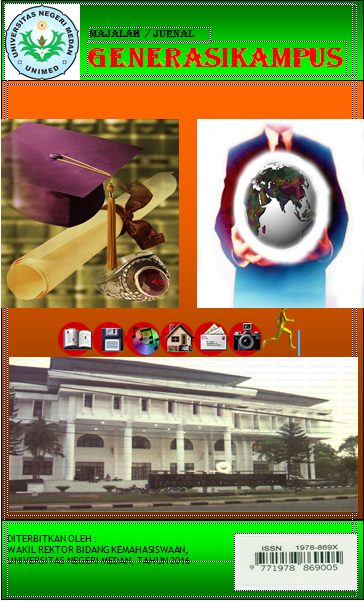
GENERASI KAMPUS
Jurnal ini terbit 2 kali setahun pada bulan April dan September. Berisi ringkasan hasil penelitian, gagasan konseptual, kajian teori, aplikasi teori yang dibuat dalam jurnal ini. -
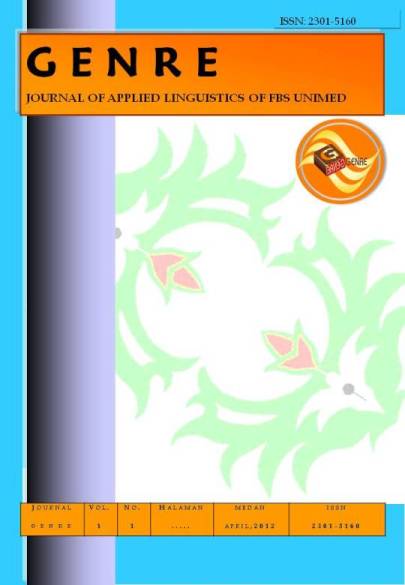
GENRE JOURNAL : Journal of Applied Linguistics of FBS Unimed
Genre Journal (E-ISSN: 2986-1551/P-ISSN: 2301-5160) is an open-access journal of applied linguistics that serves as a dynamic platform for sharing research and innovations in English language education and linguistics. It publishes original studies that explore various aspects of language learning, teaching, and use—including English-based technologies, language variation, and the development of English learners in multicultural and digital contexts. With a focus on discourse analysis, stylistics, higher education, and TESOL, the journal aims to promote interdisciplinary collaboration and foster academic dialogue among educators, researchers, and practitioners globally.
Genre Journal also embraces a wide array of linguistic subfields such as phonology, pragmatics, morphology, grammar, and English language assessment. It welcomes contributions that investigate both theoretical and practical dimensions of modern languages and applied linguistics. Published four times a year by the English and Literature Program, Faculty of Language and Arts, Universitas Negeri Medan, Genre Journal is committed to advancing scholarly work that shapes the future of English education and language studies in the digital era.
Journal title Genre Journal Initials GJ Abbreviation Genre Frequency 4 issues per year (January, April, July, October) DOI Prefix 10.24114 by ISSN 2301-5160 (print) - 2986-1551 (online) Editor-in-Chief Dr. Rita Suswati, S.Pd., M.Hum. Publisher Department of English and Literature, Faculty of Languages and Arts, Universitas Negeri Medan Indexing & Abstracting DOAJ | Copernicus | Dimensions | Garuda | Harvard Library | Scilit | Google Scholar | Neliti | ResearchGate
-
INDONESIAN COUNSELING AND PSYCHOLOGY


Indonesian Counseling and Psychology
e-ISSN: 2776-740X | p-ISSN: 2775-7587
Frequency : 2 issues per year (June & December)
DOI: https://doi.org/10.24114/icp
OAI: https://jurnal.unimed.ac.id/2012/index.php/ergasia/oai
Editor in Chief : Miswanto (Scopus, Sinta)
Managing Editor: Mirza Irawan (Scopus, Sinta)
Publisher: Universitas Negeri Medan
Accreditation Rankings : Sinta 4
Indonesian Counseling and Psychology is an open access and peer-reviewed scientific journal. This journal publishes original articles related to research, Counseling and Psychology theory development and program application related to the field of counseling and psychology. This journal is managed by the Guidance and Counseling Study Program, Faculty of Education, State University of Medan. This journal is published two times a year in June and December, and collaborates with the Regional Board of the Indonesian Guidance and Counseling Association (ABKIN).
Indonesian Counseling and Psychology is a journal that publishes comprehensive research articles with reviews from leading experts in the field of counseling and psychology. Submitted manuscripts will be selected based on their high scientific quality, the importance of the new knowledge they provide, and their relevance to the counseling and psychology community.
Indonesian Counseling and Psychology is Indexed By:
Indonesian Counseling and Psychology is accredited by the Ministry of Research, Technology and Higher Education, Republic of Indonesia, which is ranked Fourth Grade (Sinta 4) from 2022 to 2027 based on Decree No. 10/C/CE/DT.05.00/05.00/2025.

-
Garnish (Jurnal Pendidikan Tata Boga)
-
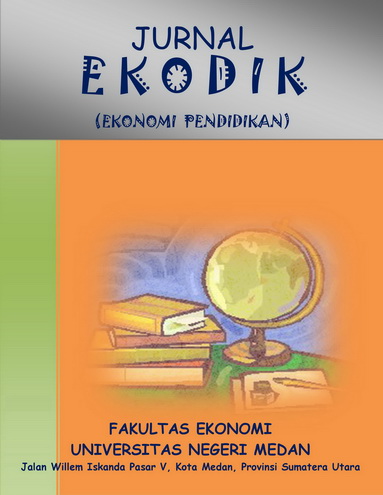
Jurnal EKODIK: Ekonomi Pendidikan
Jurnal Ekonomi Pendidikan diterbitkan oleh Program Studi Pendidikan Ekonomi Fakultas Ekonomi Universitas Negeri Medan secara berkala (Dua Kali dalam Setahun) yaitu setiap bulan April dan Oktober bertujuan untuk menyebarluaskan hasil penelitian pendidikan dalam bidang ekonomi dan bisnis. Artikel yang dipublikasi dalam jurnal ekonomi pendidikan berupa artikel hasil penelitian.
-
Indonesian Journal of Chemical Science and Technology (IJCST)
Indonesian Journal of Chemical Science and Technology (IJCST) is published by The Chemistry Department of Mathematics and Natural Sciences Faculty, Universitas Negeri Medan (UNIMED) Indonesia. This scientific periodical specializes in the study of the Multidisciplinary Chemistry Field, including Pure Chemistry and Applied Chemistry. The journal publishes original research and review which submissions on original advances in the understanding of Chemical application and Engineering areas, are welcome.
Indonesian Journal of Chemical Science and Technology (IJCST) has been accredited for 4th grade (SINTA 4) by the Ministry of Research, Technology, and Higher Education of the Republic of Indonesia since Vol. 6, No. 1, 2023 according to the decree No.152/E/KPT/2023.
.jpg)
The following are the field within the scope of Indonesian Journal of Chemical Science and Technology :
- Basic Chemistry
- Analytical Chemistry
- Physical Chemistry
- Organic Chemistry
- Inorganic Chemistry
- Biochemistry
- Applied Chemistry
- Chemical Engineering
Indonesian Journal of Chemical Science and Technology has become a CrossRef Member and all articles published by Indonesian Journal of Chemical Science and Technology will have unique DOI number.
About Indonesian Journal of Chemical Science and Technology
- Country of Publication: Indonesia
- Publisher: Department of Chemistry, Faculty of Mathematics and Natural Sciences, Universitas Negeri Medan.
- Format: Print & Online
- ISSN: p-ISSN: 2622-1349, e-ISSN: 2622-4968
- Frequency: Biannual
- Publication Dates: January and July
- Article Processing Charges: Yes
- Types of Journal: Academic/Scholarly Journals
- Open Access: Yes
- Indexed & Abstracted: Yes
- Policy: Peer-reviewed
- Review Time: Eight Weeks Approximately
IJCST is Indexes/Abstracted in:
- Google Scholar
- Garda Rujukan Digital (GARUDA)
- PKP Index
- International Standard Serial Number (ROAD)
- Neliti
- BASE
-
-
JAKPI - Jurnal Akuntansi, Keuangan & Perpajakan Indonesia
Jurnal Akuntansi, Keuangan & perpajakan Indonesia (JAKPI) di kelola oleh Jurusan Akuntansi Universitas Negeri Medan yang di terbitkan dua kali dalam setahun, yaitu pada bulan April dan September. Jurnal ini adalah media publikasi ilmiah yang di terbitkan secara on line dengan mempublikasikan hasil-hasil penelitian baik dalam bentuk riset kuantitatif maupun kualitatif dan kajian teori oleh para akademisi, praktisi, mahasiswa, dan pihak-pihak yang berkepentingan.


-
Paedagogi: Jurnal Kajian Ilmu Pendidikan (e-journal)

Paedagogi: Jurnal Kajian Ilmu Pendidikan (e-journal)
e-ISSN: 2407-7445 | p-ISSN: 2085-9880
Frequency: 2 issues per year (June & December)
DOI: Prefix 10.24114
Editor in Chief: Try Wahyu Purnomo, S.Pd., M.Pd
Paedagogi: Jurnal Kajian Ilmu Pendidikan (e-journal) is a peer-reviewed journal published by Faculty of Education, Universitas Negeri Medan (since 2014) and is managed in collaboration with Lembaga Pengembangan Kinerja Dosen (Lecturer Performance Development Institute), International Forum of Researchers and Lecturers, Asosiasi Riset Ilmu Pendidikan Indonesia (Indonesian Educational Science Research Association), Asosiasi Peneliti Dan Pengajar Ilmu Sosial Indonesia (Association of Social Science Researchers and Lecturers). Paedagogi: Jurnal Kajian Ilmu Pendidikan (e-journal) is an integrated media for on going communication related to significant new research findings related to study of educational science, development of learning models, digital technologies in education, innovative learning environments, adaptive learning, gamified learning, and results of research in the field of educational science.
Paedagogi: Jurnal Kajian Ilmu Pendidikan (e-journal) publishes research articles that are comprehensive in nature by inviting reviews from the leading experts in educational science studies. The incoming papers will be selected based on high scientific studies, provide important new knowledge, and are very interesting for the community in the field of educational science studies. This journal provides immediate open access to its content on the principle that making research freely available to the public supports a greater global exchange of knowledge.
-
Jurnal Antropologi Sumatera
ISSN: 1963-7317 (Printed)
ISSN: 2597-3878 (Online)Jurnal Antropologi Sumatera, The Journal is managed by the Unimed Postgraduate Social Anthropology Study Program. Jurnal Antropologi Sumatera, consisting of print and online editions, is an Anthropological Science journal that examines socio-cultural issues, especially in the local context of Sumatra. Contributors in this journal are academics, researchers, students, teachers, social and community science activities, cultural activists, and other parties with an interest in the development of socio-cultural issues. Jurnal Antropologi Sumatera is published in two editions a year, namely in December and June which are disseminated as social anthropology publications.
.png)

.png)
-
Jurnal Kesehatan dan Olahraga
Jurnal Kesehatan dan Olahraga adalah jurnal yang memuat berbagai artikel ilmiah tentang berbagai hasil penelitian, konseptual dan kebijakan dibidang kesehatan dan bidang olahraga yang diterbitkan oleh Program Studi Ilmu Keolahragaan (IKOR), Fakultas Ilmu Keolahragaan (FIK), Universitas Negeri Medan (UNIMED). Jurnal Kesehatan dan Olahraga menerima manuskrip/sumbangan tulisan yang belum pernah diterbitkan dalam jurnal yang lain. Naskah yang masuk dievaluasi oleh tim redaksi. Redaksi dapat melakukan perubahan pada tulisan yang dimuat untuk keseragaman format, tanpa mengubah maksud dan isinya.
Jurnal terindeks oleh:




Nama Jurnal : Jurnal Kesehatan dan Olahraga ISSN : 2597-4165 (Cetak) | 2599-0128 (Online) Frekuensi terbit : 6 Bulanan (Maret dan September) DOI : https://doi.org/10.24114/ko (Prefix - by Crossref) OAI : https://jurnal.unimed.ac.id/2012/index.php/ko/oai Editor in chief : Zulaini, SKM.,M.Kes, AIFO Publisher : Program Studi Ilmu Keolahragaan (IKOR) -
Jurnal PLANS : Penelitian Ilmu Manajemen dan Bisnis
ISSN : 1978-7057 (Print) | ISSN :2527-306X (Online)
The PLANS Journal contains from relevant management research results. Journal of PLANS is published by the Department of Management, Faculty of Economics, University of Negeri Medan which is published periodically twice a year in every May and November. The editors receive the manuscript from the authors according to the established criteria and prerequisites and have not been published by other journals.
-
Jurnal Usia Dini
ISSN : 2301-914X (Media Cetak) | ISSN : 2502-7239 (Media Online)
Nama Jurnal : Jurnal Usia Dini Editor in Chief : Peny Husna Handayani, S.Pd., M.Pd Penerbit : Program Studi PG PAUD FIP UNIMED DOI Prefix : https://doi.org/10.24114/jud Prekuensi Terbit : 2 terbit per tahun (Juni dan Desember) Jurnal Anak Usia Dini merupakan media publikasi ilmiah yang dikelola oleh Prodi PG PAUD FIP UNIMED sejak tahun 2015. Terbit sebanyak dua kali dalam satu tahun, yaitu pada bulan Juni dan Desember. Jurnal ini memuat artikel hasil penelitian maupun kajian kritis berkaitan dengan tema-tema pendidikan, pendidikan anak usia dini, inovasi pembelajaran (materi, metode, pendekatan, model, media, dan evaluasi belajar) anak usia dini, dan tumbuh kembang anak usia dini.


.png)
-

HEXAGONE Jurnal Pendidikan, Linguistik, Budaya dan Sastra Perancis
Hexagone (P-ISSN: 2301-6582 | E-ISSN: 2745-5386) est une revue publiée par la section française du département des langues étrangères étant une des composantes de l’Universitas Negeri Medan. C’est une revue semestrielle se lançant en juin et en décembre. Cette revue fait des appels à contribution pour les ouvrages scientifiques, les recherches ou les données qualitatives ou quantitatives de l’enseignement de français. Elle vise à promouvoir l’échange académique et à enrichir la réflexion sur la didactique du français à travers des publications originales, innovantes et rigoureusement évaluées par des pairs. Hexagone accueille des contributions d’enseignants, de chercheurs, ainsi que de praticiens du domaine de la langue française, tant au niveau national qu’international.
-
PSIKOLOGI KONSELING
Journal Title : Jurnal Psikologi Konseling ISSN : 2085-8086 (print) | 2502-7190 (Electronik) DOI Prefix : 10.24114 by Crossref Editor in Chief : Rafael Lisinus Ginting, S.Pd, M.Pd Managing Editor : Mirza Irawan S.Pd, M.Pd Publisher : Faculty of Education Universitas Negeri Medan Country : Indonesia Frequency : 2 issues per year (Juni and December) Indexed : JURNAL PSIKOLOGI KONSELING
PSIKOLOGI KONSELING: Jurnal Kajian Psikologi dan Konseling (P-ISSN 2085-8086; E-ISSN 2502-7190) is a peer-reviewed open-access journal established to disseminate the latest knowledge in the fields of psychology and counseling. This journal is published twice a year (June and December) by the Guidance and Counseling Study Program, Faculty of Education, Universitas Negeri Medan, North Sumatra, Indonesia.The journal serves as a platform for publishing original articles addressing current issues and emerging trends in psychology across various contexts, as well as in guidance and counseling, with the aim of advancing our understanding of psychological and counseling theories and practices. In addition, the journal also covers topics related to inclusive education.
All submitted manuscripts undergo an initial editorial review and are subsequently evaluated by at least two reviewers through a double-blind peer-review process to ensure the quality of published papers.
JURNAL PSIKOLOGI KONSELING has been accredited as a SINTA 5 academic journal by the Ministry of Research and Technology/National Research and Innovation Agency of the Republic of Indonesia.
JURNAL PSIKOLOGI KONSELING is indexed in SINTA, GARUDA, and Google Scholar
-
Puteri Hijau : Jurnal Pendidikan Sejarah
Puteri Hijau: Jurnal Pendidikan Sejarah, merupakan media publikasi hasil penelitian guru, dosen dan peneliti bidang Pendidikan Sejarah, Ilmu Sejarah dan Ilmu Pengetahuan Sosial. Jurnal Puteri Hijau terbit per 6 (enam) bulan, Januari dan Juli.




-
TRANSFORM: Journal of English Language Teaching and Learning
TRANSFORM Journal was published by English Department, Faculty of Languages and Arts, Universitas Negeri Medan with DOI prefix of 10.24114 by
 has been covered in indexing and abstracting services such as DOAJ, Copernicus, Dimensions, Garuda, Harvard, Library, Scilit, Google Scholar, Neliti and ResearchGate.
TRANSFORM Journal (E-ISSN: 2985-9441 | P-ISSN: 2301-5225) is an open-access electronic journal that supports research in the field of Linguistics, Literature, and English Language Teaching. The aim of the journal is to publish academic research on applied linguistics relevant to actual issues and to be a publication platform for original research from academics, researchers, and practitioners.
TRANSFORM Journal is issued four times annually, in March, June, September and December. The focus and scope of this journal include areas of analysis like Linguistics, Literature, and English Language Teaching.
-

JURNAL SASTRA INDONESIA (SASINDO)
Jurnal Sastra Indonesia (Sasindo) merupakan media publikasi hasil penelitian dan kajian konseptual dalam bidang sastra, media pembelajaran sastra, linguistik, seni budaya, multimedia senimatografi, dan kajian media massa. Jurnal ini dikelola oleh Program Studi Sastra Indonesia Jurusan Bahasa dan Sastra Indonesia Fakultas Bahasa dan Seni (FBS) Universitas Negeri Medan (Unimed). Jurnal ini terbit tiga kali dalam setahun yakni pada bulan April, Agustus, dan Desember.
Journal title Jurnal Sastra Indonesia Initials Sasindo Abbreviation JSIS Frequency 3 issues per year (April, Agustus, & Desember) DOI Prefix 10.24114 by ISSN 2301-590X (Print) I 2985-7465 (Elektronik) Editor in Chief Muhammad Anggie J. Daulay, S.S., M.Hum. Publisher Universitas Negeri Medan Indexing & Abstracting Google Scholar | Dimensions | Garuda | Scilit | | Neliti | ResearchGate
INDEXING BY :
.png)

.png)
.png)
.png)
.png)
.png)
-
JURNAL BUNGA RAMPAI USIA EMAS
ISSN : 2301-9409 (Media Cetak) | ISSN : 2502-7166 (Media Online)
Nama Jurnal : Jurnal Bunga Rampai Usia Emas Editor in Chief : Gita Noveri Eza, S.Pd., M.Pd Penerbit : Program Studi PG PAUD FIP UNIMED DOI Prefix : https://doi.org/10.24114/jbrue Terbitan : 2 terbit per tahun (Juni dan Desember) Jurnal Bunga Rampai Usia Emas merupakan jurnal elektronik nasional yang dikelola oleh Prodi PG-PAUD FIP Universitas Negeri Medan. Jurnal ini menerbitkan artikel 2 kali dalam 1 tahun, yaitu di bulan Juni dan Desember. Artikel yang ditulis dalam jurnal meliputi hasil penelitian dan/atau gagasan ide bertema pendidikan, pembelajaran, ilmu pengetahuan, dan pengabdian masyarakat yang berkaitan dengan pendidikan anak usia dini.
-
Journal of Architecture and Spatial Planning
Journal of Architecture and Spatial Planning (JASP) is an open-access scholarly journal dedicated to the advancement of knowledge in architecture, urban design, and spatial planning. Published biannually in February and July, JASP provides a platform for disseminating both empirical and theoretical research that addresses critical and contemporary issues in the built environment. The journal covers a wide range of topics including architectural design and spatial form, contemporary urban design, sustainable and resilient city planning, technological innovations in the built environment, human-centered urbanism, and urban policy, culture, and transformation.
By adopting an interdisciplinary perspective, JASP aims to foster academic dialogue that integrates architecture, planning, and social sciences to produce innovative approaches to urban and regional development. The journal encourages submissions that contribute to theoretical advancement, practical applications, and policy-making in urban and spatial planning. All manuscripts undergo a rigorous double-blind peer-review process to ensure high academic standards and integrity. As an open access journal, JASP is freely available to a global readership, enabling wider dissemination of research outcomes and knowledge exchange among scholars, practitioners, and policymakers.
-

Unimed Law Review
e-ISSN: XXX | p-ISSN: XXX
UNIMED Law Review is an academic journal established by the Business Law Study Program, Faculty of Social Sciences, Universitas Negeri Medan. Published biannually in May and November, the journal serves as an open access, double peer-reviewed platform dedicated to publishing high-quality legal research. UNIMED Law Review aims to provide a space for scholarly discussions on various legal issues, encompassing topics such as constitutional law, administrative law, civil law, criminal law, Islamic law, human rights law, customary law, business law, international law, tax law, agrarian law, cyber law, environmental law, humanitarian law, economic law, intellectual property law, arbitration law, and other related areas of legal studies.
The journal publishes full-length articles that critically analyze key legal topics and challenges. UNIMED Law Review offers a comprehensive approach to understanding the intersection of law with social, political, and economic spheres. The journal is committed to ensuring that all published research maintains the highest academic standards. Articles are rigorously selected and evaluated through a transparent and objective peer-review process to ensure their scholarly quality.
UNIMED Law Review accepts submissions from researchers worldwide. All submitted manuscripts must be original, not previously published elsewhere, and not under consideration for other publications. The journal employs plagiarism detection software to ensure the integrity of the research, and any manuscript with detected plagiarism above 20% will be automatically rejected.
