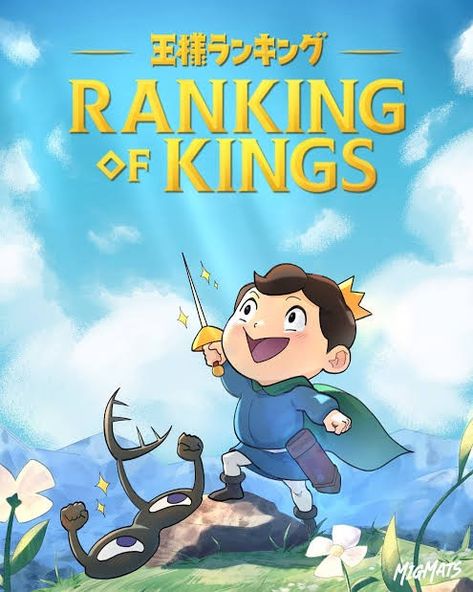
Pengaruh Model Pembelajaran Value Clarification Technique (Vct) Berbantuan Anime Ousama Rankings Terhadap Hasil Belajar Pendidikan Pancasila Siswa Kelas IV
DOI:
https://doi.org/10.24114/73450Abstract
This study aims to investigate the impact of implementing the Value Clarification Technique (VCT) learning model combined with the anime media Ousama Ranking on the learning outcomes of Pancasila Education among fourth-grade students at SDN 064037 Medan Tembung. A quantitative approach was employed using a quasi-experimental design, specifically adopting the nonequivalent control group design. The research sample consisted of two groups, each comprising 25 fourth-grade students. The experimental group received instruction through the VCT model assisted by Ousama Ranking anime media, while the control group continued with conventional teaching methods. The findings revealed that the average learning outcome of the experimental group reached 70.2, reflecting a meaningful improvement from pretest to posttest scores in class IV-A. The normality test confirmed that the data followed a normal distribution, with significance values exceeding the 0.05 threshold. Similarly, the homogeneity test demonstrated consistency across groups, indicated by a Based on Mean significance value of 0.750, which surpassed the 0.05 criterion. Furthermore, hypothesis testing conducted through the Independent Sample T-Test produced a significance value (2-tailed) of 0.005, falling below the 0.05 threshold, leading to the rejection of H₀ and the acceptance of Hₐ. In conclusion, the implementation of the VCT learning model assisted by Ousama Ranking anime media proved to have a significant effect on improving the Pancasila Education learning outcomes of fourth-grade students at SDN 064037 Medan Tembung
Downloads
References
Andriani, L. "Pengaruh Faktor Internal dan Eksternal Terhadap Hasil Belajar Siswa." Jurnal Pendidikan dan Pembelajaran, vol. 10, no. 2, 2020, pp. 24-31.
Arikunto, Suharsimi. Prosedur Penelitian: Suatu Pendekatan Praktik. Rineka Cipta, 2013.
Badan Pembinaan Ideologi Pancasila (BPIP). Buku Panduan Pendidikan Pancasila. BPIP, 2022, https://bpip.go.id/public/buku/. Diakses 13 Desember 2025.
Hasanah, Nurul. "Peningkatan Kesadaran Nilai Melalui Model Value Clarification Technique dalam Pendidikan Karakter." Jurnal Pendidikan Moral, vol. 8, no. 1, 2023, pp. 45-60.
Hikmah, Siti, et al. "Moral Values in Ousama Rankings and Its Relevance to Character Education." Journal of Character Development, vol. 12, no. 2, 2023, pp. 45-60.
Ismail. Value Clarification Technique (VCT). 2020.
Kementerian Pendidikan dan Kebudayaan. Panduan Pendidikan Kewarganegaraan. Kemendikbudristek, 2022.
Kementerian Pendidikan Kebudayaan Riset dan Teknologi. Pendidikan Pancasila. Kemendikbudristek, 2023, https://static.buku.kemdikbud.go.id/content/pdf/bukuteks/kurikulum21/Pendidikan-Pancasila-BS-KLS-X.pdf. Diakses 13 Desember 2025.
Kusuma, Rina. "Efektivitas Diskusi Reflektif Berbasis Media dalam Pembelajaran Pancasila." Jurnal Ilmiah Pendidikan Sosial, vol. 11, no. 2, 2022, pp. 78-92.
Lefudin. "Model Pembelajaran Efektif di Era New Normal." Jurnal Pendidikan Vol 23, No 2 (2022): 125-139.
Mulyadi, Arief, and Prasetyo, Budi. "The Role of Anime in Teaching Moral Values to Elementary School Students." International Journal of Educational Media, vol. 8, no. 1, 2022, pp. 78-92.
Mona Lisa, H., & Kurnia, H. (2023). Upaya meningkatkan pendidikan Indonesia berdasarkan nilai-nilai Pancasila. Jurnal Pendidikan, 7(1). DOI: 10.31316/jk.v7i1.4807
MyAnimeList. "Ousama Ranking Reviews." 2022.
Nurfaizah. "Value Clarification Technique: Sebuah Pendekatan Pembelajaran Nilai." Universitas Muhammadiyah Makassar, 2023.
Ousama Ranking. Disutradarai oleh Yousuke Hatta, Wit Studio, 2021.
Prasetyo, H., dan D. Sari. "Metode Pembelajaran Interaktif dalam Pendidikan Kewarganegaraan." Jurnal Pendidikan Dasar, vol. 6, no. 2, 2021.
Pratama, Andi. "Pembelajaran Berbasis Media: Tantangan dan Strategi Implementasi." Jurnal Inovasi Pendidikan, vol. 9, no. 4, 2022, pp. 55-70.
Rahman, Dedi, dan Siti Putri. "Peran Media Visual dalam Pendidikan Moral dan Karakter." Jurnal Pendidikan Karakter.
Salim Media Indonesia. Pendidikan Pancasila. 2020, https://www.salimmedia.com/product/pendidikan-pancasila/. Diakses 13 Desember 2025.
Santrock, John W. Educational Psychology. McGraw-Hill, 2020.
Sari, R. "Kewajiban Siswa di Sekolah: Tanggung Jawab dan Implementasinya." Jurnal Ilmu Pendidikan, vol. 9, no. 1, 2023.
Setiawan, A. "Faktor yang Mempengaruhi Hasil Belajar Siswa." Jurnal Pendidikan, vol. 6, no. 1, 2020, pp. 11-16.
Sportskeeda. "Why Ousama Ranking is the Perfect Anime to Start This Week." 2021.
Sugiyono. Metode Penelitian Kuantitatif Kualitatif dan R&D. 23rd ed., Alfabeta, 2016.
Sukardi. "Hak dan Kewajiban Warga Negara dalam Pendidikan Kewarganegaraan." Jurnal Pendidikan Kewarganegaraan, vol. 5, no. 3, 2021.
Trianto. Model Pembelajaran Terpadu. Jakarta: Bumi Aksara, 2021.
Universitas Wisnuwardhana Malang Press. Pendidikan Pancasila dan Kewarganegaraan. Universitas Wisnuwardhana Malang Press, 2021, https://www.gho-elearning.com/web/uploads/ebook/pdf/orfO0m__aQSQ.pdf. Diakses 13 Desember 2025.
Vocal Media. "What Makes Ousama Ranking So Special?" 2022. Diakses 13 Desember 2025.
Wena, M. Strategi Pembelajaran Inovatif. Jakarta: Alfabeta, 2021.
Downloads
Published
Issue
Section
License
Copyright (c) 2026 Muammar Sahala Tua Siregar, Apiek Gandamana, Robenhart Tamba, Waliyul Maulana Siregar, Yusra Nasution

This work is licensed under a Creative Commons Attribution-ShareAlike 4.0 International License.
Authors who publish with this journal agree to the following terms:
Authors retain copyright and grant the journal right of first publication with the work simultaneously licensed under a Creative Commons Attribution 4.0 International that allows others to share the work with an acknowledgement of the work's authorship and initial publication in this journal.
Authors are able to enter into separate, additional contractual arrangements for the non-exclusive distribution of the journal's published version of the work (e.g., post it to an institutional repository or publish it in a book), with an acknowledgement of its initial publication in this journal.
Authors are permitted and encouraged to post their work online (e.g., in institutional repositories or on their website) prior to and during the submission process, as it can lead to productive exchanges, as well as earlier and greater citation of published work.
Deprecated: Implicit conversion from float-string "-118.3465" to int loses precision in /var/www/html/2012/plugins/generic/pflPlugin/PflPlugin.php on line 132