STRENGTHENING THE PROFILE OF PANCASILA STUDENTS THROUGH 21ST CENTURY SKILLS-BASED LEARNING
DOI:
https://doi.org/10.24114/jmpsd.v2i3.72174Keywords:
Pancasila Student Profile, twenty-first-century learning, character education, project-based learning, Merdeka CurriculumAbstract
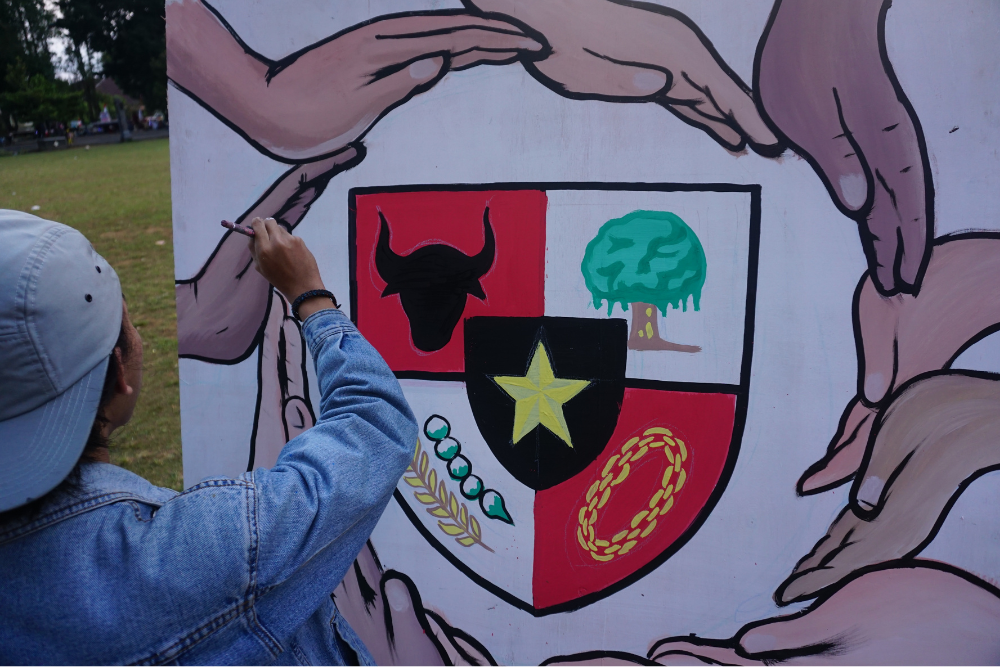
The rapid changes of the twenty-first century require education systems to develop students who possess not only academic competence but also strong character and essential life skills. In Indonesia, the Pancasila Student Profile has been introduced through the Merdeka Curriculum as a strategic framework for strengthening character education while responding to global educational demands. This study aims to analyze how twenty-first-century learning approaches contribute to strengthening the Pancasila Student Profile in educational practice. This research employed a qualitative literature review design by analyzing academic journal articles, books, and policy documents related to the Pancasila Student Profile, twenty-first-century learning, and character education. Data were analyzed thematically to identify patterns, key findings, and relationships between contemporary pedagogical approaches and the six dimensions of the Pancasila Student Profile. The results indicate a strong alignment between the Pancasila Student Profile and twenty-first-century competencies, particularly critical thinking, creativity, collaboration, and communication. Project-based learning, problem-based learning, collaborative learning, and the Project for Strengthening the Pancasila Student Profile (P5) were found to be effective in internalizing Pancasila values through contextual and experiential learning. However, challenges such as teacher readiness, limited resources, and infrastructure disparities remain significant obstacles to effective implementation.In conclusion, strengthening the Pancasila Student Profile through twenty-first-century learning requires integrated efforts involving innovative pedagogy, continuous teacher professional development, and systemic institutional support. By combining global competencies with national values, Indonesian education can foster students who are resilient, ethical, and well-prepared to face future challenges.
References
Gabriela, M. (2024). Implementation of the Project for Strengthening the Pancasila Student Profile through entrepreneurship activities in senior high schools. Journal of Character Education, 14(2), 145–156.
Halisa, A. S. N., Wahyuni, A., & Saparuddin, A. S. (2024). Portrait of the implementation of the School Driving Program at SDN Aroepala Makassar. Irfani: Journal of Primary Education, 5(1), 23–35.
Insani, N. H., Utomo, T. D., & Ulya, L. H. (2024). Actualization of Tetep, Antep, and Mantep values to realize the critical reasoning dimension of the Pancasila Student Profile. Piwulang: Journal of Regional Language and Literature Education, 6(1), 55–66.
Kemendikbudristek. (2022). Guidelines for strengthening the Pancasila Student Profile project. Directorate General of Primary and Secondary Education, Ministry of Education, Culture, Research, and Technology.
Satya, H. H., Nursuciati, H., & Yuana, M. I. (2024). Pancasila as the entity and identity of the Indonesian nation and the realization of the Pancasila Student Profile in contextual education. Journal of Basic Learning, 8(2), 101–112.
Uzma, I. A., & Rahayu, Y. S. (2025). Effectiveness of guided discovery-based electronic worksheets in training critical thinking skills. Scientific Periodical of Biology Education, 14(1), 67–78.
Downloads
Published
Issue
Section
License
Copyright (c) 2025 Rizky Zulaidah, Sastri Kirani, Cut Kumala Sari

This work is licensed under a Creative Commons Attribution-ShareAlike 4.0 International License.
Authors who publish with this journal agree to the following terms:
Authors retain copyright and grant the journal right of first publication with the work simultaneously licensed under a Creative Commons Attribution 4.0 International that allows others to share the work with an acknowledgement of the work's authorship and initial publication in this journal.
Authors are able to enter into separate, additional contractual arrangements for the non-exclusive distribution of the journal's published version of the work (e.g., post it to an institutional repository or publish it in a book), with an acknowledgement of its initial publication in this journal.
Authors are permitted and encouraged to post their work online (e.g., in institutional repositories or on their website) prior to and during the submission process, as it can lead to productive exchanges, as well as earlier and greater citation of published work.