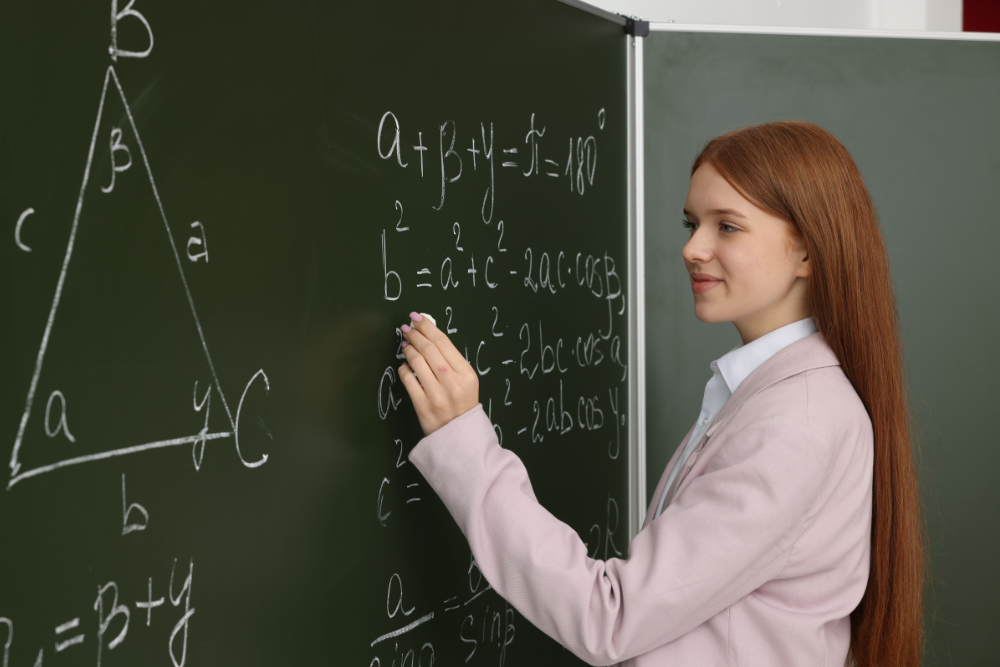
FACTORS AFFECTING ELEMENTARY SCHOOL STUDENTS' INTEREST IN LEARNING MATHEMATICS ON THE TOPIC OF GEOMETRY AND EFFORTS TO IMPROVE IT
DOI:
https://doi.org/10.24114/jmpsd.v2i2.69503Keywords:
learning interest, mathematics, geometry, elementary school studentsAbstract
This study aims to determine the level of interest in learning mathematics among fourth-grade students at SDN 106161 Laut Dendang on the topic of geometry and to identify the factors that influence it. The study uses a quantitative approach with a descriptive method. The research subjects consisted of 32 students who were given a questionnaire containing 17 questions about their interest in learning mathematics on the subject of flat shapes. The results showed that 50% of students had a high interest in learning, while the other 50% showed a low interest in learning. This indicates that mathematics learning on the topic of geometry is not yet fully interesting for all students. Factors that influence learning interest include students' perceptions of the difficulty of the material, the learning methods used by teachers, the availability of learning media, and support from the surrounding environment. Recommended solutions include the application of interactive learning methods, the use of concrete and digital media, linking the material to everyday life, and increasing collaboration between teachers, students, and parents. This study is expected to provide input for teachers and schools to increase student interest and learning outcomes in mathematics.
References
Barimbing, A. A. (2022). ANALISIS FAKTOR RENDAHNYA MINAT BELAJAR SISWA PADA MATA PELAJARAN MATEMATIKA KELAS VI SD. JURNAL PAJAR (Pendidikan Dan Pengajaran).
Dwi Asih, D. C. (2019). Peningkatan Minat Belajar Siswa Menggunakan Metode Simon Berkata Pada Tema Selalu Berhemat Energi Kelas IV Sekolah Dasar Negeri 11 Sandung. Jurnal Studi Guru dan Pembelajaran.
Hasibuan, F. R. (2020). Faktor-Faktor yang Mempengaruhi Minat Belajar Matematika Siswa Sekolah Dasar. Jurnal Pendidikan Dasar Nusantara.
Indriani Jayanti, N. A. (2020). Analisis faktor internal dan eksternal kesulitan belajar matematika kelas V. Jurnal Pendidikan.
Irfan Fauzi, A. A. (2022). Analisis Kesulitan Belajar Siswa Pada Materi Geometri. Jurnal Sosial Teknologi. 659-654.
Kasman, K., & Ilham, M. (2022). Penggunaan Media Interaktif dalam Meningkatkan Minat Belajar Matematika. JADIKA: Jurnal Ilmiah Pendidikan Dasar, 6(1).
Muhammad Rian Subekti, A. K. (2021). Analisis minat belajar matematika siswa kelas IV SDN 25 gurung peningkah kayan hilir tahun 2020/2021. J-PiMat: Jurnal Pendidikan Matematika .
Munandar, R., & Siregar, H. (2021). Efektivitas Penggunaan Alat Peraga dalam Pembelajaran Matematika. Jurnal Al-Fihris, 5(2).
Putri, A. (2021). Pendekatan Kontekstual dalam Pembelajaran Matematika. Jurnal Pendidikan Matematika Indonesia, 9(3)
Rosali, Y. &. (2018). Pengaruh Strategi Pembelajaran dan Minat Belajar terhadap Hasil Belajar Matematika. Jurnal Teknologi Pendidikan UNIMED.
Savira Mahesa Azhirakeisha, A. A. (2024). Analisis Kesulitan Belajar Geometri pada Siswa Sekolah Dasar dengan Pendekatan Konkret dan Strategi Pembelajaran yang Adaptif. Jurnal Pendidikan Tambusai.
Slameto. (2010). Belajar dan Faktor-faktor yang Mempengaruhinya. Rineka Cipta.
Sri Ayu, S. D. (n.d.). Analisis faktor penyebab kesulitan belajar matematika. AKSIOMA: Jurnal Program Studi Pendidikan Matematika, 2021.
Suci Ramadani, K., & Rizky Wandini, R. (2023). Analisis Faktor Rendahnya Minat Belajar Matematika Siswa Kelas IVdi SD IT Hidayatul Jannah. Jurnal Pendidikan Tambusai, 7(3), 31844–31849. https://doi.org/10.31004/jptam.v7i3.12188
Syah, M. (2001). Psikologi pendidikan dengan pendekatan baru. Remaja Rosdakarya.
Wulandari, C. (2017). Menanamkan konsep bentuk geometri. Jurnal Pengabdian Masyarakat Ipteks.
Downloads
Published
Issue
Section
License
Copyright (c) 2025 Onma Nikita Putri, Chanisah Azzahra, Rizka Fadhila Siregar, Syahrial

This work is licensed under a Creative Commons Attribution-ShareAlike 4.0 International License.
Authors who publish with this journal agree to the following terms:
Authors retain copyright and grant the journal right of first publication with the work simultaneously licensed under a Creative Commons Attribution 4.0 International that allows others to share the work with an acknowledgement of the work's authorship and initial publication in this journal.
Authors are able to enter into separate, additional contractual arrangements for the non-exclusive distribution of the journal's published version of the work (e.g., post it to an institutional repository or publish it in a book), with an acknowledgement of its initial publication in this journal.
Authors are permitted and encouraged to post their work online (e.g., in institutional repositories or on their website) prior to and during the submission process, as it can lead to productive exchanges, as well as earlier and greater citation of published work.