Implementation of Reproductive Health Education for Children with Special Needs from an Inclusivity Perspective
DOI:
https://doi.org/10.24114/jmpsd.v3i4.72700Keywords:
Reproductive health education, Children with special needs, Inclusivity, Effectiveness, CurriculumAbstract
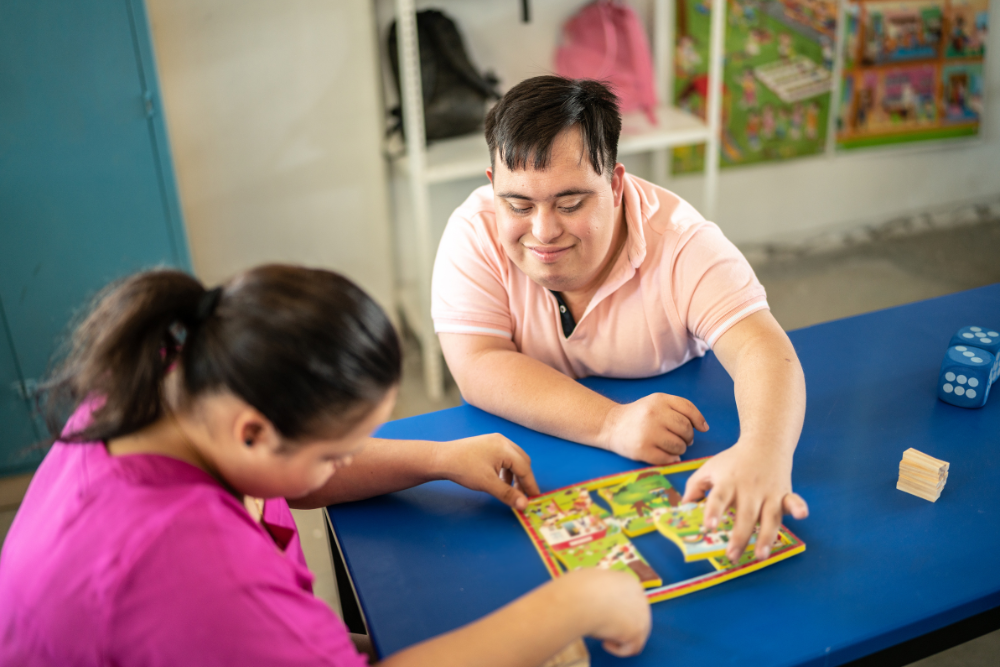
This study aims to examine the implementation of reproductive health education for Children with Special Needs (CSN) with consideration of inclusivity and effectiveness perspectives. The approach used is descriptive qualitative with a case study in several Special Needs Schools (SLB) and inclusive schools. Data were collected through in-depth interviews, participatory observations, and document analysis of relevant curriculum and teaching materials. The results indicate that while the importance of reproductive health education is recognized, many teachers still face challenges in teaching the subject due to a lack of training and support. The responses of CSN students to the material vary, with many needing visual explanations and adaptations in teaching methods. Parents also play a key role in supporting students' understanding, but there remains a sense of awkwardness when discussing this topic at home. The main obstacle faced is the lack of policies supporting the implementation of inclusive reproductive health education. Some schools have attempted innovations using visual media and technological applications to enhance students' understanding. In conclusion, to improve the inclusivity and effectiveness of reproductive health education for CSN, collaboration between teachers, parents, and supportive policies is needed to develop an adaptive and inclusive curriculum.
References
Amrina, R. (2015). Implementasi Kebijakan Pendidikan Kesehatan Reproduksi pada Anak Berkebutuhan Khusus di Sekolah Luar Biasa Kota Yogyakarta. Universitas Negeri Yogyakarta.
Astuti, F., & Hartati, T. (2022). Pendidikan kesehatan reproduksi pada anak berkebutuhan khusus di SLB. Jurnal Pendidikan Inklusif, 5(3), 150-162. https://doi.org/10.1234/jpi.v5i3.223
Hidayah, N., et al. (2021). Pendidikan Inklusif dan Anak Berkebutuhan Khusus. eprints UAD.
Meggy, H., & Aprilia, D. (2024). Augmented Reality-Based Training to Enhance Teachers' Knowledge of Reproductive Health for Special Needs Students. Inovasi Kurikulum, 21(4), 2089-2100.
Pratiwi, R. A., & Wicaksono, A. (2023). Pentingnya pendidikan seksualitas komprehensif untuk anak berkebutuhan khusus. Jurnal Penelitian dan Pendidikan Anak Khusus, 9(3), 89-102. https://doi.org/10.5678/jppak.v9i3.345
Rahmawati, N., & Subiyantoro, S. (2021). Optimasi pendidikan inklusif untuk anak berkebutuhan khusus: Penggunaan media visual dan metode problem-based learning. Jurnal Inklusi dan Pendidikan Khusus, 7(1), 45-58. https://doi.org/10.3456/jipk.v7i1.678
Syarifuddin, M., & Amelia, D. (2020). Peran orang tua dalam memberikan pendidikan seksual kepada remaja disabilitas. Jurnal Pendidikan Khusus, 8(2), 112-123. https://doi.org/10.2345/jpk.v8i2.210
Yuliza, W. T., Yanti, M., & Handiny, F. (2023). Implementasi Kebijakan Pendidikan Kesehatan pada Anak Berkebutuhan Khusus di SLB YPPLB Padang. JIK (Jurnal Ilmu Kesehatan), 7(2), 372-373.
Yusuf, M., & Hendriyani, R. (2019). Implementasi pendidikan seksual di sekolah luar biasa: Tantangan dan solusi. Jurnal Pendidikan dan Pengajaran, 6(4), 203-215. https://doi.org/10.4567/jpp.v6i4.789
Downloads
Published
Issue
Section
License
Copyright (c) 2026 Siska Syofiana, Insiatun Insiatun, Zulma Indra Rahmi Putri, Umri Rahman Efendi

This work is licensed under a Creative Commons Attribution-ShareAlike 4.0 International License.
Authors who publish with this journal agree to the following terms:
Authors retain copyright and grant the journal right of first publication with the work simultaneously licensed under a Creative Commons Attribution 4.0 International that allows others to share the work with an acknowledgement of the work's authorship and initial publication in this journal.
Authors are able to enter into separate, additional contractual arrangements for the non-exclusive distribution of the journal's published version of the work (e.g., post it to an institutional repository or publish it in a book), with an acknowledgement of its initial publication in this journal.
Authors are permitted and encouraged to post their work online (e.g., in institutional repositories or on their website) prior to and during the submission process, as it can lead to productive exchanges, as well as earlier and greater citation of published work.